Get Full Government Meeting Transcripts, Videos, & Alerts Forever!
Get email alerts on the Historic Preservation topic
No spam. Unsubscribe anytime.
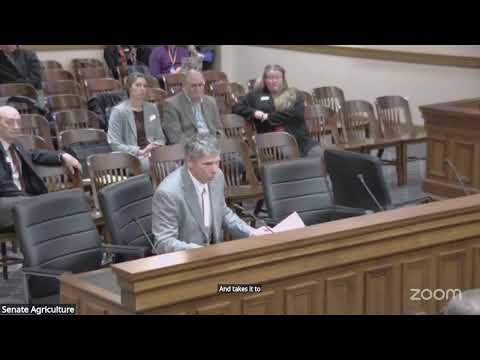
Senate committee rejects bill to make High Plains Research Station and Arboretum a state historic site
Summary
The committee defeated Senate File 192, which would have designated the High Plains Research Station and Arboretum a state historic site and provided startup funding via the tourism reserve account; proponents touted the site’s historic and agricultural value, while State Parks flagged staffing needs and some senators cited budget concerns.
The Agriculture, State & Public Lands & Water Resources Committee voted to reject Senate File 192 as amended, a proposal to designate the High Plains Research Station and Arboretum as a state historic site and to provide startup funding to restore historic buildings and reestablish nursery/greenhouse operations.
Representative Nicholas and Senator Pappas introduced the bill and described the arboretum’s history: the site was created by the U.S. Department of Agriculture in the early 20th century to identify and propagate trees, shrubs and plant varieties suited to the High Plains; its stock and research supported shelterbelts and local horticulture across Wyoming and the Rocky Mountain West. Supporters described surviving historic trees, stone terraces and DuBois‑designed buildings and told the committee the site still supports agricultural research and rangeland science.
Mayor Patrick Collins of Cheyenne told the committee the site contains roughly 600 historic trees and buildings and argued State Parks is “uniquely qualified” to manage the property in partnership with local groups; he said city and private partners contributed roughly $800,000 last year and the city planned at least $400,000 in commitments going forward. Horticulturist Jessica Friesen said the proposed historic designation would cover about 877 acres and allow the greenhouse to be restored and produce seedlings to distribute through conservation districts and State Forestry for replanting and post‑fire recovery.
State Parks deputy director Nick Veil testified the agency supports preserving the arboretum but raised a primary concern: the bill provides no staff to manage a site of that scale. Veil said a site of this size typically requires three full‑time employees plus seasonal workers, and State Parks does not currently have staff to transfer without affecting other sites.
Representative Nicholas offered an amendment that replaced the bill’s original general‑fund appropriation with $2.5 million from the tourism reserve account and included a local match: the amendment also directed the city of Cheyenne to contribute $300,000 annually. Supporters said the change avoided using general fund dollars while providing startup capital to restore a greenhouse and begin producing tree stock; opponents cited the long‑term local funding obligation and urged the project remain a private or locally driven effort.
Senator Hyde and other committee members said they favored the project’s goals but were concerned about imposing ongoing costs on Cheyenne taxpayers and about committing state resources while the Legislature pursues broader budget reductions. After debate and the amendment vote, the committee took a roll‑call on the bill as amended. The clerk recorded aye votes from Senators Crago and Pearson and no votes from Senators Eyde, McEwen and Chairman French; the committee announced that Senate File 192 failed in committee.
Quotes from the hearing included Mayor Collins: “The High Plains Arboretum is an example of a place with an amazing story and a place worthy of conserving, preserving, and restoring,” and State Parks’ Nick Veil: “Our concern is that the bill does not give us any staff to run the arboretum with.”
With committee defeat, SF 192 will not proceed to the Senate floor unless reintroduced or reconsidered under a separate motion. Supporters said they will continue local restoration efforts and pursue partnership funding; State Parks and other stakeholders said additional conversations about staffing, a sustainable operating model and sources of recurring support remain necessary.