Get Full Government Meeting Transcripts, Videos, & Alerts Forever!
Get email alerts on the Financial Regulation topic
No spam. Unsubscribe anytime.
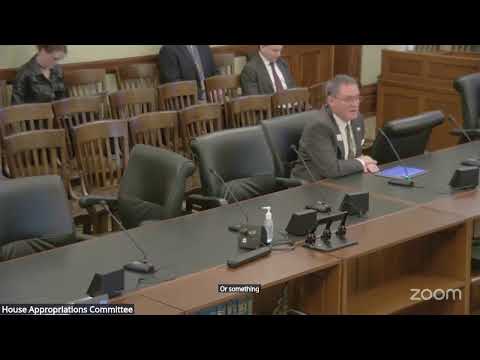
Committee debates bill to publish list of banks that 'boycott' energy companies; bill stalls after testimony
Summary
House Bill 291 would require the Secretary of State to prepare a restricted financial institution list of banks that "boycott" energy companies and make those banks ineligible for new or renewed state banking contracts; the measure prompted technical and policy objections and did not advance at the hearing.
Representative Pendergraft presented House Bill 291, which would require the Secretary of State to prepare and maintain a "restricted financial institution list" of financial institutions that, in the bill’s language, "without a reasonable business or financial purpose, discriminates against an energy company" and to provide that list to the Board of Deposits. The bill would make listed institutions ineligible to enter new or renewed banking contracts with the state and would require new banking contracts to include a term promising not to "engage in a boycott of energy companies." The proposal would also require notice to the institution and provide a process for removal of an institution from the list if it demonstrates the boycott has ceased.
The proposal drew technical drafting concerns and substantive objections from officials appearing before the committee. Secretary of State Chuck Gray said the bill addresses where Wyoming deposits state funds and pointed to past instances in which state officials de-banked a financial institution over its energy-related activities. Treasurer Kurt Meyer and Patrick Fleming, the Treasurer’s CIO, warned the committee that distinguishing a "boycott" from a reasonable business decision about lending risk is complex, that many banks limit energy lending for legitimate business reasons, and that placing large custodial banks on a public list could disrupt state banking operations.
Jeremiah Bishop, Wyoming Banking Commissioner, recommended technical edits: move the authority from Title 13 into Title 9 (where state depository and board-of-deposit authority resides) and correct cross-references so the law would apply to the banks involved in state depository business, including national banks. The state auditor noted that the purchasing-card contract the auditor’s office maintains is with a large, non-Wyoming bank and that not all relevant contracts are state depositories subject to the Board of Deposits.
Scott Meyer of the Wyoming Bankers Association testified that community banks do not typically participate in some state depository arrangements and that the bill could damage local banks by placing them on a list without a clear, independent appeals process. He urged an appeal or review mechanism and cautioned about reputational harm.
Committee members discussed the bill's definitions and enforcement path and asked technical questions about the Board of Deposits' meeting frequency and membership. The Treasurer, the Banking Commissioner, and the Treasurer’s CIO emphasized operational risks, technical complexity and the need to align statutory definitions with existing law. After additional public testimony, the committee did not advance the bill during the session; the chair concluded the measure would not proceed at that time.