Get Full Government Meeting Transcripts, Videos, & Alerts Forever!
Get email alerts on the Guns Firearms topic
No spam. Unsubscribe anytime.
Senate committee advances bill barring local enforcement of federal gun laws, adds civil and criminal penalties
Summary
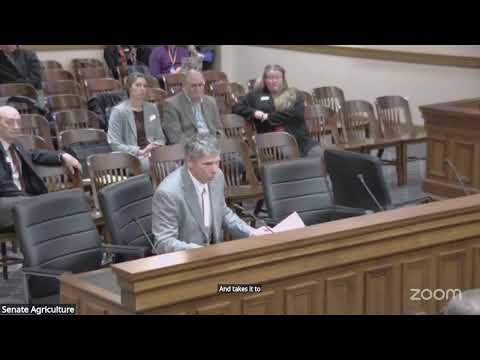
At a committee hearing of the Agriculture, State & Public Lands & Water Resources Committee, senators voted to advance Senate File 196 as amended, a bill that would bar Wyoming law enforcement from enforcing federal firearms rules and create civil and criminal penalties against agencies that violate the law.
At a committee hearing of the Agriculture, State & Public Lands & Water Resources Committee, senators voted to advance Senate File 196 as amended, a bill that would bar Wyoming law enforcement from enforcing federal laws, orders or regulations related to firearms and allow civil damages against agencies that violate the law while reinstating criminal penalties that had been removed in the bill’s original draft.
The bill’s supporters said SF 196 closes gaps they say exist in the state’s Second Amendment Protection Act (SAPA). Vice President David Salazar (introducing the bill on the floor) and witnesses for Wyoming Gun Owners described new language that would create a civil cause of action — “shall issue” damages — against agencies that knowingly enforce federal gun controls, and would prohibit the federal government from using Wyoming officers in task forces or using federal funds to pay Wyoming agencies to enforce such federal rules.
Senator Salazar told the committee the amendment now before members “reinstates criminal penalties into the SAPA law,” producing a combination of civil and criminal remedies. Aaron Doar of Wyoming Gun Owners said the organization supports SF 196 and that the bill “would plug some of the gaps that exist in existing SAFA law, which passed in 2022.” He described the civil penalties section as appearing on “page 5” of the draft and said the civil remedy targets agencies rather than individual officers.
Several law enforcement leaders testified in opposition or with caution. Captain David James of the Cheyenne Police Department said the legislation “is a chip away at qualified immunity,” and warned it could complicate officers’ ability to make split‑second decisions and expose departments and municipalities to litigation. Alan Thompson, executive director of the Wyoming Association of Sheriffs and Chiefs of Police, urged the committee to ensure the bill would not prevent lawful seizure of firearms in Wyoming prosecutions and suggested technical language to preserve investigations and seizures related to violations of Wyoming law.
Witnesses discussed specifics that were included in the committee record: the bill would (1) create civil “shall issue” damages against agencies for unlawful enforcement of federal gun control; (2) replace or supplement prior statutory language that limited non‑enforcement to federal laws deemed “unconstitutional,” with a broader statutory prohibition on enforcement of any federal act, law, treaty, order, rule or regulation regarding firearms, ammunition or accessories; (3) block the federal government from using Wyoming officers in federal task forces to seize firearms and prevent use of state or federal funds to pay Wyoming officers to enforce federal gun rules; and (4) expand the class of state actors who may be subject to penalties, applying liability to the employing agency rather than solely to “public officers.” Supporters said the bill includes categorical exceptions on page 7 for foreign nationals and for persons involved in felony narcotics or violent felony offenses.
Opponents urged caution and clarity. Representatives of local police, the Wyoming Highway Patrol and a task force official said the bill, as drafted, could hinder cooperative work on federal‑state task forces (for example, with U.S. Marshals, DEA, BIA or ICE) and could chill hiring of applicants who’ve previously worked for federal agencies. Lieutenant Colonel Carl Germain of the Wyoming Highway Patrol asked the committee to consider carve‑outs for troopers who hold federal certifications that permit safe policing on tribal lands. Several law enforcement witnesses emphasized they already enforce state law and noted existing civil remedies (for example, 42 U.S.C. § 1983 claims were discussed by witnesses in the hearing) for constitutional violations.
Panel members and the bill sponsor accepted several technical amendments during the hearing. The committee adopted an amendment that restored the criminal penalties that SF 196 had removed in its original draft; later, the committee added a new subsection clarifying that nothing in the bill “shall preclude any investigation and lawful seizure of firearms, accessories or ammunition related to violations of Wyoming law,” and added language specifying the act would not create civil penalties against individual officers but rather against employing agencies. After debate and amendments, the committee moved the bill forward on a roll‑call vote. Senators Grego, Eyde, McEwen, Pearson and Chairman French recorded aye votes; the clerk announced five ayes and the committee reported the bill as passed out of committee “as amended.”
Senate File 196 will next go to the Senate floor for further consideration. Proponents said the combined civil and criminal scheme and the clarified ban on local enforcement of federal gun controls would provide additional protections for gun owners and for Wyoming officers who do not want to be used to implement federal firearms restrictions; opponents said the bill as drafted risked unintended consequences for multi‑jurisdictional investigations and could increase litigation costs for local governments.
Quotes from the hearing include: “These are shall issue damages if a violation of law occurs,” Aaron Doar told the committee while describing the civil remedy in the draft. Captain David James testified, “This legislation is a chip away at qualified immunity.” Senator Anthony Bouchard, a former senator and founding member of Wyoming Gun Owners, urged passage, saying the bill “gives people their day in court.”
The committee record includes testimony from statewide groups, local law enforcement leaders and national organizations; the transcript shows the committee adopted sponsor amendments and voted to report SF 196 to the floor as amended.