Get Full Government Meeting Transcripts, Videos, & Alerts Forever!
Get email alerts on the Election Funding topic
No spam. Unsubscribe anytime.
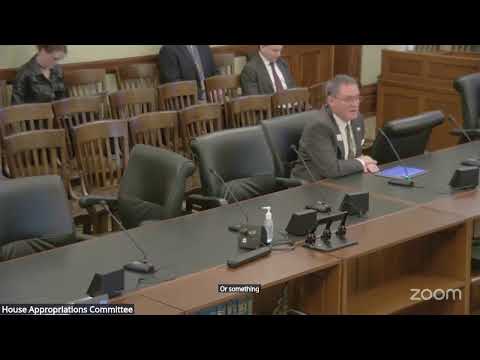
Committee advances 'no private funds for conducting elections' bill after close debate
Summary
The Appropriations Committee forwarded House Bill 228, which would prohibit private funding of election administration; an amendment narrowing the bill’s language failed on the floor of the committee.
Chairman Knapp presented House Bill 228, described by its sponsor as a prohibition on private funds used to conduct elections. The bill’s sponsor and Secretary of State Chuck Gray framed the bill as a response to private grants used during the COVID-19 era to support election administration in other states.
Chuck Gray, Secretary of State, told the committee he supported the bill and said the measure would bar government and election officials from accepting private donations for conducting elections and would also prohibit private citizens from providing those funds for that purpose. "I stand in support of House Bill 228 prohibiting private funds for conducting elections," Gray said, describing how private grants elsewhere had been used for election administration and related efforts.
Representative Sherwood asked whether the bill would unintentionally bar routine voter outreach — for example, a nonprofit providing space at a community event for a county clerk to offer voter-registration assistance. Chairman Knapp read language in the draft making specific exceptions for meals or food provided in support of election training, and Gray said the bill attempts to distinguish allowed community outreach from funding that could be used to influence administration.
Representative Sherwood later offered a committee amendment to narrow the statute so it would only bar funding for "expenses related to conducting elections" and would remove the specifically enumerated items such as voter education, outreach and registration programs. Representative Sherwood argued the change would preserve public outreach while focusing the prohibition on the administration of elections. The sponsor and the Secretary of State opposed the amendment as cutting too far into the bill’s stated intent, and the committee voted the amendment down.
With that, the committee voted to report the bill do pass. The roll call recorded five ayes, one no (Representative Sherwood) and one excused.
The committee discussion centered on definitional lines between permitted civic engagement and private funds used to support election administration functions such as staffing, drop boxes, or contracted election services. The Secretary of State urged an approach that prohibits private funding for conduct-of-election activities including "voter education, voter outreach or voter registration programs" as listed in the draft; Representative Sherwood and others asked for tighter language to avoid chilling nonpartisan community outreach efforts.
The committee forwarded the bill for further consideration with the recorded vote.