Get Full Government Meeting Transcripts, Videos, & Alerts Forever!
Get email alerts on the Transportation topic
No spam. Unsubscribe anytime.
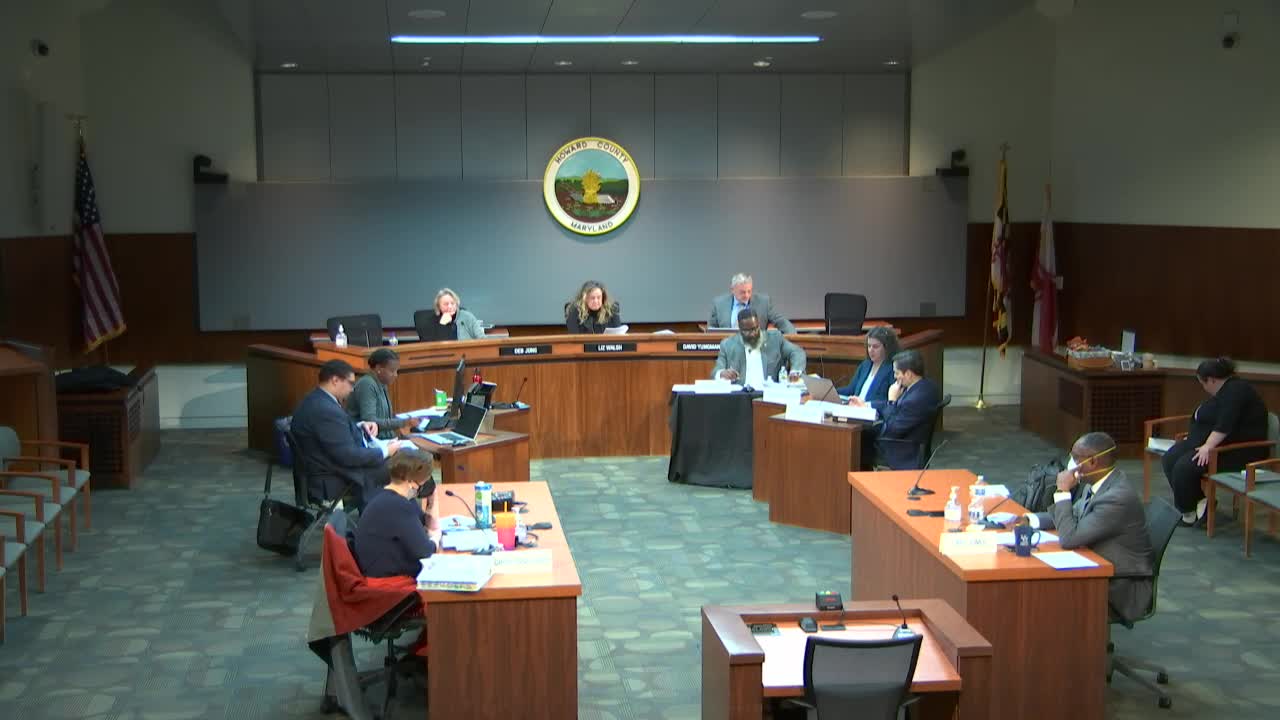
Howard County Council authorizes agreement for Bus Rapid Transit planning amid debate over costs and effectiveness
Summary
Council approved Council Bill 4-2025 to authorize a multiyear agreement related to Bus Rapid Transit (BRT) with Montgomery County and the state. Members debated whether the measure commits local funds prematurely and whether the project would deliver true BRT benefits.
The Howard County Council voted to approve Council Bill 4-2025, a multiyear agreement with the State of Maryland and Montgomery County to participate in a Bus Rapid Transit planning and implementation effort, after an extended debate about funding, ridership data and whether the agreement would commit local dollars without sufficient design detail.
Supporters said the agreement is needed to qualify for outside funding and to advance regional transit planning. One council member said, "I don't know what the funding reality is, but I know we're gonna need this agreement to get the funding," and urged approval so the county could be eligible for state or federal dollars.
Critics questioned whether the project as currently scoped would deliver true bus rapid transit, noting studies were six years old and predated COVID-related commuting changes. Councilmember Youngman called the measure "not bus rapid transit" and said, "These are buses that are gonna sit in traffic," arguing the agreement might effectively subsidize Montgomery County’s prior investments without clear local benefits.
Other members pushed back, noting testimony at the work session that ridership had returned to pre-COVID levels and arguing that incremental measures such as transit-priority traffic signals could speed buses and were worth pursuing. One supporter said the agreement did not immediately obligate county spending but authorized the county executive to sign an MOU that could commit the county to a local match later. Councilmembers also discussed the project’s broader regional benefits, including connections to employment centers and hospitals.
The council approved CB 4-2025. The recorded debate emphasized differing views on the quality of the project’s data, the age of supporting studies, and whether the agreement obligates county funds. The transcript records members urging updated analyses and clearer cost and ridership projections as follow-up to the agreement.
Why it matters: The agreement positions Howard County to participate in a regional BRT effort that could alter commuting patterns and require local matching funds; members debated whether that step should follow updated studies and clearer funding commitments.
Next steps: The MOU authorized by the bill could allow the county executive to accept state or federal funds and to commit a local match; council members asked for updated studies to determine whether the project will produce reliable transit-time improvements.