Get Full Government Meeting Transcripts, Videos, & Alerts Forever!
Get email alerts on the Certification Eligibility topic
No spam. Unsubscribe anytime.
Commissioners debate age, live-fire and reciprocity rules as high-school programs seek certification credit
Summary
At the Feb. 3 work session commissioners and staff discussed whether certification rules requiring applicants to be 18 and the 16/64 live-burn requirements are appropriately interpreted for high-school fire programs and volunteer departments.
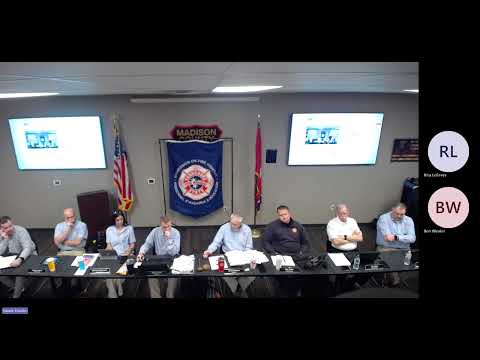
Commissioners and staff at the Feb. 3 Tennessee Fire Commission work session debated how certification rules apply to high-school fire programs, live-fire verification and cross-jurisdiction reciprocity.
Training officers and commissioners described practical cases in which high-school seniors complete classroom and practical training but cannot be issued commission certification because the examination chapter currently states applicants must be at least 18. Commissioners said the age requirement appears in the Education Incentive/VEIP rules but not uniformly across other chapters, and they directed staff to reconcile that discrepancy.
The commission also discussed the live-fire verification requirement commonly expressed as "16/64 and live burn" for certain firefighter-level certifications. Staff reported confusion across departments about what kinds of live-fire exercises count; commissioners and attendees said some departments have been told by local training providers that certain burns do not count toward the commission's live-fire verification despite having received live-burn numbers in the past. Staff noted the new rules extend some live-fire verification eligibility back to Dec. 31, 2021, and that certain live-burn forms will be recognized for a 10-year lookback under the revised rule language.
Commissioners asked staff to clarify three items for the regular meeting: whether chapter-specific age and residency requirements are statutory or regulatory; whether live-fire verifications issued by a department or association count statewide; and whether reciprocity or credits for out-of-state training can be consistently applied. Staff said they will prepare specific redlines and legal citations showing where the 18-year-old requirement and residency references appear (they noted that the requirement currently appears in the EIP/VEIP rule but not necessarily in the general certification chapter).
Why it matters: The age and live-fire interpretation affect whether students walk off a high-school stage with a commission-recognized credential, whether volunteers can qualify for incentive payments and whether departments can rely on previously issued live-fire verifications. Commissioners said inconsistent practice is likely to discourage participation and complicates hiring and pay decisions by departments that rely on commission certifications in promotional or pay processes.
Commissioners discussed possible mitigations, including: allowing high-school students to take coursework and practicals before age 18 and to certify once they turn 18; seeking guidance from the attorney general on whether the commission may modify age language across chapters; and issuing administrative guidance clarifying what constitutes a commission-approved live-burn for the 10-year lookback. No formal policy change was adopted at the work session.
Sources: Commission discussion and staff comments, Feb. 3, 2025 work session.