Get Full Government Meeting Transcripts, Videos, & Alerts Forever!
Get email alerts on the Peer Review Penalties topic
No spam. Unsubscribe anytime.
Board committee weighs stronger penalties for peer-review noncompliance but cites statutory limits
Summary
The Law & Rules Committee discussed whether civil penalties and the discipline matrix should be revised to better deter firms that avoid required peer review, but staff said state statute constrains the board to $1,000 per violation per day unless changed by the legislature.
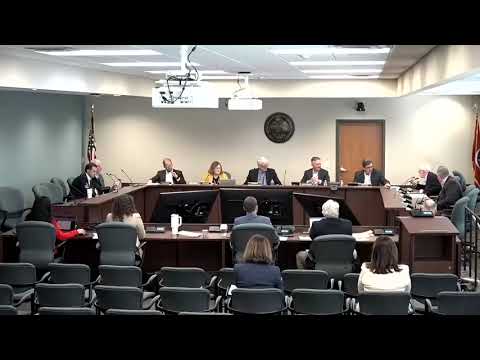
The Law & Rules Committee of the Tennessee State Board of Accountancy spent significant time on Feb. 3 debating how to make penalties for failing to comply with peer-review requirements more punitive and harder to treat as a calculated cost of noncompliance.
John Griesbeck, chair of the Law & Rules Committee, summarized the 2023 discipline-matrix revisions and said the matrix was intended to provide consistent, incremental penalties for violations. Legal counsel told the committee that the board's authority for civil penalties is governed by a general provision in the Tennessee Code, Title 56, Chapter 1, which limits civil penalties to $1,000 per violation per day. Counsel noted the board may use the per-violation, per-day construct but must have evidentiary support for each violation if it seeks to multiply daily penalties.
Committee members and legal staff discussed several ways to increase effective consequences for noncompliance. Options included:
- Charging separate penalties for each attest report issued while a firm is out of peer-review compliance, with each illegitimate report treated as a distinct violation; committee members observed this could multiply the penalty above the nominal $1,000 level if evidentiary records linked each report to the noncompliant period.
- Using engagement letters, dates on issued reports and time-entry or engagement-hour records as factual evidence to establish the number of days or instances of violation (investigators and counsel said firms typically keep such records and those could be used to calculate violation counts).
- Seeking to recover investigative and administrative costs in addition to civil penalties. Counsel and committee members noted that applicable statute and the board's civil-penalty guideline permit imposing the cost of investigation and administrative hearings separately from a civil penalty and that those costs have in some cases exceeded nominal penalties.
Legal staff cautioned the committee that appellate precedent (citing a Court of Appeals decision summarized in committee materials) requires evidentiary support for counting each day as a separate violation; simply multiplying by days between two calendar bookends may not survive judicial review without showing the underlying conduct for each day. Kyle Johnson, disciplinary counsel, said proving daily violations can be challenging and suggested aggravating factors and repeated offenses be used to justify suspension or revocation when appropriate.
Committee members asked staff to prepare a focused analysis and recommendations for the full board and for possible legislative or administrative options, including revising the discipline matrix language that currently references dollar amounts per year. Committee chair Griesbeck asked staff to examine the matrix comprehensively and to return with legal and procedural recommendations for the board to consider.