Get Full Government Meeting Transcripts, Videos, & Alerts Forever!
Get email alerts on the Governance topic
No spam. Unsubscribe anytime.
Charlotte council retreats to governance questions after tense debate over roles, closed sessions and trust
Summary
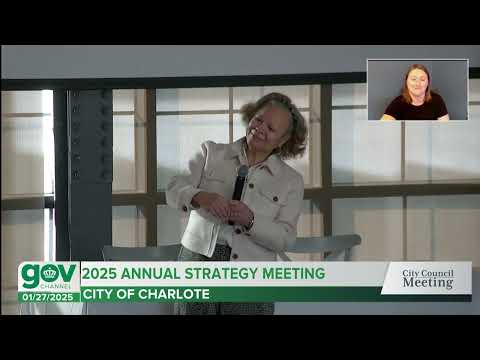
Charlotte City Council members spent the retreat’s sessions focused on governance, the council–manager relationship and internal conduct after exchanges about who may direct staff and what belongs in closed session.
Charlotte City Council members spent the retreat’s morning and afternoon sessions focused on governance, the council–manager relationship and internal conduct after a series of exchanges about who may direct staff and what belongs in closed session.
Mayor Vi Lyles opened the meeting and framed the day as a chance to “work together” and produce outcomes the city could be proud of. Facilitator De Alba Arnold (D Wilson Agency) led exercises intended to define a team operating agreement. City Attorney Anthony Fox delivered a detailed review of the council–manager form of government and the council’s rules of procedure; Marcus Jones, the city manager, and budget staff gave a budget preview that followed the governance discussion.
Why it matters: The retreat centered on duties and limits that affect how the council makes decisions, how staff implements them and how the public sees the body exercise authority. Legal clarifications about recusal, closed sessions and the statutory role of the city manager came up repeatedly as council members urged clearer, more consistent processes and sought ways to rebuild trust.
Discussion highlights
• Council–manager form: City Attorney Anthony Fox told the council this form of government is a statutory requirement in North Carolina and explained its practical meaning: “neither the mayor, the council, nor any member shall direct the conduct or activities of any city employee directly or indirectly, except through the city manager,” Fox said. He described the manager as the city’s chief operating officer and the council’s role as a policy-making board that appoints only three direct employees— the city manager, the city attorney and the city clerk.
• Contacts with staff and committees: Council members pressed for clearer, routine channels for directing or requesting staff work. Marcus Jones described customary use of assistant city managers and committee structures to develop policy and said the manager’s office is ready to work with council members but urged that “net new directives” be handled through the manager rather than by asking staff to take on unbudgeted work directly.
• Rules of procedure and meeting management: Fox reviewed the council’s adopted rules (RDA Rules of Procedure, adopted Oct. 10, 2022) and emphasized the mayor’s authority as presiding officer under Rule 6 to apply parliamentary rules, call recesses and rule motions in or out of order. Several council members called for more assertive meeting management to keep debate focused and to limit repetitive or theatrical remarks that lengthen meetings.
• Closed sessions and confidentiality: Fox explained the statutory grounds that permit closed (executive) sessions, including economic development negotiations and certain personnel matters. He warned council members about disclosing confidential material from closed sessions, saying that such disclosures can be a violation of law and of the fiduciary duties associated with the council’s office.
• Recusal and duty to vote: Fox told the council the state statute requires members to abstain from voting only when a financial conflict of interest exists; other requests to be excused remain at the council’s discretion. He recommended consulting the city attorney when in doubt and said his office would provide advisory opinions.
• Trust, respect and internal culture: The facilitator’s round-robin work and a council survey highlighted trust and respect as the retreat’s dominant concerns. Council members repeatedly returned to the same themes: members said they wanted clearer processes for placing items on agendas, better pre-meeting communications among colleagues, more reliable committee follow-through, and a culturally different way of raising and resolving disputes so personal friction did not stall city business.
What was not decided
The retreat did not produce binding changes to the council’s rules or charter. Fox explained that changes to chartered duties would require General Assembly action; amendments to the council’s internal rules could be done by the council if it chose to do so. Council members asked staff to bring back additional materials—the charter text and the full rules of procedure—for further review in committee and future meetings.
Outlook and next steps
Council members asked for clearer processes for non‑agenda items, for options to make agenda requests more visible to fellow members, and for a practical plan to improve information flow among members between meetings. The staff committed to follow up with materials (charter and rules), to provide written guidance on the difference between council direction and manager authority, and to identify a path to resume committee work on any rule changes council wants to consider. Members also signaled an interest in trust‑building steps and smaller-group conversations beyond the formal agenda.
Ending note
The retreat made governance the central issue: Fox’s legal guidance and the council’s discussions set a framework for subsequent committee work and for the manager’s budget process. Council members left the governance sessions with the same practical questions repeated throughout the day—how to balance district advocacy with citywide policymaking, how to ensure staff receives clear direction through the manager, and how to rebuild trust and civility so the council can operate more efficiently.