Get Full Government Meeting Transcripts, Videos, & Alerts Forever!
Get email alerts on the City Finance Receivables topic
No spam. Unsubscribe anytime.
Comptroller: $132.5 million in city receivables; $41 million in unpaid parking citations draws questions on collections
Summary
The committee reviewed the annual outstanding receivables report. The comptroller's office reported $132.5 million in outstanding receivables at year-end 2023 and discussed parking citation collections, towing practices and collection tools such as income tax intercepts and vehicle-registration holds.
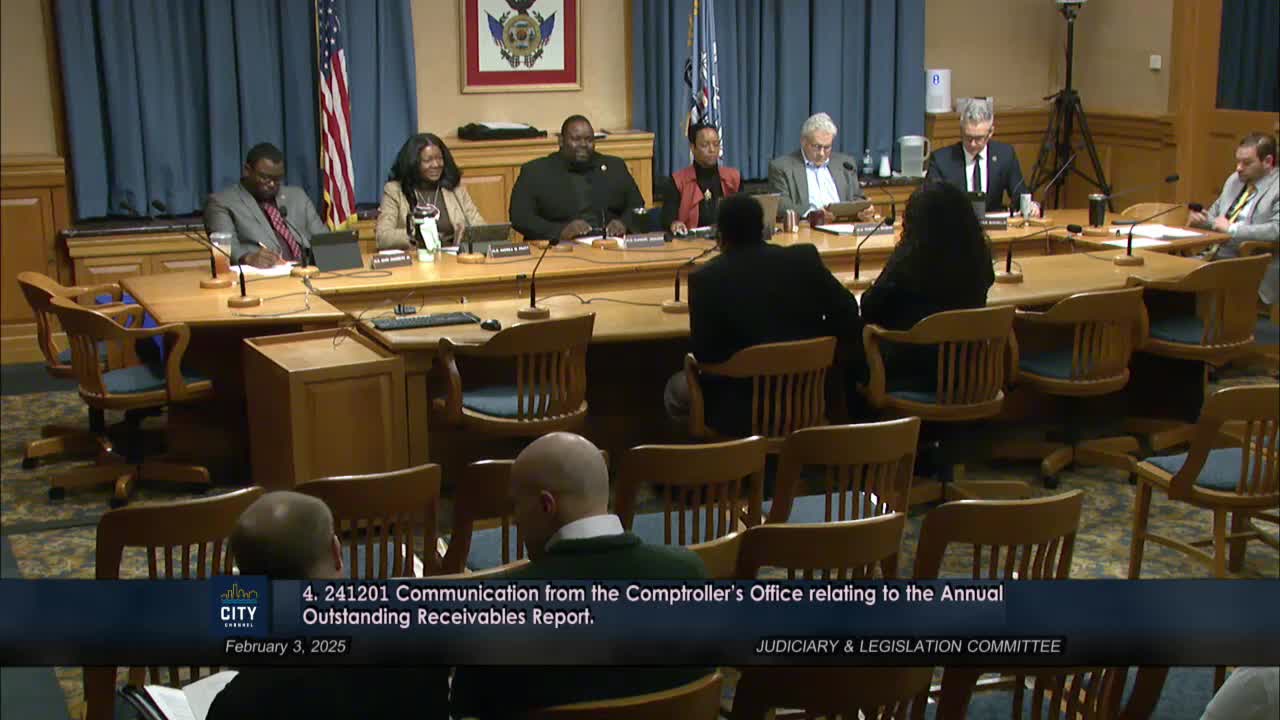
The Judiciary and Legislation Committee reviewed the City of Milwaukee annual outstanding receivables report on Feb. 3, hearing from the comptroller's office and collection contractors about collections, parking citation backlogs and potential policy changes.
"Outstanding accounts receivable was $132,500,000 for year end December 31, 2023 — an increase of $4,700,000 when compared to 2022," Gloria Lucas of the comptroller's office told the committee while summarizing the report. The report includes a department-level breakdown of miscellaneous accounts receivable and cancellations and adjustments required by city ordinance.
Committee members focused much of the discussion on parking citations. The committee record shows the comptroller and collection experts described a cumulative balance of approximately $41,000,000 in unpaid parking citations spanning as many as seven years. City staff said the seven-year period reflects statute-of-limitations and collection practice for citations and that the $41 million is a cumulative balance of unresolved citations over several years rather than a single-year shortfall.
Officials described collection and enforcement practices: the city uses a private collections contractor (Duncan Solutions), an income-tax intercept program that yields about $2,000,000 annually, and daily towing of vehicles that meet recurring-violator criteria. Staff said towing activity can total about 25,000 vehicles annually, with roughly 10,000 police tows and 15,000 to 16,000 administrative/contract tows.
Bill Christianson, the city comptroller, clarified how citation revenue is recognized for budget purposes. "With parking, it's different. So those are only recognized when the cash is actually" collected, he said, explaining why outstanding citation balances are not counted as budgeted revenues until collected.
Committee members also asked about using registration holds via the Wisconsin Department of Transportation and other tools used by peer cities. Staff said the city used such a registration-suspension referral in prior years and that, in one full year in 2016, referring delinquent citations for registration action generated about $700,000 in revenue. Staff said changes in DOT submission rules and per-citation fees mean the cost and logistics of reintroducing registration holds would differ now.
Other receivable categories discussed included conduit-rental debts owed by communications firms that use city conduit infrastructure; staff said some conduit occupants lacked executed leases historically and that DPW and the city attorney are pursuing remedies, including draft revisions to Chapter 98 governing conduit use.
Committee action on the communication was to place the report on file for the record, allowing departments and administration to continue work on collection and legal remedies and to return with implementation options.
Committee members asked the administration to evaluate collection tools, including reconsidering DOT registration holds, expanded referrals to legal counsel for large commercial debts and potential public reporting of significant debtors to encourage compliance. Staff said some of those steps are already in progress, including updated Chapter 98 language and targeted enforcement of tow-operator accounts.
The committee's questions and staff answers did not include a decision to reinstate statewide registration suspensions, and staff cautioned that each tool carries costs and operational trade-offs.