Get Full Government Meeting Transcripts, Videos, & Alerts Forever!
Get email alerts on the Wildfire Mitigation topic
No spam. Unsubscribe anytime.
Lakeway officials highlight years of wildfire mitigation work, urge home hardening and signups for alerts
Summary
City and Lake Travis Fire Rescue leaders reviewed mitigation programs started after 2011 wildfires, described recent storm debris and cleanup costs, and urged residents to sign up for Warren Central Texas, obtain Firewise home assessments, and support changes to local landscape and HOA rules to allow home-hardening measures.
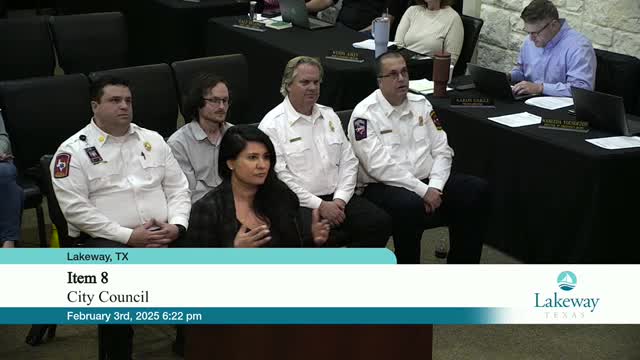
Lakeway city officials, the Tri City Emergency Management Office and Lake Travis Fire Rescue briefed the City Council on wildfire preparedness and mitigation measures at a special meeting on Feb. 3, 2025, outlining multi‑year programs, recent storm debris impacts and steps residents can take to reduce home ignition risk.
The briefing — led by Lake Travis Fire Rescue Chief Abbott, Tri City Emergency Management Director Wahida and LTFR wildfire mitigation specialist Dustin Dunn — summarized work dating to 2011, noted accelerated efforts after the 2021–23 winter storms and described completed projects such as the Hamilton Greenbelt mitigation paid with roughly $350,000 and an 18‑month effort.
Why it matters: Speakers said the city and partner agencies have invested in mechanical fuels treatments, volunteer programs and planning to reduce risk where homes meet wildland. But they cautioned debris from recent storms and contiguous privately owned forested lands limit the effectiveness of city work alone, and emphasized homeowner actions and policy changes are needed to reduce structure losses.
“...the programs that we've put in place with the collaboration with the cities and Travis County have gone a long way to keeping this community safe,” Chief Abbott said, adding that the 2021–23 storms left “a lot of down and dead” vegetation that increased fuel loads and cleanup costs.
Dustin Dunn summarized preparedness steps including use of the Tri City warming center and shelter, volunteer trainings and updates to the Tri City Hazard Mitigation Plan in 2023. Dunn said volunteers number about 65 and the symposium and wildland task force created last year have improved communication among utilities, county and federal partners.
Dunn also urged homeowners to pursue home‑hardening measures and Firewise assessments. “We do not share the reports with with anybody. It's largely, my eyes that are seeing them,” Dunn said in response to homeowner concerns about assessments being shared with insurers. He said assessments use a nonprofit platform called Fire Aware (referred to in the presentation as “Fire Aside”) and that he had not heard of insurers submitting Freedom of Information requests for individual homeowner assessment reports.
City forester Richard said the city has mitigated roughly 190–200 acres of municipal forested land since his tenure began and expects to finish the remaining city‑maintained acreage in the next few years. He described terrain‑limited areas — notably steep canyon rims and Golden‑cheeked Warbler habitat — where mechanical mitigation is difficult or restricted for environmental reasons.
Officials said much adjacent forest is privately held or managed by HOAs or developers (the Canyonlands area was identified in the Travis County GIS as owned by Rough Hollow Development), and outreach to private owners and HOAs has been uneven. The forester noted some HOAs restrict landscaping choices that could allow home‑hardening measures such as rock or artificial turf; staff said the city has written letters supporting policy exceptions in some cases.
Funding and federal support: The emergency management director said Lakeway is included in a 2023 Travis County all‑hazard risk assessment that FEMA accepted, which officials said improves eligibility for some FEMA grant programs. Staff reported FEMA/TDEM reimbursement work recovered a substantial portion of the city’s storm response costs; separate discussion later in the meeting covered the actual FEMA reimbursement (see related article).
Council discussion and next steps: Council members and staff discussed policy changes and communications. Mayor and council members asked staff to:
- Encourage residents to sign up for Warren Central Texas emergency alerts and promote the Tri City registration system; - Finalize a revised landscape ordinance to remove HOA barriers that prevent recommended home‑hardening measures and consider letters supporting exceptions where appropriate; - Prioritize outreach and coordination with adjacent private landowners and developers where contiguous forest borders city property; and - Continue promoting Firewise neighborhood organization formation and free home ignition zone assessments, using LTFR contacts and the wildfire email wildfire@ltfr.org.
Chief Abbott and Dunn recommended homeowners create household action plans and designated meeting locations in case phone systems fail. Staff also committed to share after‑action items from recent tabletop exercises and to provide follow‑up information on available grants when FEMA and federal grant availability is clarified.
The council offered no formal votes on policy changes at the meeting, but repeatedly urged staff to return with proposals — including a possible ordinance amendment — and more detailed implementation and funding options for future discussion.