Get Full Government Meeting Transcripts, Videos, & Alerts Forever!
Get email alerts on the Humanitarian Aid topic
No spam. Unsubscribe anytime.
UN says humanitarian operations in Gaza expanding as global crises strain aid capacities
Summary
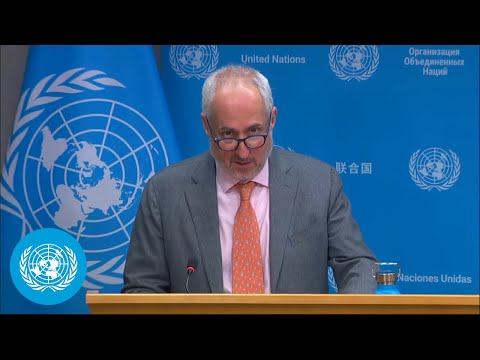
The United Nations said at a press briefing that lifesaving humanitarian operations in the Gaza Strip are expanding as more supplies enter the territory and aid partners respond to large internal movements of people, while the UN warned that multiple other conflicts are producing acute civilian needs.
The United Nations said at a press briefing that lifesaving humanitarian operations in the Gaza Strip are expanding as more supplies enter the territory and aid partners respond to large internal movements of people, while the UN warned that multiple other conflicts — notably in Sudan, the Democratic Republic of the Congo, Lebanon, Syria and Ukraine — are producing acute civilian needs.
The UN spokesperson said the Office for the Coordination of Humanitarian Affairs (OCHA) and humanitarian partners estimate that more than 45,000 people moved from south to north in Gaza over the past week, and that more than 36,000 people were observed moving from north to south. OCHA also reported distribution of more than 30,000 identity bracelets for children under age 4 to reduce family separation, and the establishment of three temporary sites in Beit Hanoun, Beit Lahia and Jabaliya each able to host up to 5,000 people.
Why it matters: movement, shelter and family separation compound protection and logistics challenges in Gaza even as a ceasefire-related opening allows more humanitarian commodities to enter. The briefing underscored gaps in cash, food consumption and services that aid agencies say continue to limit relief despite some price declines, and flagged the scale of needs across several other crises where humanitarian access remains constrained.
The most urgent facts
- Gaza: The spokesperson reported expanded operations and said UN and partner agencies estimate tens of thousands of people moved within Gaza in the past week. The World Food Programme noted food prices have begun to fall since the ceasefire but remain above pre-conflict levels; lack of cash is a primary obstacle to access for many households. UN agencies also reported about 280,000 school-age children in Gaza registered for UNRWA e-learning programs.
- Sudan: The secretary-general is "deeply alarmed" by reports of summary executions in Khartoum North, the spokesperson said, citing corroboration by the Office of the High Commissioner for Human Rights. The briefing reported a market strike and residential-area attacks in Khartoum state that local sources said left about 60 dead and more than 150 injured; OCHA warned of rising severe malnutrition and cited local reports that recorded roughly 1,100 cases of severe malnutrition in January in three neighborhoods. The spokesperson repeated the UN appeal for parties to cease fighting and allow humanitarian access.
- Lebanon: UNIFIL (the UN peacekeeping force in southern Lebanon) described the area along the Blue Line as "generally calm" but noted continued troop presence and returns by civilians; UN Habitat reported more than 15,000 buildings damaged or destroyed in South Lebanon and an estimated 8,000,000 tons of debris.
- Democratic Republic of the Congo: Humanitarian colleagues in Goma reported bodies still in the streets, overwhelmed morgues and hospitals, and looted or hijacked aid vehicles. The World Food Programme said it is prepositioning supplies and working with partners and neighboring countries to develop contingency plans as one-quarter of people in parts of the DRC face acute hunger.
- Ukraine and cultural sites: The briefing condemned recent attacks on civilian objects and noted UNESCO reported severe damage to at least two protected cultural buildings in the historic center of Odesa. The spokesperson reiterated that directed attacks on civilians and civilian infrastructure are prohibited under international humanitarian law.
Other items flagged
- Colombia: The UN Emergency Relief Coordinator allocated $3.8 million from the Central Emergency Response Fund to help about 42,000 people in Catatumbo with food, shelter, water, sanitation, education and protection services; the wider Colombian humanitarian response plan seeks $342 million to assist 2 million people.
- Uganda: Agencies including WHO, UNICEF and WFP repurposed $1.3 million for Ebola response support. The briefing said there were four confirmed cases and one death, with 189 contacts isolated.
- Syria: The Special Envoy for Syria, Geir Pedersen, was reported to have held multiple meetings with Syrian interlocutors; the spokesperson said Pedersen repeatedly heard calls for an inclusive, Syrian-led political process and that the envoy has raised reports of targeted killings, including alleged assassination squads, directly with transitional authorities in Damascus.
Funding and operational concerns
The spokesperson emphasized the importance of donor funding and said the United States remains a major donor, noting that US support underpins large portions of humanitarian operations worldwide and that current uncertainty at a major donor agency is having immediate operational impacts. "USAID is a critical partner," the spokesperson said, adding the UN is assessing specific operational impacts and seeking further clarity.
What officials said
"The secretary-general is deeply alarmed by reports of summary executions of civilians in Khartoum North," the spokesperson said, repeating the UN call for cessation of hostilities and protection of civilians.
The briefing also quoted Tom Fletcher, Under-Secretary-General for Humanitarian Affairs and Emergency Relief Coordinator, as leading field visits to Israel, the West Bank and the Gaza Strip to assess obstacles facing aid partners and to coordinate relief efforts.
Context and next steps
UN agencies said additional humanitarian supplies are arriving in Gaza and partners are expanding protection and basic services, but emphasized that access, cash shortages and damage to infrastructure remain major constraints. The spokesperson closed by stressing the urgent need for funding, logistics and security guarantees to allow aid to reach the most vulnerable and to stabilize rapidly deteriorating protection and nutrition indicators across the crises described.
Ending note: The spokesperson said the UN and partners will continue assessments and field visits in the coming days and urged donors to sustain and increase support to meet urgent needs across multiple theaters of conflict and displacement.