Get Full Government Meeting Transcripts, Videos, & Alerts Forever!
Get email alerts on the Security Council Program topic
No spam. Unsubscribe anytime.
China, as Security Council president, adopts February program and will host Feb. 18 high‑level debate on multilateralism
Summary
China's UN mission said Security Council members adopted a program of work during internal consultations that prioritizes a February 18 high‑level open debate on multilateralism and a slate of briefings on the Middle East, Africa and peacekeeping matters.
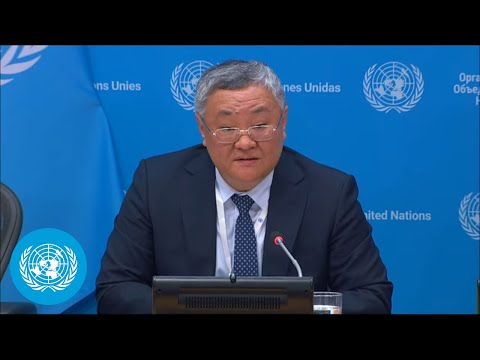
Ambassador Fusong, Permanent Representative of China and president of the U.N. Security Council for February, said the council adopted a program of work in an internal consultation and will hold a high‑level open debate on Feb. 18 titled "practicing multilateralism, reforming, and improving global governance," with Chinese Foreign Minister Wang Yi expected to preside.
The program of work, Ambassador Fusong said, reflects China's priorities as the rotating president for the month: a signature event on multilateralism timed with the United Nations' 80th anniversary, briefings on Gaza and the broader Middle East situation, attention to Syria in the context of Security Council Resolution 2254, and multiple African items including U.N. missions in South Sudan, Libya and the Central African Republic and developments in Sudan and eastern Democratic Republic of the Congo.
"It is an honor for China and for me personally to assume the Security Council presidency for the month of February. We see this as an important responsibility," Ambassador Fusong said. He described the council's work as "quite full" and said China would "engage extensively and closely with all parties on all issues on the agenda and try our best to build the broadest possible consensus."
The ambassador said the Feb. 18 open debate will invite foreign ministers and senior officials, including from non‑Council members, and aims to encourage states to "revisit the original aspirations of the UN, reaffirm their commitment to multilateralism and the important role of the United Nations, including the Security Council, and to explore ways to reform and improve the global governance." He said the initiative is intended to respond to calls—particularly from the Global South—to reform global governance "to better reflect the changing realities of the global political and economic landscape."
On process, Ambassador Fusong said the mission will invite civil society representatives "to participate in relevant meetings as appropriate" and will keep close contact with media "to ensure transparency of our work." He also said the council will hold its annual dialogue with peacekeeping police and consultations related to DPRK sanctions, and will remain prepared to address other "hotspot" issues as they arise.
The mission said members held an internal consultation to adopt the month’s program; the ambassador characterized that adoption as the basis for the items he then outlined. No formal public vote or text of the adopted program was published during the briefing.
China's spokesperson Li Zemin introduced the event and said Minister‑Counselor Sun Zhi Chang was present at the mission for the briefing.