Get Full Government Meeting Transcripts, Videos, & Alerts Forever!
Get email alerts on the Property Tax Relief topic
No spam. Unsubscribe anytime.
Senate committee approves 'residential property tax reduction account' bill; implementation, cost questions remain
Summary
Senate File 177 passed the Senate Revenue Committee 4-1 to establish a residential property tax reduction account funded from surplus general‑fund dollars. Sponsor framed the measure as a dividend to homeowners; the Department of Revenue said administering the program would require significant one‑time programming and hundreds of temporary staff.
Senate File 177, a bill to establish a "residential property tax reduction account" funded from surplus general‑fund dollars, passed the Senate Revenue Committee on a 4-1 roll call after extensive sponsor explanation and questions about implementation.
Senator Darren Smith, sponsor of the bill, described it as a mechanism to return surplus state funds to homeowners as a "dividend" when the state runs a surplus. "If the state does well, then the homeowners are rewarded with the dividend," Senator Smith said, adding the bill would not touch core budget minimums and would direct surplus appropriations into an account that would be disbursed by refund to eligible primary‑residence owners.
Under the language discussed by the sponsor, a primary residence is defined as residential property where the claimant resided at least six months of the tax year, and residential property is limited to dwellings designed to house up to four families and associated land up to 35 acres. Senator Smith told the committee that payments would be funded from surplus determined after the biennial budget and that payouts would be made on a biennial schedule, with half the account paying in the first half of the biennium and the remainder in the supplemental year.
Department of Revenue witnesses said administering a program at the proposed scale would be materially larger than the department's current property‑tax refund work. Ken Gill of the Department of Revenue said the agency currently processes about 15,000 refund applications; using census and assessment data the department estimated up to 175,000 potential applications under the proposed program. Gill said the Department would request appropriations and estimated one‑time programming costs (ETS) at about $182,000, and annual temporary staffing in the range of 40 to 45 positions to process applications.
Legislative Service Office (LSO) and sponsor estimates were also referenced in committee discussion: Senator Smith cited an LSO estimate of roughly $1,600,000 (notation in the hearing record) for implementation; Department of Revenue witnesses confirmed that figure during questioning.
Committee members asked whether the proposal would interfere with other statutory uses of surplus and reserves and how the account would operate when revenues fall; Senator Smith replied the bill triggers distribution only when the legislature designates surplus at the end of the biennial budget process. The Department of Revenue director, Brenda Henson, noted county treasurers do not accept overpayments and emphasized the need to coordinate any new refund pathway with existing property‑tax relief options and caps.
Public testimony included Robert Short, a county commissioner, who asked whether tenants in multifamily dwellings would see rent adjustments if owners received refunds; sponsor and committee discussion noted the bill focuses on owner‑occupied primary residences and cannot guarantee how owners will allocate funds.
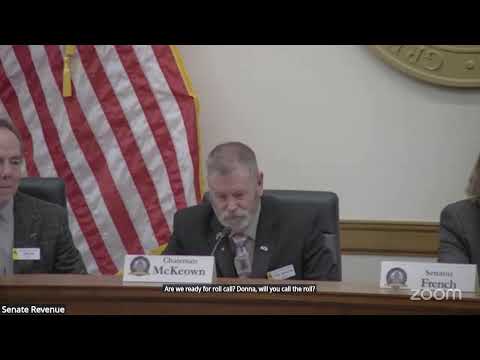
The committee proceeded to a motion. The motion to advance Senate File 177 was moved by Senator Smith and seconded by Senator French. The roll call: Senator Case — No; Senator French — Aye; Senator Eyde — Aye; Senator Pappas — Aye; Chairman McEwen — Aye. The committee chair stated, "Senate File 177 has passed the Revenue Committee."
Ending: The bill advances with identified implementation costs and administrative needs; Department of Revenue requested appropriations and temporary staffing to handle potentially large application volume. Committee members asked for more specificity on surplus calculation, interaction with other reserves and existing property‑tax relief programs before floor consideration.