Get Full Government Meeting Transcripts, Videos, & Alerts Forever!
Get email alerts on the Historic Site Arboretum topic
No spam. Unsubscribe anytime.
Committee deadlocks on making High Plains Arboretum a state historic site after amendment reduces appropriation
Summary
Representative Nicholas presented House Bill 229 to fund and designate the High Plains Research Station and Arboretum as a state historic site; the committee adopted an amendment reducing the appropriation but the final do‑pass vote on the amended bill was tied and the measure did not advance.
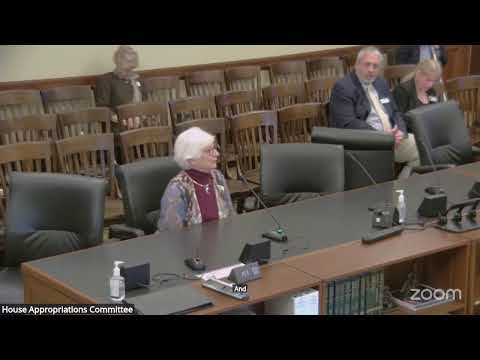
Representative Nicholas presented House Bill 229 to the House Appropriations Committee, asking the Legislature to designate the High Plains Research Station and Arboretum a state historic site and to provide funding for initial rehabilitation and restart of the arboretum’s greenhouse and facilities.
Mayor Patrick Collins of Cheyenne told the committee that the site and its historic plant material — developed beginning in the early 1900s — played a critical regional role in identifying plants suited to the High Plains. "The High Plains Arboretum is an example of a place with an amazing story and a place worthy of preserving, conserving, and restoring," Mayor Collins said, describing the site’s ties to Civilian Conservation Corps projects and to statewide windbreak and nursery programs.
Jessica Friess, a horticulturist at the Cheyenne Botanic Gardens who works part time at the arboretum, described the scientific and practical value of reestablishing in‑state tree and seed stock. She told the committee that replanting using locally sourced, locally adapted seedlings increases the chance trees will thrive after fire or drought. Friess also explained distinctions between the research station and the arboretum and said portions of the USDA grasslands research station would remain in federal use while the arboretum portion would be restored for public and nursery use.
State Parks staff described a facility condition assessment funded from a prior appropriation. The assessment identified approximately $7.7 million in deferred maintenance and about $11.2 million in rehabilitation costs — a combined total just under $19 million — and recommended a phased approach to work. Deputy Director Nick Meehan and planner Carly Ann Carruthers said the greenhouse and several buildings are priorities for stabilization and rehabilitation.
Representative Nicholas proposed a budget amendment that reduced the requested appropriation from roughly $3,338,000 to $2,500,000 by moving funds from the tourism reserve account and added a requirement that the City of Cheyenne commit no less than $300,000 annually in cash or services as an ongoing local contribution. Representative Harrelson moved the amendment; it was seconded and carried in committee.
After extended public and organizational testimony — including support from the Alliance for Historic Wyoming and the Cheyenne Botanic Gardens and comments about revenue potential from plant sales, event rentals and reforestation contracts — the committee took a roll call on the amended bill. The final roll recorded three ayes, three nays and one excused member, producing a tie that the chair indicated would leave the measure in committee (do‑pass failed on the final motion). The clerk’s statement summarized the result as "3 yes, 3 no, 1 excused." The committee chair said the bill would remain in the committee’s files accordingly.
Committee members raised questions about long‑term operations, revenue potential and whether the reduced appropriation would be enough to begin priority work such as greenhouse rehabilitation. State parks staff noted the appropriation would fund initial phased steps but that the full deferred maintenance and rehabilitation needs are much larger and would require additional fundraising and phasing.
Because the committee did not record a majority to advance the amended bill, the measure did not move to the floor from Appropriations at this hearing. The committee record includes the facility condition assessment figures and the adopted amendment language that reduced the appropriation and required the local match; further action or resubmission would be needed to advance a revised measure.