Get Full Government Meeting Transcripts, Videos, & Alerts Forever!
Get email alerts on the Tobacco Tax topic
No spam. Unsubscribe anytime.
Wyoming revenue committee advances bill repealing most tobacco excise taxes; health groups warn of public-health costs
Summary
Senate File 163, a partial repeal of Wyomingtobacco products excise tax, advanced out of the Senate Revenue Committee on a 4-1 roll call after testimony from retailers, the Department of Revenue and multiple public‑health organizations.
Senate File 163, a partial repeal of Wyomingtobacco products excise tax, advanced out of the Senate Revenue Committee on a 4-1 roll call after testimony from retailers, the Department of Revenue and multiple public‑health organizations.
Senator Pappas introduced the bill as an attempt to simplify taxation of noncigarette tobacco products and to ease administrative burdens on small retailers and the Department of Revenue. "The administrative overhead to collect this tax is huge," Senator Pappas said, adding the fiscal note showed limited revenue from the existing excise and that online collection has been difficult. The bill would keep the existing cigarette excise in place while repealing excise taxes on moist snuff, other tobacco products (including many cigars and roll‑your‑own tobacco) and vapor material, effective July 1, 2025, as stated by the sponsor.
The bill drew support from retailers and trade groups who said unit‑based or ad valorem rules for noncigarette products had created inconsistent treatment and a heavy paperwork burden. Donovan Short, owner of Casper Cigar Company, said completing quarterly reports required "days per quarter" of work for small operators and that statute inconsistencies made administration difficult. Mike Mosher of the Wyoming State Liquor Association said reducing complexity would benefit Wyoming retailers and could reduce cross‑border customer loss.
Department of Revenue staff and the bill sponsor said technical cleanup language accompanies the repeal: Brett Fanning, excise tax administrator for the Department of Revenue, described definition changes and timeline clarifications, and said Wyoming currently taxes vapor products at 15% of wholesale (or 7.5% of retail). Fanning also told the committee that tax revenue from moist snuff, other tobacco products and vapor material currently flows to the state general fund.
Public‑health organizations urged the committee to oppose the measure. Jackie Simmons, government relations director for the American Heart Association in Wyoming, said taxes are one of the most effective tools to reduce nicotine use and warned the state could "see significant increases in nicotine related diseases" if taxes are repealed. Nick Torres of the American Lung Association and Luke Kavanagh of the American Cancer Society Cancer Action Network likewise urged rejection and recommended aligning tax treatment across tobacco product categories to avoid encouraging product switching among price‑sensitive youth.
Committee questions ranged from technical administration to specifics about which types of products would remain taxable. Fanning clarified that some nicotine pouches that are not tobacco‑derived may already be untaxed under current statute and that federal reporting duties (including PACT Act requirements) apply unevenly across product classes. The sponsor said the change responds to perceived unfairness in how certain products are taxed by price rather than unit or weight.
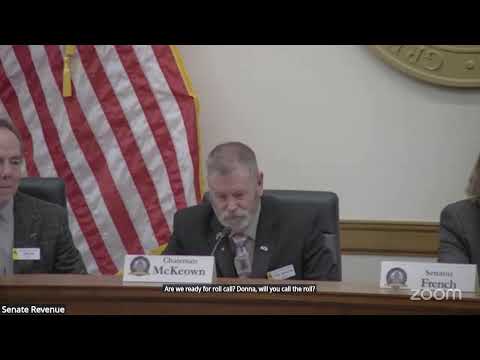
The committee voted by roll call. The motion to advance the bill was moved by Senator Pappas and seconded by Senator Eyde. The recorded vote: Senator Case — No; Senator French — Aye; Senator Eyde — Aye; Senator Pappas — Aye; Chairman McEwen — Aye. The committee chair announced, "Senate File 163 is passed the Revenue Committee." The bill will move to the next stage of the legislative process.
Ending: Supporters stressed administrative relief for small retailers and the Department of Revenue; opponents warned of potential public‑health and long‑term fiscal consequences if excise revenues and price disincentives for youth use are removed. The committee record includes requests for clarifying statutory language, and Department of Revenue staff noted the bill contains cleanup provisions and raised implementation questions that may be addressed in subsequent drafting or floor debate.