Get Full Government Meeting Transcripts, Videos, & Alerts Forever!
Get email alerts on the Central Bank Digital Currency topic
No spam. Unsubscribe anytime.
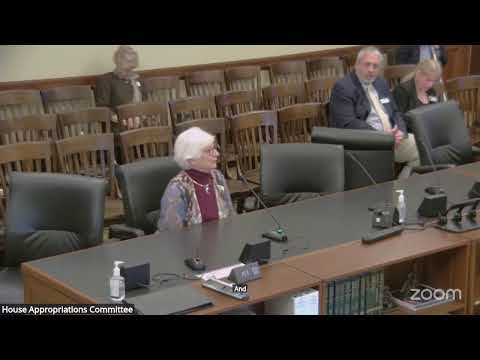
Appropriations committee backs bill to bar state role in central bank digital currencies
Summary
The House Appropriations Committee voted to advance House Bill 264, which would prohibit Wyoming state agencies from accepting or implementing central bank digital currencies; the measure passed the committee 5–1 with one member excused and will move to the floor.
The House Appropriations Committee voted to advance House Bill 264, a measure that would bar Wyoming state agencies from accepting or implementing central bank digital currencies, following a presentation from Vice Chair Representative Singh.
The bill’s proponent framed the legislation as a defense of individual financial sovereignty. "A CBDC is not just another form of digital currency. It is an entirely new financial control system," Representative Singh said, arguing that a central bank digital currency would allow "total financial surveillance" and governmental control over how citizens spend money.
The bill would prohibit state agencies from accepting CBDCs as payment and prevent the use of taxpayer dollars to implement or support CBDC infrastructure, according to Representative Singh’s presentation. He said the measure is intended to signal Wyoming’s opposition to centrally controlled digital currencies and would not conflict with the state’s existing stable‑token project. "The stable token is not a central bank digital currency," he said, adding that participation in the state token would be voluntary.
Committee members asked whether the bill could interfere with other forms of payment or existing state projects. Representative Sherwood asked whether the bill would create a broader list of prohibited payment forms; Representative Singh and other committee members clarified that the bill would prohibit state assistance in implementing a CBDC but would not change current rules requiring federally issued legal tender for payment of state obligations.
There was no public testimony recorded on the bill. After committee discussion, a member moved the bill "do pass"; the motion was seconded by Representative Haroldson. The roll call recorded five ayes (Representative Angelos, Representative Hamilton, Representative Pendergraft, Representative Smith, Chairman Bair), one no (Representative Sherwood) and one excused (Representative Olamand). The committee chair said the bill will go to the floor and asked Representative Singh to manage it there.
The measure, as presented, focuses on preventing state agencies from helping implement a federal CBDC or spending state funds on CBDC infrastructure. It does not adopt or authorize alternative state currency schemes, and Representative Singh repeatedly distinguished the proposed prohibition from voluntary state or private token projects.
With the committee approval, the bill will be scheduled for floor consideration; no floor date was announced in the committee record.