
City staff says juvenile disparities report moving to implementation; community members press for more transparency on street‑level policing data
Get AI-powered insights, summaries, and transcripts
Sign Up Free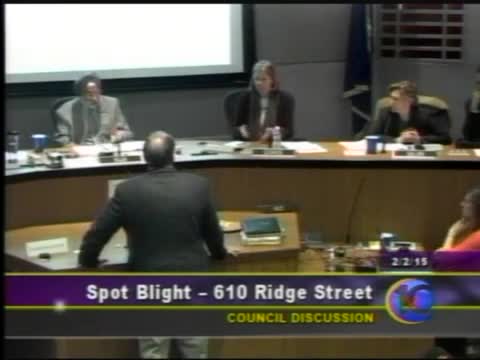
Summary
City staff updated council on implementation of the Disproportionate Minority Contact (DMC) task force recommendations, describing training, policy review and community forums; public commenters and some council members urged release of more police stop data and narratives and recommended an adult-system study be scoped for the next budget cycle.
City staff presented the Charlottesville Disproportionate Minority Contact (DMC) and racial‑disparities task force update on Feb. 2, summarizing progress on multiple implementation tasks and asking council for direction about next steps, including whether to expand study work into the adult criminal justice system.
Mike Murphy, the city staff lead for the DMC implementation, told council the task force has moved from producing a report to active implementation. He reported five working subcommittees are now operating—community education and support, data, policy, training and schools—and outlined near‑term activities: community forums (one scheduled for that week in Westhaven and another in Friendship Court), an upcoming May training for officers run by Strategies for Youth, a juvenile court guide being finalized for publication and a case‑file research effort to better understand service needs. Murphy said juvenile justice involvement in Charlottesville has fallen dramatically over the past decade and that staff are focusing resources on prevention and targeted services for the small group of youth who account for repeat involvement.
Murphy told council the task force needs guidance on several items: whether council wants the DMC group to pursue an independent review of police stop‑and‑frisk records (including narrative reports), whether the group should initiate a separate, larger adult‑system study and how to coordinate study or service work already conducted by other interagency bodies.
Community members urged faster, more transparent action on street‑level policing. Brandon Collins, a Charlottesville resident and DMC task force member who also spoke during the meeting’s public comment period, said the task force’s pace had been too slow and that "the police and other agencies on the task force seem too concerned with defending their departments rather than taking bold and significant steps to change the system." Several other residents asked council to press for release of stop data; staff and the city attorney noted legal constraints, particularly for juvenile records, and recommended a discussion of what may be legally released and whether some information should be shared with redactions or via an independent review.
Murphy gave examples of concrete implementation steps under way: two community forums with 45–60 attendees, work to revise juvenile court notice language so it is clearer for families, and a plan to provide “train‑the‑trainer” cultural‑competency/best‑practice training so the work continues as officers rotate through the force. He also flagged that an adult‑system study would be larger in scale and cost — requiring separate scoping, interagency agreement and possible budget requests or grant funding.
Council members asked staff to provide a short written outline of the options and likely costs for (1) an independent review of police data, (2) a targeted adult‑system study, and (3) further gap analyses of mental‑health and youth‑services needs that overlap with the CPMT/Comprehensive Services Act processes. Several councilors also asked staff to prepare a simple set of success metrics so the task force can report measurable progress at future meetings.