Get Full Government Meeting Transcripts, Videos, & Alerts Forever!
Get email alerts on the Governmental Purpose Property Tax topic
No spam. Unsubscribe anytime.
Revenue committee debates and amends bill defining "governmental purpose" for property-tax exemptions; final outcome unclear at vote
Summary
Committee debated Senate File 185 to define "governmental purpose" for property-tax exemptions and to require sale or findings for long-unused public land; amendments added to protect parklands/historic sites, extend vacant-hold period and delay effective date, but a late vote-change created ambiguity in the final tally.
The Senate Revenue Committee spent the bulk of its meeting debating Senate File 185, a broad rewrite that would define "governmental purpose" for property-tax exemptions, restrict certain government-owned commercial or recreational uses from exemption and require long-unused public land to be offered for sale or justified by documented cause.
Senator Case, sponsor of the bill, told the committee the measure grew out of work after a Wyoming Supreme Court ruling that called into question what counts as a governmental purpose. "The Constitution has a list and says land owned by the United States government, if used for a governmental purpose," Case said, and the bill aims to clarify the statutory definition to reduce litigation.
The bill's core text would define "governmental purpose" as when a majority of a property is used for health, safety and welfare, education, transportation, infrastructure or administrative uses, and it would explicitly exclude many commercial or recreational activities — for example, "property used for recreation, including cabin rentals, campgrounds, bowling alleys, movie theaters, shooting ranges, and sports complexes" — and property leased for private commercial operations.
Brenda Henson, director of the Wyoming Department of Revenue, told the committee the rewrite is intended to provide consistent, statewide guidance to assessors. "When you have governmental entities that...go into competition with the private sector, at what point does a governmental purpose cease to exist?" Henson asked. She cautioned the committee that the bill, as drafted, would not create an immediate exemption for state grazing leases and that assessors are preparing to value some leases for 2025 unless the Legislature acts.
Multiple stakeholders testified. Glenn Januska, director of the Casper–Natrona County International Airport, warned the committee that applying the bill as drafted could tax airport leases and facilities that finance airport operations. He said his airport leases more than 200 agreements, including airline counters and rental-car space, to pay for maintenance and operations and that taxing those leases could make the airport reliant on county subsidies. "This revenue is what basically keeps us off of the tax roll and makes us self-sufficient," Januska said.
Keith Kennedy, representing the Wyoming Wheat Growers, said many agricultural leases already assign property taxes on improvements to the lessee and that comparing private and state leases is not straightforward. Laramie County assessor Todd Ernst generally urged clearer guidance on what constitutes a governmental purpose.
Committee members debated several policy options. Some members argued for excluding state trust grazing leases from taxation or for a payment-in-lieu-of-taxes arrangement; others warned that carving exceptions could prompt separate litigation. Senator Case proposed, and the committee adopted, three amendments during the hearing: adding "park lands and historic sites" to the list of infrastructure uses; lengthening the period before forced sale or disposition of unused public property from 10 to 20 years; and delaying the bill's effective date from January 1, 2026, to January 1, 2027, to allow additional interim work.
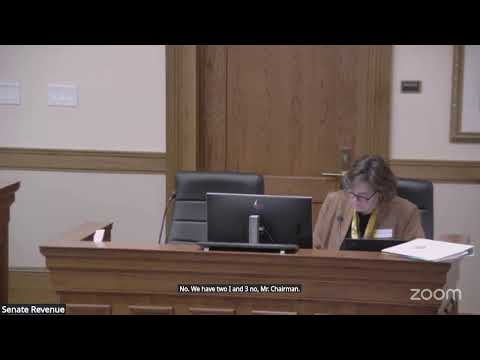
After amendment and debate the committee took a roll-call vote. The clerk initially announced that the bill "has failed to make it out of the revenue committee." Shortly after that announcement a senator asked to change a recorded vote; the clerk then reported a revised tally of three aye and two no. The transcript does not include a final clerk declaration altering the earlier statement that the bill failed. The committee did not adopt additional substantive language on agricultural leases or an immediate exemption for 2025 during the hearing.
Supporters of the restructuring told the committee the change would reduce litigation risk and create uniform administration of exemptions across counties. Opponents and concerned stakeholders said the language as drafted could reach widely varying uses — from airport leases and industrial pipe yards to grazing leases and recreational facilities — and asked for more study and precise exceptions.
Committee members agreed to pursue further work on the topic in interim study and separate task-force proposals already underway; several members publicly urged additional committee or interim work before taking final legislative action.