Get Full Government Meeting Transcripts, Videos, & Alerts Forever!
Get email alerts on the Gaza Humanitarian Medical topic
No spam. Unsubscribe anytime.
WHO, OCHA and UN say medical capacity is being expanded in Gaza; possible first medical evacuations via Rafah
Summary
UN agencies report WHO deliveries of dignity kits and plans to expand hospital capacity in Gaza, deployment of surgical teams, and that medical evacuations via Rafah may begin soon; agencies warn needs for tents, shelter and emergency supplies remain acute.
United Nations agencies said they have increased medical and humanitarian support inside the Gaza Strip, while noting that access and supplies remain constrained.
World Health Organization officials reported delivery of dignity kits for more than 26,000 women and girls in northern Gaza and said plans are under way to expand Al Shifa Hospital in Gaza City by 200 beds. WHO said two surgical teams were being deployed to support trauma and surgical capacity at hospitals in Gaza City and that discussions were in final stages to set up a prefabricated health facility there.
OCHA said humanitarian partners are expanding operations in North Gaza and that visits to neighborhoods such as South Ramal and Tel Al Heiwa found returning households in need of water, kitchen supplies, bedding and cleaning items. OCHA reported that roughly 500,000 people have returned to northern areas and that the ceasefire was holding at the time of the briefing; partners also reported smaller-scale movements from north to south.
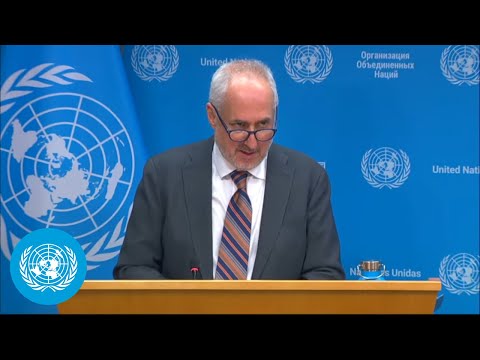
On medical evacuations, the UN spokesperson said that after the secretary-general met with four U.S. doctors who returned from Gaza, “there may be a first round of medical evacuations tomorrow, through Rafah,” and that the UN will continue to push for more medical evacuations. The spokesperson said the secretary-general was “very moved” by first-hand accounts from the doctors.
Why it matters: enhanced hospital capacity and medevac corridors could save lives, but constrained entry points and shortages of tents, tarpaulins and other shelter items limit civilians’ ability to return safely.
UN officials said WHO is working with the Palestinian Ministry of Health to assess and restore facilities, and that two surgical teams were being deployed to Ali Arab and Al Quds (public aid) hospitals in Gaza City. WHO also said it is exploring prefabricated facilities to increase surge capacity.
Reporters asked whether Rafah would fully open; the spokesperson said UN agencies do not have a monitoring role for entries and exits and that Rafah’s status was a matter for local authorities and other actors managing border access. UN agencies reiterated that the main constraints are access, logistics and safe passage for people and supplies.
The UN said humanitarian partners are continuing to provide first aid and psychological support at monitoring points for people moving south to north and to expand aid operations where access allows.