Get Full Government Meeting Transcripts, Videos, & Alerts Forever!
Get email alerts on the Drc Humanitarian topic
No spam. Unsubscribe anytime.
UN: Fighting around Goma displaces roughly 300,000; agencies report 700 killed in recent assessments
Summary
UN humanitarian and human-rights agencies report heavy civilian toll, mass displacement and strained services around Goma, Democratic Republic of the Congo; OHCHR documents summary executions and forced conscription in areas held by the M23 armed group.
The United Nations said humanitarian agencies are reporting large-scale displacement and mounting casualties around Goma, Democratic Republic of the Congo, after renewed fighting that has disrupted transport and local services.
UN humanitarian staff cited assessments by the World Health Organization and partners that, between Dec. 26 and the day before the briefing, 700 people had been killed and about 2,800 injured and were receiving treatment in health facilities. The agencies warned those figures are expected to rise as more information becomes available.
The UN’s humanitarian and resident coordinator for the DRC, Bruno Lamarqui, said in a statement that “Goma is now facing the devastating consequences of the hostilities with massive humanitarian needs and severely strained response capacities.” He and UN partners reported the city’s airport remains closed and that access by road is extremely limited, with some movement possible only via Rwanda.
Why it matters: large numbers of displaced people, damaged or occupied civilian infrastructure and interruptions in water and health services raise the risk of disease outbreaks and impede delivery of aid.
UN humanitarian teams and partners including OCHA, WHO and the International Organization for Migration (IOM) said displacement sites on the outskirts of Goma have been partially or completely emptied. IOM reported that displacement locations that had hosted civilians were now largely vacated; the agencies said displaced men, women and children urgently need shelter, food, clean water, medical assistance and protection services.
UN personnel warned that access to safe drinking water in Goma remains cut off in some areas, forcing people to use untreated water from Lake Kivu, increasing the risk of waterborne disease. WHO said it and partners found water and health services still operating at some sites visited near Bulengu and Lusagala, but that conditions were “dire.” The agencies also listed urgent needs for blankets, mats and cooking utensils.
The UN human-rights office (OHCHR) reported that its teams have documented summary executions by the M23 armed group in areas under the group’s control in South Kivu, including Minova, and said schools and hospitals had been occupied. OHCHR said the group also subjected civilians to forced conscription and forced labor. The office reported it has documented instances of conflict-related sexual violence by government forces and allied fighters and said it is verifying additional reports.
The IOM and other UN speakers described roughly 300,000 internally displaced people associated with the recent movement around Goma; UN staff cautioned the figure is approximate and that many displaced persons have dispersed during fighting, making precise counts difficult. A UN briefing participant said that once populations disperse amid combat, it is much harder for humanitarian teams to locate and assist them.
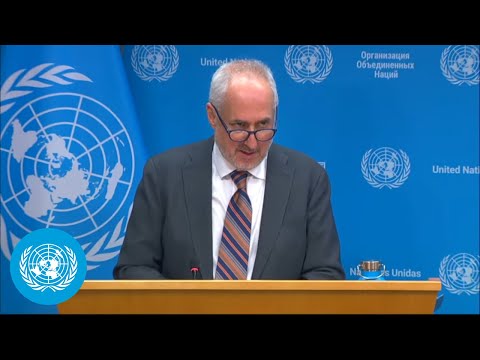
On staff safety, the spokesperson said UN personnel were being moved out of Bukavu as a precaution while teams seek to balance staff security with continuing assistance to civilians.
The UN called on all parties to protect civilians, ensure humanitarian access and allow delivery of lifesaving goods and services. Agencies warned that without urgent action, health and water system interruptions could lead to additional deaths.
Looking ahead: UN agencies said they will continue field assessments and try to re-establish aid delivery as access allows; they urged the international community to scale up support for response operations.