Get Full Government Meeting Transcripts, Videos, & Alerts Forever!
Get email alerts on the Medical Ethics Conscience Protections topic
No spam. Unsubscribe anytime.
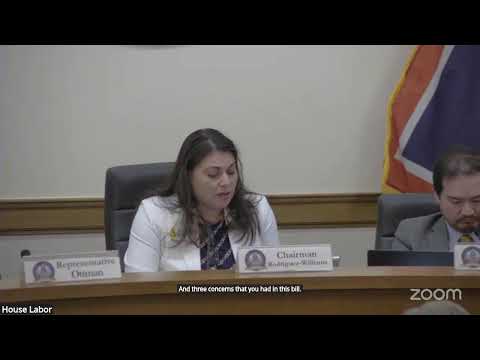
Committee hears Medical Ethics Defense Act; sponsors and opponents clash over scope; bill carried over for further work
Summary
House Bill 222, the Medical Ethics Defense Act, would broaden conscience protections for health-care professionals and institutions; the committee carried the bill over for amendment after testimony from supporters and opponents.
House Bill 222, introduced for committee consideration by Representative Otman, would expand statutory protections for conscience-based refusals by health-care professionals and institutions. Backers said the measure protects religious and moral liberty for doctors, nurses and other clinical staff and prevents employers or regulators from compelling participation in procedures that violate an individual’s conscience.
Sponsor and presenters described the bill as procedure-limited and not patient-directed. Dr. Dean Bartholomew, a family physician who testified in support, said the measure would protect clinicians and trainees: “Every American should have the freedom to live according to their ethical and religious beliefs,” he told the committee. Co-presenter Gregory Shuffin (online) and other backers said the statute would apply to discrete procedures rather than removing care for patients and that similar statutes have been enacted in other states.
Supporters argued the protections would preserve conscience rights for a wide range of clinical staff, not only physicians, and could help recruit practitioners to Wyoming. Nathan Winters of the Wyoming Family Alliance and other private citizens urged passage; Bill Winnie recounted a historical example of a religious hospital changing ownership after being required to provide services it opposed.
Opponents — including the Wyoming Hospital Association, Cheyenne Regional Medical Center and a resident physician — said the draft is too broad and could conflict with existing duties to provide emergency care. Kevin Bonhamblest, executive director of the State Board of Medicine, recommended changing a proposed evidentiary standard from “beyond a reasonable doubt” to “clear and convincing evidence” to better align with licensing standards. Tim Thornell, CEO of Cheyenne Regional Medical Center, said federal statutes like EMTALA (42 U.S.C.) already require hospitals to provide emergency care and warned that a broadly worded conscience statute could put single-provider rural facilities at risk if staff refuse services during emergencies.
A resident physician at the University of Wyoming program testified in opposition, saying the bill “lacks protection and transparency for patients” and could allow providers to refuse a wide range of treatments while not disclosing the basis for that refusal to patients. The resident asked that patient interests and shared decision-making be preserved in any statutory change.
Committee action and next steps: The committee heard extensive public comment and questions from members. Committee staff and members discussed statutory cross-references, potential limits for emergency care, and interactions with existing Wyoming law addressing health-care decisions (the transcript cites W.S. 35-22-408) and federal law. At the end of the hearing the committee moved to carry the bill over for additional work and amendment; Representative Guggenmaz moved the carryover and Representative McCann seconded. The chair announced the bill would be carried over until the next committee meeting on Monday for further drafting and amendment.
What to watch: Committee members asked staff to consider narrower, procedure-specific language and to reconcile proposed language with federal obligations and existing Wyoming statutes that address conscience and health-care directives. Several witnesses asked for clearer definitions and limits (for example, narrow procedure-based protections and express exclusions for emergency medical obligations). The committee did not take a final vote on HB 222.