Get Full Government Meeting Transcripts, Videos, & Alerts Forever!
Get email alerts on the Medical Debt Credit Reporting topic
No spam. Unsubscribe anytime.
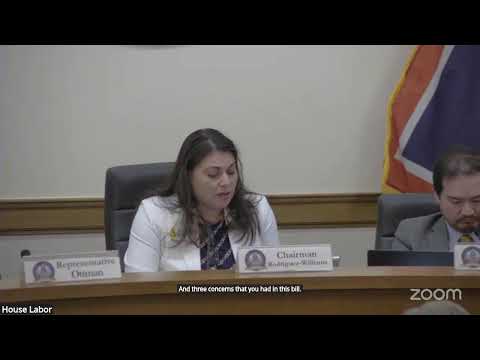
Wyoming committee hears bill to bar medical debt from credit reports; amendment passes, full bill fails in committee
Summary
House Bill 195, proposed by Representative Provenza, would bar medical facilities and collection entities from reporting medical debt to credit reporting agencies; an amendment to redefine medical debt was adopted but the committee voted 3–5 (one excused) against advancing the bill.
House Bill 195, proposed by Representative Provenza, would prohibit medical facilities and collection entities doing business in Wyoming from reporting medical debt to credit reporting agencies for use in consumer credit reports. The sponsor said the measure aims to prevent medical bills from lowering people’s credit scores and cited personal experience: “My father died in September of 2024 after refusing an ambulance because of his concern about debt,” Representative Provenza told the committee.
The bill would add a new provision to Wyoming’s consumer protection code (Title 40, Chapter 12) with definitions for “medical debt,” “collection entity” and “credit reporting agency,” and would allow courts to impose civil penalties on violators rather than automatically canceling the debt. Representative Provenza said the bill is narrow and limited to reporting to credit agencies; it would not change providers’ other collection tools.
Why this matters: Medical debt in collections is widespread in Wyoming, the sponsor said, and removing such data from credit reports could lift credit scores on average by about 20 points and improve access to housing and loans for affected households. Supporters at the hearing — including patient-advocacy groups and AARP Wyoming — said medical debt frequently arises from emergencies and high out-of-pocket costs and is distinct from consumer choices like auto loans.
Public testimony and stakeholder positions diverged. Supporters included AARP Wyoming, the Leukemia & Lymphoma Society and several residents who described large, unexpected bills that reduced financial opportunity. Tom Laycock of AARP said older adults are disproportionately affected and urged exclusion of medical debt from credit reports. Adam Zahn of the Leukemia & Lymphoma Society said, “Medical debt is fundamentally different from other types of debt,” and described high costs for serious illnesses.
Opponents or neutral stakeholders raised operational and federal-preemption concerns. Dave Pickard of the Receivables Management Association International proposed an amendment to standardize the definition of medical debt; Representative Yin moved that amendment and the committee approved it by voice. Zachary Taylor of the Consumer Data Industry Association (representing consumer reporting agencies) opposed the bill in principle, saying it “would prohibit the reporting of medical debt to consumer reporting agencies” and warning of federal preemption under the Fair Credit Reporting Act and pending Consumer Financial Protection Bureau regulations. Taylor also noted that major consumer-reporting companies already limit reporting for small or recent medical debts and debts in dispute.
Committee action: Representative Yen moved the bill out of committee; Representative Guggenmaz seconded. The committee adopted the amendment offered by the Receivables Management Association but, on the roll-call vote for the bill as amended, the motion failed. The clerk reported the final tally as three yes, five no, and one excused, so the measure did not advance from the committee at that time.
What the bill would and would not do: The measure targets only reporting to credit agencies and does not eliminate providers’ ability to collect by other means, the sponsor said. The bill’s text excludes credit-card balances charged under ordinary credit-card accounts from the definition of medical debt, but an amendment clarified the scope of covered debts. The bill would permit courts to impose civil penalties for violations.
Next steps: Because the committee rejected the motion to advance the bill, HB 195 did not move forward from this session of the committee. Interested parties said they may continue to engage with lawmakers about narrower fixes, federal regulatory changes, or alternative consumer protections.
Ending: The hearing included detailed explanations of bill language, cross-examination by multiple committee members and around a dozen public commenters in person and online. Committee members asked how the change would affect small providers’ ability to collect unpaid bills; Representative Provenza and supporters replied that court collection and payment plans would remain available and that the bill’s goal was to protect credit scores, not to erase obligations.