Get Full Government Meeting Transcripts, Videos, & Alerts Forever!
Get email alerts on the Transparency State Payments topic
No spam. Unsubscribe anytime.
House panel advances bill to codify state auditors online payment portal
Summary
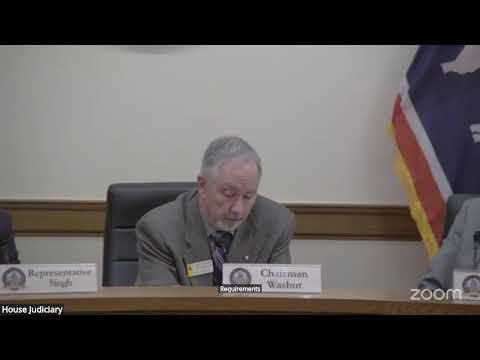
Representative Laurie Bratton introduced House Bill 166 to the House Judiciary Committee, asking lawmakers to codify the State Auditors public payments website and require ongoing posting of state expenditures.
Representative Laurie Bratton introduced House Bill 166 to the House Judiciary Committee, asking lawmakers to codify the State Auditors public payments website and require ongoing posting of state expenditures.
"I'm here to introduce House Bill 166, State Auditor Payment Transparency," Bratton said, describing the portal as a way for residents to "see how the state spends our money." The bill would add a new duty to the auditors statutory responsibilities to publish payments, subject to state and federal law, and require posting within 30 days of a transaction and retention of posted records for at least five years.
The bill would formalize work the auditors office has already done through the public website (referred to in testimony as yopen.gov). State Auditor Kristi Racines told the committee the site was launched in July 2019 and has been expanded since. Racines said the portal reduced public-records requests by making payment data directly searchable and downloadable and described the ongoing operating cost as minimalabout $1,600 to $1,700 per year for hosting and domain-related fees.
Racines and the bill sponsor said the site publishes vendor payments drawn from the States financial system and excludes information that state or federal law requires to remain confidential. The committee heard examples of excluded categories that the auditors office already filters out, including Medicaid and other assistance payments, confidential law-enforcement expenditures, victim compensation claims, and certain personnel and disability claims.
Racines described the technical and review work required to prepare the data for public posting. The auditors office reviewed the states chart of accounts with agencies and the attorney generals office to identify expenditure codes that should be restricted. Racines said the site is currently updated close to daily and that during the COVID-disbursement period traffic jumped sharply.
Several committee members praised the portal as a low-cost transparency tool. Steve Johnson, a former legislator who testified in support, said he and others use the site to track state spending. Kevin Lewis of Equality State Taxpayers and American Transparency recounted prior litigation over access to the states checkbook and said codifying the portal would avoid future lawsuits.
Committee business: Representative Kelly moved to advance the bill; Representative Webb seconded. On roll call the committee reported eight ayes and one excused, advancing the measure to the floor.
Clarifying details from testimony included that the site covers expenditures recorded in the Wyoming Online Financial System, the office retains posted data for at least five years under the bill, and that the auditors office currently operates the portal at a roughly $1,600$1,700 annual cost. In a snapshot cited to the committee, the auditors office said a recent monthtodate download contained over 96,000 transactions of varying amounts.
The measure does not change the substantive confidentiality rules that apply; the bill language conditions publication "subject to state and federal law," and witnesses said those protections would continue to block legally protected categories from public posting.
The committee did not adopt substantive amendments prior to advancing the bill. The sponsor and auditor said they welcome technical suggestions from stakeholders and legislative services as the bill moves forward.