Get Full Government Meeting Transcripts, Videos, & Alerts Forever!
Get email alerts on the Charter Review topic
No spam. Unsubscribe anytime.
Richardson charter review panel recommends $1,200 monthly pay, residency rule and procedural updates; council sets timeline and OKs economic incentive deal
Summary
The Richardson Charter Review Commission presented its final report to the City Council, recommending changes including raising council pay to $1,200 per month, adding a one‑year district residency requirement and updates to petition, recall and ethics provisions.
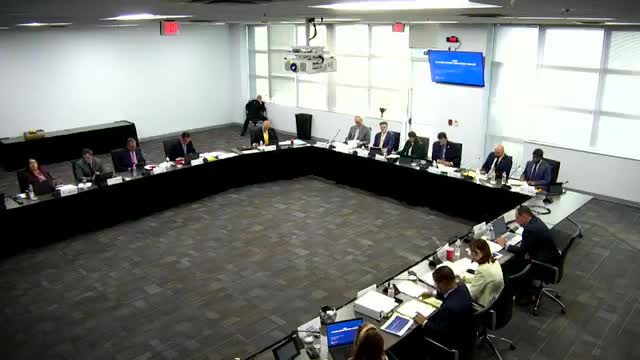
The Richardson Charter Review Commission presented its final report to the City Council on Monday, recommending a package of charter changes that includes raising council pay to $1,200 per month, adding a one‑year district residency requirement, clarifying recall and initiative procedures and several procedural modernizations.
The commission’s report, delivered by Chairman Bright of the Charter Review Commission, outlines changes the panel says are intended to bring the charter into alignment with state law, clarify ambiguous provisions and modernize language for electronic communications. "To the council, we appreciate the opportunity to serve the citizens of Richardson and provide the final report and recommendations of the 20 25 charter review commission," Chairman Bright said during the presentation.
Why it matters: If the City Council adopts the commission’s recommendations and places them before voters, the changes could alter how candidates qualify for district seats, how initiative and recall petitions are verified, the city’s ethics and continuity provisions and how the council is compensated.
Major recommendations
- Council compensation: The commission recommended replacing the existing per‑meeting stipend (previously $100 per meeting) with a fixed monthly payment of $1,200 and retaining reimbursement for necessary expenses. The panel said the change recognizes work outside formal meetings and that the figure was benchmarked against other North Texas cities.
- Residency for district candidates: The commission recommended adding a one‑year residency requirement for candidates running in a particular council district (references in report: sections 4.02 and 4.04).
- Initiative and petition technical changes: The commission kept the existing threshold for citizen initiatives at 10% of qualified voters (measured against the number of qualified voters on the date of the last regular municipal election) but revised petition technical requirements to include either a voter registration number or date of birth for signatories to conform with state law.
- Recall: The commission recommended adding specificity on the grounds for recall petitions (no new exhaustive list was adopted by the commission; the recommendation asks for clearer standards in the charter).
- Incentives and participation by appointees: The commission recommended allowing the City Council, by ordinance, to permit appointed members of boards and commissions to participate in city economic incentive programs; a similar change for city employees was discussed but not recommended unanimously (the commission provided language council could adopt if it chose to include employees).
- Ethics, continuity and administrative edits: The report recommends (a) adding a requirement to adopt and periodically review a code of ethics for elected and appointed officials (article 18.1), (b) adding a continuity of government provision for disasters (18.09), and (c) allowing the council to correct non‑substantive charter errors (renumbering, spelling, punctuation) by ordinance rather than calling an election (section 19.06).
Public comment and commission process
Two members of the public addressed council before the commission’s presentation. Lisa Kupfer, a Richardson resident and recent council candidate, urged the council to increase civic engagement and to promote women’s leadership in city government. "Over the next 2 years, I truly hope that you as council members will match your words and chambers and out in the community with your actions," Kupfer told the council.
Justin Neff, a Richardson resident who said he attended every Charter Review Commission meeting, praised the commission’s process and urged council to use the report as a baseline for what to place on the ballot. "This commission didn't just allow for public comments. They valued the input we gave them," Neff said.
Deliberation, staff support and next steps
City Manager Don Magner and staff told council they will post a redlined charter showing the commission’s suggested edits in advance of council deliberations. Magner outlined a schedule for council action: the council has reserved time on June 9 and June 16 for deliberations; a public hearing was scheduled for June 23; staff will post draft propositions on July 21; and staff has set an internal target to have the council call an election on Aug. 11 if it chooses to do so. The commission also noted the council will need to decide by Aug. 18 whether to place propositions on the November ballot.
Legal and insurance questions
Council members asked the commission and city attorneys about a pair of accountability and liability topics discussed by the commission: a potential surety bond requirement and public official liability (errors‑and‑omissions or directors-and‑officers) coverage. Assistant city attorney Joe Garfida and staff said the city carries errors‑and‑omissions type coverage for management positions but that deliberate, intentional wrongful acts would fall outside typical coverage; commissioners discussed whether a surety bond (or other protections) should apply to certain offices. City staff agreed to provide a written comparison of current coverage and proposed surety options for council review before further action.
Votes at a glance
- Project Rodeo economic incentives: After an executive session on economic development, Council Member Justice moved that the city manager be authorized to negotiate and execute an agreement with "Project Rodeo" to provide economic development incentives in accordance with direction given in executive session. Council Member Dorian seconded. The motion passed 7–0.
What remains undecided: The commission provided detailed recommendations but did not itself change the charter; the City Council must decide which recommendations, if any, it will place before voters. Several recommendations (for example, whether to include employees in incentive‑program eligibility) were presented with optional wording for council consideration rather than mandated changes.
The presentation and accompanying report conclude the Charter Review Commission’s 11‑meeting process. Council members thanked the commission members and staff for the work and scheduled follow‑up deliberations and public hearings as outlined by staff.