Get Full Government Meeting Transcripts, Videos, & Alerts Forever!
Get email alerts on the Land Use topic
No spam. Unsubscribe anytime.
Fairfax planning staff propose new land-use structure, suburban village centers and stricter guidance for data center rezonings
Summary
Staff reorganized the land use element into eight categories, proposed a new "suburban village centers" classification, added objectives on urban design and equity, expanded repurposing guidance for office-to-residential conversions, and proposed LEED Gold and nine-topic criteria for data centers seeking rezoning or special exception approvals.
Fairfax County planning staff presented a reorganized land use element that folds former appendices into the main policy text, introduces a new "suburban village centers" classification, strengthens urban-design and equity objectives, and proposes criteria for data centers that would apply to rezoning and special-exception cases.
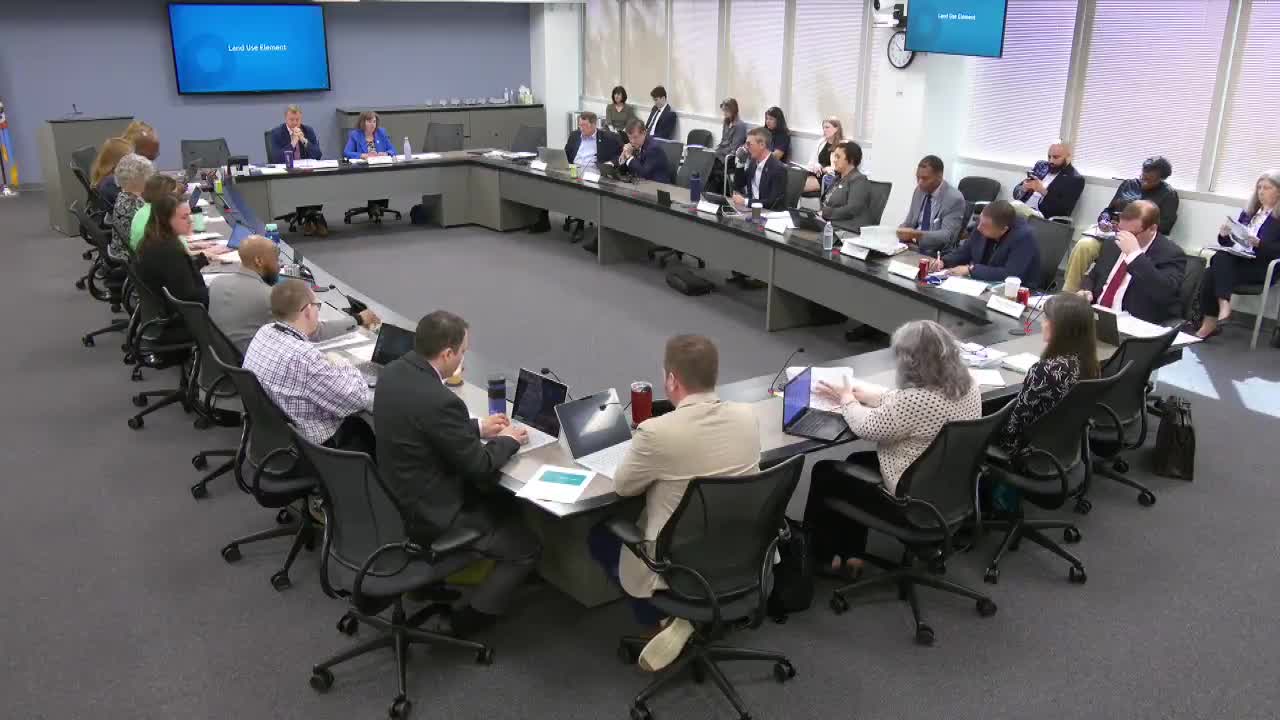
Michael Burton, a co-lead on the land use element, told the Land Use Policy Committee that the draft collapses earlier structure into eight broad categories and integrates 14 previously separate appendices into the element as policies and development criteria. "Where appropriate, appendix content was incorporated into policies or use specific guidance," Burton said.
Staff described the new suburban village centers concept as a classification for commercial nodes that serve adjacent lower-density neighborhoods and that could be appropriate for mixed uses including multifamily or townhouses; staff cited Graham Park Plaza, the Pan Am Shopping Center, and the Hilltop Village Center as examples of sites that fit the functional description even though the classification is not mapped.
The update also adds two equity-focused objectives with five supporting policies to address displacement, access to opportunity and culturally appropriate economic development.
On office repurposing, staff said they revised policies to allow limited increases in gross floor area or building height to facilitate conversions in some cases, and to allow additional residential density outside the footprint of repurposed buildings where appropriate. The change is intended to increase flexibility and reduce the need for plan amendments, staff said.
Data centers drew sustained attention. Burton said the land use element incorporates work from the January 2024 data center report and zoning changes presented to the board March 12, 2024 and adopted in September 2024. The draft proposes nine topic areas for rezoning or special-exception criteria for data centers, including a staff recommendation that data centers seeking rezoning or special exception "achieve a standard of LEED Gold." Proposed criteria also address energy and water demand, coordination with utilities, monitoring of cooling-system discharge, water-quality measures, open-space and tree-preservation targets, stormwater treatment beyond code, and noise mitigation measures that exceed minimum code limits.
Several supervisors expressed concern that recommended data-center criteria may be more prescriptive than the county's zoning ordinance and urged close coordination with industry and utility providers. The committee chair and Supervisor Smith both said countywide policy language should generally remain high-level, with technical, enforceable requirements handled through zoning or other regulatory tools.
Supervisor Alcorn raised questions about wording that references "forecasted population and employment growth," warning that the term "forecasted" can be circular because population forecasts derive from the comprehensive plan itself. Multiple supervisors requested clearer links between areas targeted for growth and measures to make those areas "transit ready," integrate active-transportation infrastructure and align green/open-space strategies with redevelopment goals.
Staff said the proposed land use changes aim to provide flexibility to respond to changing market conditions and to make it easier to repurpose underused buildings. Staff invited additional feedback through the project webpage and the public input email address.
Ending
Board members requested follow-up work: closer review of language where the new text may be more prescriptive than past language, additional engagement with data-center industry and utilities on proposed criteria, and clarification of how the new categories and objectives would be implemented in area plans.