Get Full Government Meeting Transcripts, Videos, & Alerts Forever!
Get email alerts on the Governance topic
No spam. Unsubscribe anytime.
Barron County corporation counsel reviews open meetings law, closed-session rules
Summary
County corporation counsel walked supervisors through Wisconsin open meetings statutes, including permissible closed-session exemptions, notice requirements and risks of walking quorums.
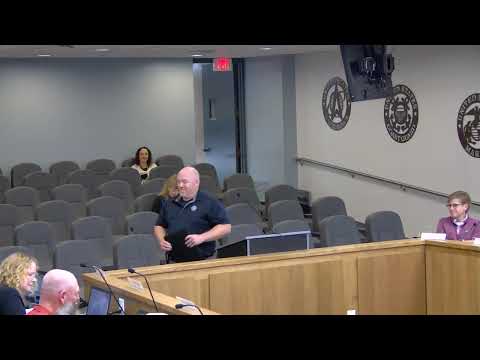
County Corporation Counsel gave a detailed overview of Wisconsin’s open meetings law at the Barron County Board of Supervisors meeting on May 19, reviewing when closed sessions are permitted, required notice content and how electronic communications can create unintentional “meetings.”
The counsel said the law allows closed sessions for narrowly defined exemptions including employee discipline and evaluations (statute cited as 19.85(1)(b) and (c)), competitive bargaining and purchase negotiations (19.85(1)(e)), damaging personal information (19.85(1)(f)), and consulting with legal counsel about litigation strategy (19.85(1)(g)). The counsel emphasized that the agenda notice must describe the matter and cite the specific statutory exemption in sufficient detail to allow the public to determine whether a closed session is authorized.
On reconvening from closed session, the counsel explained that bodies must record the motion, second and vote to go into closed session and that the meeting “cannot reconvene in open session for 12 hours” unless the original notice included an intent to return to open session. The counsel also cautioned that many closed-session discussions should remain confidential even after the rationale for secrecy has passed, particularly legal strategy and personal medical or disciplinary information.
The counsel warned about “walking quorums,” where a series of gatherings or individual communications among members can amount to an unnotified meeting. He said electronic messages, text, email or sequential phone contacts can create a meeting if a sufficient number of members effectively determine the body’s course of action outside a noticed meeting. The counsel cited the Showers case (Wisconsin Supreme Court) and related court of appeals guidance in his explanation.
Ending: The counsel invited questions and said the office is working to align the county’s rules and procedures with a Wisconsin Counties Association template and will return with any proposed changes.