Get Full Government Meeting Transcripts, Videos, & Alerts Forever!
Get email alerts on the Water And Sewer Rates topic
No spam. Unsubscribe anytime.
DeKalb officials propose 10% annual water and sewer rate hikes to fund multi‑billion‑dollar repairs
Summary
DeKalb County officials on Feb. 1 outlined a proposal to raise water and sewer rates by 10% annually for 10 years to fund a multiyear capital program intended to complete federal consent‑decree work and modernize aging transmission mains, treatment facilities and neighborhood pipes.
DeKalb County officials on Feb. 1 outlined a proposal to raise water and sewer rates by 10% annually for 10 years — the "10 by 10" plan — to fund a multiyear capital program intended to complete federal consent‑decree work and address decades of aging infrastructure.
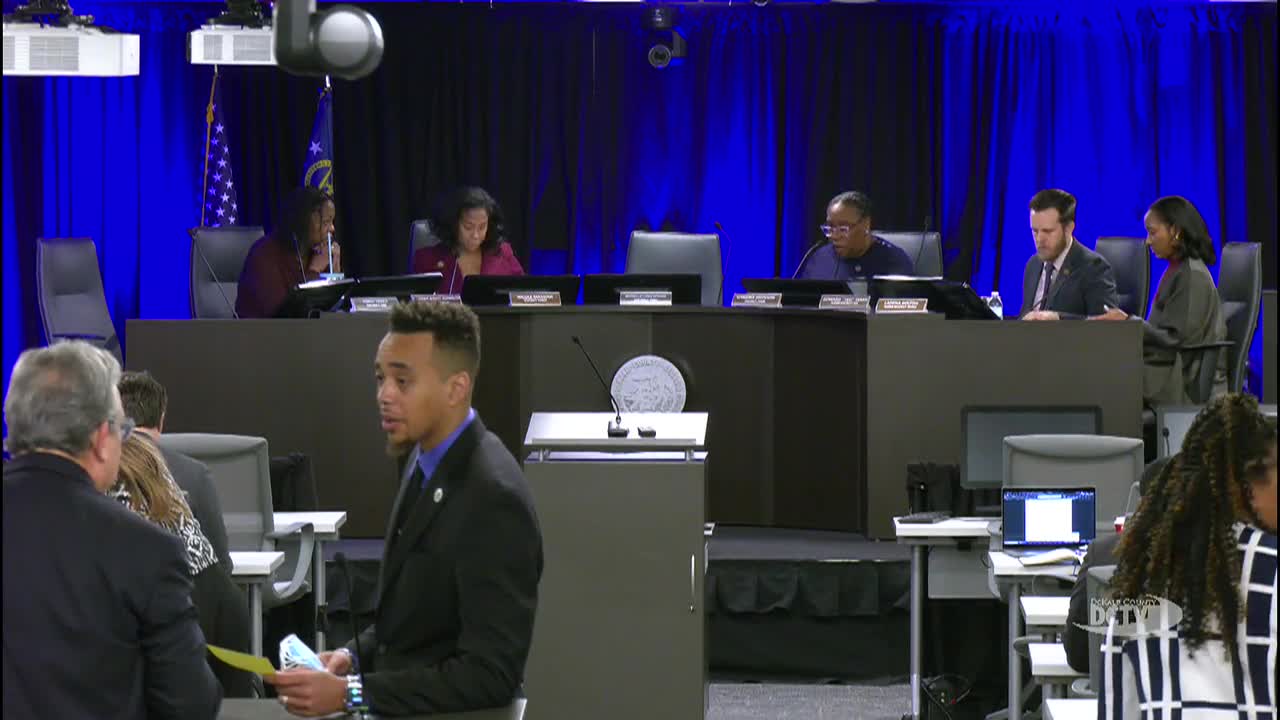
At a specially called Public Works and Infrastructure Committee meeting, CEO Cochran Johnson told commissioners the county has reached a “pivotal moment” in the county’s water and sewer system and needs sustained funding to finish consent‑decree projects and reduce sewer spills. “It’s time to act,” she said.
The county and consultants from Arcadis described a capital plan that officials said totals more than $4 billion over a 10‑year horizon and would be financed primarily with new bonds, federal low‑interest loans (including WIFIA and GEFA), grants and rate revenue. Robert Ryle and Robert Bridal of Arcadis said the funding plan assumes phased capital spending that grows over the decade and requires persistent annual rate increases to meet bond covenants and support new borrowing.
Why it matters: County officials said key assets are old and increasingly fragile. Maria Houser, director of the Consent Decree and Environmental Compliance program, said DeKalb has spent about $1.25 billion since 2017 to repair water and sewer assets but still faces serious risks: more than 165 sewer spill sites have been addressed, about 90 miles of water mains replaced, and the system averages roughly 950 water main breaks per year. Houser said many of the county’s large transmission mains date to the mid‑20th century, and no new transmission mains have been constructed from the Scott Candler treatment plant since 1974. She warned that catastrophic failure of precast concrete transmission mains could leave as many as 240,000 people without water.
What the 10 by 10 would pay for: The presentation identified projects the county would prioritize under the 10‑year plan, including upgrades at the Scott Candler water treatment plant, replacement of high‑risk precast concrete and steel transmission mains, construction of a roughly 11‑mile, 60‑inch “loop” transmission main to increase capacity and allow rotation/out‑of‑service work, upgrades to high service pump stations, and consent‑decree facilities in the Snapfinger Basin. Houser said the 10‑year plan would allow the county to address about 1% of water mains annually and about 1.36% of sewer mains annually — figures the consultants compared to typical industry replacement rates of about 1%–2% per year.
Affordability and customer impacts: Arcadis presented modeled customer impacts using a typical household with a 3/4‑inch meter and 4,000 gallons per month. The county’s current average residential water and sewer bill is about $70 per month. Under a 10% annual increase, staff projected the county’s affordability metric (annual water/sewer cost as a share of median household income) would remain under EPA guidance levels (well below the common 3% threshold). Arcadis noted that over the past decade the average annual rate increase among comparable utilities was about 4.2%.
Assistance programs: The county also proposed a package of customer‑assistance measures under a DeKalb Cares program to reduce hardship from higher rates. Proposals described at the meeting included an income‑eligible customer discount program with two tiers of discounts, a customer assistance fund (donor and ratepayer contributions to help customers in arrears), extended payment plans (up to seven years in some cases), a customer amnesty program for eligible residents who maintain regular payments for a year, repair assistance for private residential infrastructure, and creation of an Office of the Customer Advocate to help resolve disputes and oversee assistance program implementation. Diane McNabb and staff said the discount program would begin concurrently with rate implementation and the county would seek to run some programs through outside nonprofit partners where appropriate.
Regulatory and timing constraints: Officials stressed the proposal is tied to federal consent‑decree obligations and active litigation. CEO Cochran Johnson said the county is currently before federal authorities to request modification of the consent decree and that regulators will expect a credible funding plan for any multi‑year schedule. The administration said certain consent‑decree projects — totaling roughly $106 million in the upcoming year — must be started to meet court timelines and that a shortfall in funding risks delayed work and potential enforcement consequences.
Alternatives and tradeoffs: Houser summarized alternative rate scenarios presented to the county: a bare‑bones capital program (described in the presentation as a 7% scenario) and an intermediate 8% scenario. Staff said the 7% scenario would leave much of the water system at lower condition grades and would not fund the new transmission main (“the loop”) or some high‑risk transmission main replacements. The 10% scenario is presented by staff as the “balanced” approach that funds consent‑decree needs while beginning to address transmission mains and plant upgrades.
Board process, oversight and next steps: Commissioners pressed for additional documentation. Several members asked for an itemized list of projects tied to the 10‑year CIP, the consultant engineers’ reports, and an updated revenue sufficiency/cost‑of‑service study; Arcadis said the new billing system will provide a year of data at the end of the month and that a cost‑of‑service study would take roughly three to four months to complete. Commissioners also asked for opportunities for independent review; several said they would seek a prompt third‑party review or additional expert review to validate assumptions and to support public outreach.
Public outreach and schedule: The administration scheduled three public town halls the week after the meeting (Feb. 3 at Dunwoody City Hall, Feb. 4 at the Reed Coffer Library in Tucker, and Feb. 5 at Porter Sanford Performing Arts Center, each from 6:00–7:30 p.m.) and said the item will be presented to the full Board of Commissioners on Feb. 11 for a vote if the board is prepared. The CEO cautioned that delays to secure additional approvals would require using reserve funds or otherwise risk missing deadlines in the consent decree.
Quotes from the meeting: "It's time to act," CEO Cochran Johnson said, describing the county's water and sewer systems as at a "pivotal moment." "My name is Maria Houser. I'm the director of the consent decree as well as the capital improvement program and overall environmental compliance for DeKalb County," Houser said when introducing the 10 by 10 recommendation.
Ending: Commissioners agreed to continue detailed technical review and public outreach ahead of the Feb. 11 Board of Commissioners meeting. Staff committed to supply project‑level sheets from the CIP, the schedule for the cost‑of‑service study and to meet with commissioners and their staff for follow‑up briefings in the coming weeks.