Venus ISD bond committee recommends $76 million bond for phase‑1 high school; asks board to consider May 2025 election
Loading...
Summary
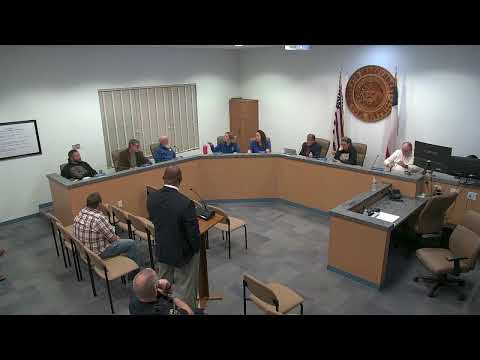
A volunteer bond planning committee for Venus Independent School District on Dec. 16 recommended that the school board call a $76,000,000 bond election on May 3, 2025, to fund phase 1 of a new high school on district‑owned land along Highway 67.
A volunteer bond planning committee for Venus Independent School District on Dec. 16 recommended that the school board call a $76,000,000 bond election on May 3, 2025, to pay for phase 1 of a new high school built on district‑owned land along Highway 67.
The committee presentation, led by Christina Sanchez and Steven Cervantes, proposed a 95,000‑square‑foot first phase sized to serve about 540 students and said the bond would be funded by a change to the district’s interest and sinking (I&S) tax rate. The presenters said the committee’s recommended funding plan would require a 0.07‑dollar (7¢) change to the I&S rate for the phase‑1 package and showed homeowner cost examples during the meeting presentation.
Why it matters: committee members said three of Venus ISD’s four campuses are currently at or above capacity and that accelerating construction on a new high school would relieve crowding and preserve instructional space at elementary and intermediate campuses as enrollment grows. The presenters told the board the district must act in time to align design, bidding and construction schedules with projected growth and state deadlines for a May 2025 election.
What the committee recommended and why: the bond committee, which reviewed demographic forecasts, construction costs and multiple facility scenarios, said the high school “rose to the top” as the highest‑priority, fiscally responsible first step. Committee members described a phased approach: build a new high school on land the district already owns, then later reconfigure grade alignments so the current high school could serve lower grades (for example a junior high) as future phases or additional bonds address remaining capacity needs.
Funding details presented to the board included homeowner‑level examples and a discussion of tax‑rate caps. Committee presenters referenced the Texas attorney general’s “50‑cent test” in explaining constraints on I&S increases and showed a range of taxation scenarios and growth projections. In one example the presenters said a homeowner with a $230,000 house would see a monthly impact of about $7.58 under a modeled scenario; presenters also described the committee’s preferred financing as a roughly 7¢ I&S change to fund the $76 million phase‑1 package. The committee said homestead exemptions for taxpayers age 65 and older would not be affected by the bond unless a property owner makes improvements that change taxable value.
Timing and next steps: the committee asked the board to decide by the state deadline of Feb. 14, 2025, if it will call the bond for the May 3 ballot. Presenters said architects would begin design work and stakeholder charrettes immediately if voters approve the bond, and they estimated a late‑2028 opening for the new building if the May election is successful and schedules run on plan.
What the board heard but did not decide: the presentation included survey results the committee used to gauge community support; roughly half of respondents “strongly supported” the $76 million figure and a plurality of others said they were undecided and wanted more information. The board did not vote to call the election at the Dec. 16 meeting; members were given time to ask questions and said they would consider the recommendation in meetings to come.
Context and caveats: committee members emphasized the recommendation was the result of two years of long‑range planning and that multiple scenarios were considered. The presenters repeatedly described the proposal as a phased, first‑step response to capacity pressures and said another bond is likely to be needed in subsequent years if projected growth occurs. The presentation included multiple tax‑rate scenarios and slides; the committee’s recommended package and the financial example cited during the presentation are those described above and were presented to the board by the committee on Dec. 16.
Looking ahead: the bond committee asked the board to hold public engagement and informational sessions if it decides to place the measure on the May ballot and said it would assemble a task force to study grade‑realignment and the next phases of construction if voters approve phase 1.