Get Full Government Meeting Transcripts, Videos, & Alerts Forever!
Get email alerts on the Housing Policy topic
No spam. Unsubscribe anytime.
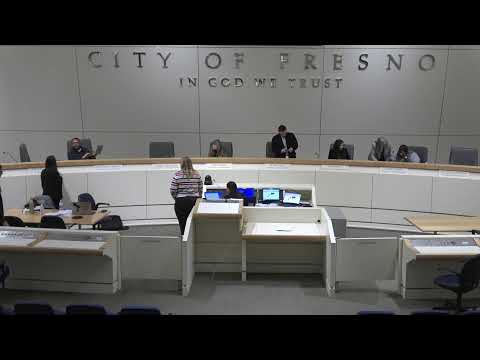
Planning commission recommends city council consider multi‑jurisdiction housing element update amid calls for stronger fair‑housing measures
Summary
The Fresno City Planning Commission voted to recommend that the City Council consider adopting the city’s multi‑jurisdictional housing element, a state‑reviewed update intended to show how Fresno will meet its RHNA target; staff and consultants said the element includes a sites inventory and an action plan of implementation programs, while community groups urged stronger, specific fair‑housing and tenant‑protection measures.
The Fresno City Planning Commission voted to recommend that the City Council consider adoption of the city’s update to the multi‑jurisdictional housing element, the element of the general plan that shows how the city will accommodate its Regional Housing Needs Allocation (RHNA) over the next planning cycle.
City staff and the consultant team told the commission the element documents the city’s sites inventory, assigns the city a local housing target derived from the regional RHNA, and contains an action plan of ordinances and programs intended to implement the plan over the next eight years. Chelsea Payne, director of urban planning at Ascent, said Fresno’s assigned housing target is “just under 37,000” units (the Fresno County region’s RHNA is about 58,000), with roughly 15,000 of those units in the lower‑income (very low and low) categories. Payne said the housing element shows a surplus of capacity at all income levels based on the detailed sites inventory and associated capacity assumptions.
The draft element pairs an inventory with 50 policies and 37 implementation programs organized around seven goal areas, Payne said. The presentation highlighted several programs commissioners asked about: Program 2 (create multifamily capacity and “missing middle” units in higher‑resource areas), Program 4 (streamline development review and create nondiscretionary approvals consistent with state streamlining laws such as SB 330 and SB 35), Program 6 (adopt objective development and design standards by December 2025), Program 17 (review and prioritize surplus public lands for affordable housing with timelines by June 2025), Program 25 (zoning and code changes to allow shelters, residential care facilities and other special‑needs housing consistent with state law), and Program 36 (maintain at least 500 shelter beds and create 400 new supportive housing units, plus other homelessness actions).
The consultant and staff emphasized that the new housing element must also comply with Assembly Bill 686’s requirement to affirmatively further fair housing (AFFH). The element contains two AFFH approaches: encourage more affordable housing in higher resource areas and direct investments into lower‑resource neighborhoods to reduce segregation and improve amenities. Staff said the element calls for geographic targeting of investments, a public story map to show where investments occur, and annual grant‑seeking to prioritize disadvantaged communities.
Public comment at the hearing included several speakers and community organizations who urged stronger, more specific commitments. Giovanna Morales of the Leadership Council for Justice and Accountability said HCD’s October 7, 2024 findings identified deficiencies and asked the city to supply a complete assessment of fair housing and to strengthen programs with geographic targeting, specific metrics and timing. Morales urged adoption of community‑identified programs including a just‑cause eviction ordinance and rent stabilization, a rental assistance program, inclusionary housing, codifying eviction protections into the municipal code with ongoing funding, rezoning changes around industrial uses near sensitive receptors, and other place‑based measures. Power California’s Marissa Moraza urged the commission not to adopt a noncompliant element and reiterated demands for rent‑stabilization and stronger eviction protections.
Other public speakers who identified themselves as formerly unhoused or engaged in street outreach urged deeper commitments to housing affordable at 30% of area median income and criticized criminalization of homelessness. Staff and the consultant responded, noting engagement with community‑based organizations and that outreach reached over 400 residents through multiple rounds and partner organizations. Sophia Pagalotis, planning manager (joining by Zoom), and city staff said the outreach included 20+ workshops and partnerships with local community development corporations and Every Neighborhood Partnership; staff said comments are summarized in Section 6 of the appendix and documented in Exhibit materials.
Payne said the city submitted the draft to the state in November 2023, received HCD comments in February 2024, and submitted multiple rounds of revisions through August 2024. She said the city expected to receive a pre‑certification letter from HCD by the end of the week; if the city council adopts the element next week (the hearing was scheduled for Dec. 12), the city would then submit the adopted document to the state and HCD would have 60 days to certify it (staff said they expect certification before Feb. 2025 barring unexpected issues).
Commission discussion included questions about geographic targeting and investments in historically underserved neighborhoods (south of Shaw and west of Highway 99). Commissioners cited Measure P and the active transportation plan as mechanisms the city uses to prioritize investments in highest‑need neighborhoods. After discussion the commission voted to recommend the City Council consider adoption of staff’s recommendations and forward the housing element to the City Council for action.
The record shows strong public advocacy for added protections and resources; several speakers and organizations urged the council and staff to incorporate those specific programs before final adoption and to secure firm funding commitments and timelines for implementation.