Get Full Government Meeting Transcripts, Videos, & Alerts Forever!
Get email alerts on the Industrial Warehouse topic
No spam. Unsubscribe anytime.
Perris planning panel certifies EIR, approves 551,922‑sq‑ft Prologis warehouse with $400,000 school donation
Summary
The Perris Planning Commission on Dec. 18 certified a final environmental impact report and approved entitlements allowing Prologis to build a 551,922‑square‑foot warehouse on 29.79 acres east of Webster Avenue and south of Ramona Expressway, voting 4‑0 to adopt Resolution 24‑20 and approve the tentative parcel map and development plan.
The Perris Planning Commission on Dec. 18 certified a final environmental impact report and approved a tentative parcel map and development plan to allow construction of a 551,922‑square‑foot industrial warehouse on 29.79 acres east of Webster Avenue and south of Ramona Expressway (Prologis DC 11 Ramona at Webster). The commission voted 4‑0 to adopt Resolution 24‑20, approve TPM 22‑05363 (TPM 38643) and DPR 22‑0035 and to adopt the mitigation, monitoring and reporting program prepared for the project.
The action implements findings in a Final Environmental Impact Report prepared under the California Environmental Quality Act and allows Prologis to consolidate 13 vacant parcels into a single 29.79‑acre parcel for a single industrial tilt‑up building. The approved plan includes about 178,922 square feet of landscaped area (about 14.12 percent of the site, above the 12 percent minimum), separate employee and truck access points and truck‑route controls that restrict truck movements to Brennan Avenue and other designated routes.
Why it matters: The project is one of several large warehouse proposals in the Perris Valley Commerce Center specific plan area and sits adjacent to Val Verde Unified School District property. Commissioners and staff said the EIR found impacts could be reduced to less‑than‑significant levels with the adopted mitigation measures; residents, advocates and school district officials asked the commission to secure additional community benefits and air‑quality protections before construction.
The applicant’s presentation and commitments Nicole Torstvet, a representative for Prologis, said the company revised landscaping and building architecture after meetings with an ad hoc commission committee and nearby neighbors. "Our goal is to be a positive contributor to this community and a good neighbor," Torstvet said, outlining added screening, a monument sign at Ramona and Webster, and physical measures to discourage trucks from turning north on Ramona Expressway.
Torstvet also said Prologis will donate $400,000 to Val Verde Unified School District for an outdoor amphitheater at the district office. "We are part of this community and continually give back through sports sponsorships…our goal is to be a positive contributor to this community," she said.
Traffic, truck routing and drainage City planning staff and the applicant said truck access to the site is restricted to Brennan Avenue; from Brennan trucks would travel south to Morgan, east to Indian Avenue and then to either Harley Knox Boulevard or Placentia Avenue to reach I‑215. Staff noted channelizers, a 90‑degree curb return at the Bridal Avenue drive, and signage are included to make left turns onto Ramona Expressway difficult. Commissioners asked engineering staff about an open drainage channel along Ramona; department conditions require the existing open channel along the northern portion of the project be placed in an underground drain to tie into the ultimate Ramona/Paris drainage system.
Air quality and community requests Dozens of speakers addressed the planning commission during the public comment period. Several labor and trades representatives, plus speakers from recovery and community organizations, urged approval and emphasized jobs and local hire. Joshua Gastelum, speaking for a men’s recovery home, said the project would provide employment opportunities for residents of his program: "Jobs … are very important for men like myself who are trying to make a change in their lives," he said.
Other residents and community members urged stronger mitigation for local air quality and cumulative impacts. Yesenia Contreras told the commission, "I understand that cumulative impacts do not need to be taken into account for this particular project…But in spite of this, we live in the county with the second worst ozone pollution in the nation," and asked the commission to request additional mitigation and community benefits. Val Verde Unified District representatives said the district supports the project and described the proposed amphitheater and green space the donation would fund.
The project’s air‑quality consultant, Michael Tirone of Urban Crossroads, told the commission the technical analyses in the EIR and health‑risk assessment show the project would not exceed significance thresholds for regional or localized pollutants and would not produce significant health risks to the nearby school with the proposed mitigations in place. "The findings of the analysis demonstrate that the project would not exceed any of the significant thresholds with regard to regional pollutants, localized pollutants, or for the health risk for the school," Tirone said.
Commission questions and conditions Commissioners repeatedly praised the ad hoc committee’s work and the applicant’s revisions, and several asked staff to work with the applicant to increase native plantings and further refine landscaping along Webster Avenue. Commissioners also stressed enforcement of the approved truck route and the applicant’s channelizer and curb design to prevent trucks from using Ramona Expressway for turns.
The Planning Commission’s approval applies the findings and conditions of approval in the staff report and the MMRP. During the hearing staff noted three comment letters on the draft EIR from Riverside County Airport Land Use Commission, a law firm (Adams Broadwell Joseph & Cardozo) and the South County Air Quality Management District; staff said those comments were addressed in the Final EIR and responses in the MMRP.
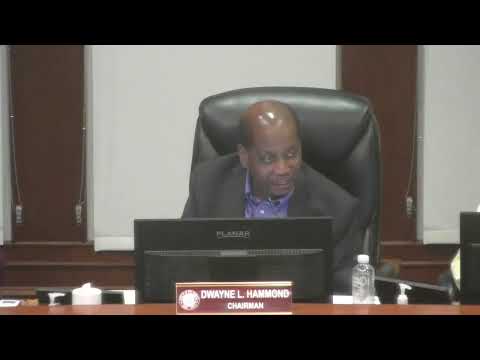
Votes and next steps The Planning Commission approved the project on a 4‑0 vote (Commissioner Jimenez, Commissioner Lopez, Vice Chair Shively and Chair Hammond voting yes). The approval certifies the Final EIR, adopts the mitigation monitoring and reporting program and approves TPM 22‑05363 (TPM 38643) and DPR 22‑0035 to facilitate construction of the 551,922‑square‑foot industrial warehouse on 29.79 acres, subject to the conditions of approval.
What’s next: The approval authorizes the entitlements the commission considered; construction, tenant occupancy and any required building permits and ministerial approvals remain subject to the conditions of approval, applicable permits and inspections. The record shows the applicant has offered the $400,000 school contribution and committed to several design and truck‑route measures; some community members urged additional mitigation (air filtration at the school, an on‑site monitor, a tenant commitment before site work and more native landscaping).