Get Full Government Meeting Transcripts, Videos, & Alerts Forever!
Get email alerts on the School Meals topic
No spam. Unsubscribe anytime.
Gilbert Unified nutrition staff review school-meal standards, conduct taste tests for students’ menus
Summary
Nutrition services staff reviewed federal meal requirements, upcoming sugar and sodium rules, and conducted taste tests of three entrees. Board members praised the program; the board later approved routine business including revisions to the fiscal-year report and superintendent evaluation instruments.
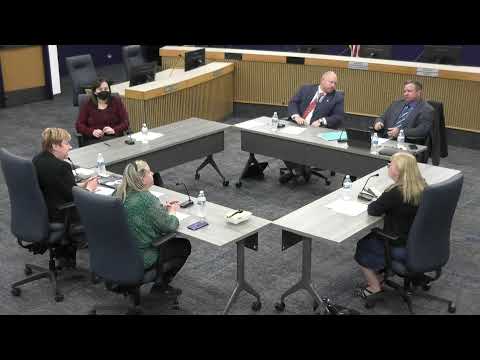
Natalie Tenney, a member of Gilbert Unified School District nutrition services staff, told the governing board during a work-study session that the district served “over 2,200,000 lunches to students, and we served over 500,000 breakfasts to students” in the 2023–24 school year.
The update outlined how district cafeterias comply with the National School Lunch Program (NSLP) and related USDA meal-pattern requirements, previewed forthcoming federal limits on added sugars and higher sodium targets, and included in-person taste testing of three menu items that are served to students: a hamburger with tater tots, teriyaki-style chicken with fried rice and a dumpling, and stuffed-crust breadsticks with marinara.
The presentation matters because the district operates a $15,000,000 nutrition services operation that serves thousands of meals daily and must follow changing federal nutrition rules while keeping meals palatable enough that students will eat them. Board members and staff said participation is key to both students’ nutrition and the program’s financial stability.
Tenney and other nutrition staff explained which foods count as reimbursable meals under NSLP rules and described specific product choices the district has made to meet nutrition targets without losing student participation. Tenney said the district receives 51¢ in USDA support even for students who pay full price, which helps keep meal prices lower. She noted upcoming USDA added-sugar limits that take effect on July 1, 2025: cereals limited to about 6 grams or less of added sugar, flavored milks to about 10 grams or less, and yogurt to about 12 grams or less; the district reported it already meets the cereal and flavored-milk limits and is monitoring yogurt formulations.
Staff also reviewed sodium targets the district is tracking. The district said the first sodium target (implemented July 1, 2023) averages two meals and is roughly: kindergarten–grade 5 about 1,110 mg per day (two meals combined), grades 6–8 about 1,225 mg, and grades 9–12 about 1,280 mg. Nutrition staff compared those daily two-meal totals to common restaurant items to show the gap (for example, staff cited a McGriddle at roughly 1,100 mg of sodium). Staff said manufacturers and condiment suppliers are part of efforts to reduce hidden sodium (the district said it has switched ketchup to a “naturally balanced” product with about 31% less sodium).
The presentation included product-level details and sourcing. Staff said the hamburger bun used in schools is 51% whole wheat (white whole wheat), the district’s burger patties are a simple formulation (described on the tray as 100% ground beef, water, less than 2% salt, and natural smoke flavor), tater tots are U.S.-sourced and baked (not deep-fried), and some Asian entrees and dumplings used in the district are supplied by regional vendors that performed well in taste tests. Staff described how foods are held and plated at different school levels (elementary tray vs. secondary bowls) and explained batching and warming procedures used to keep items hot and appealing.
To keep menus acceptable to students, nutrition staff described a formal taste-testing process. Staff conduct vendor taste testing in the summer and then test finalists with students in schools from August through December; they ask individual students whether they liked an item and whether they would eat it again. The district said students “vote with their feet” — participation changes when a favored component (for example, an Asian dumpling) is left off a day’s meal.
Board members and administrators praised the nutrition team’s outreach and responsiveness. Tenney and colleagues encouraged board feedback via the evaluation forms provided at the meeting. The work-study portion of the meeting was then adjourned and the board proceeded to brief business.
Votes at a glance
- Consent agenda (agenda item 6): motion to approve the consent agenda was moved and seconded; the board approved the consent agenda during the meeting (board members present voted in the affirmative). Transcript evidence: roll call and motion beginning at the board’s brief-business roll-call and consent-agenda discussion.
- 7.01 Superintendent evaluation instruments and performance-pay measures and weights: board moved and seconded to approve the evaluation instruments and weights the board reviewed in executive session; the board voted in favor. (Recorded in the meeting under action item 7.01.)
- 7.02 Revision to fiscal year 2024 annual financial report: motion to approve a technical revision that reclassified certain revenues from Maintenance & Operations to Unrestricted Capital so the AFR matches district budgeting and fund accounting; motion moved and seconded and passed (vote recorded as 3–0).
The district nutrition staff provided tasting samples and encouraged written feedback; board members thanked staff for the presentation and food. The meeting’s next business items proceeded after the work-study portion was adjourned.