Get Full Government Meeting Transcripts, Videos, & Alerts Forever!
Get email alerts on the Education Support Programs topic
No spam. Unsubscribe anytime.
Troy School District spotlights Pathways program that tutors students toward career center and graduation
Summary
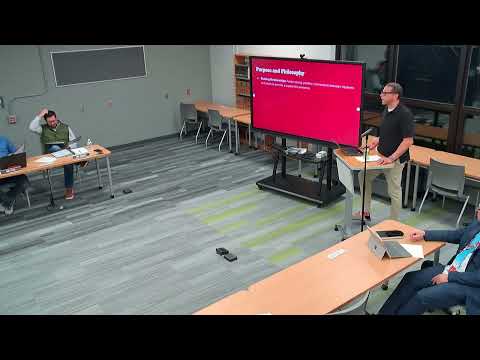
At its Dec. 9 meeting the Troy School District board heard a presentation on the Pathways program at Troy High School. Staff described a small-classroom model that provides daily academic intervention, behavior support and career-center preparation; students described how the program changed their attendance and grades.
At the Troy School board meeting on Dec. 9, district staff described the Pathways program at Troy High School as a targeted support track for freshmen and sophomores who need extra academic, behavioral and social-emotional supports.
Jeremy Hughes, a history teacher and the district’s Pathways coordinator, told the board the program aims to “empower students to succeed in high school and beyond” by combining daily routines, a built-in intervention period and constant teacher follow-up. Hughes said the program typically keeps class sizes small and currently serves 39 freshmen and 36 sophomores.
“The biggest role that I have with these kids is building a relationship,” Hughes said. He described everyday monitoring of attendance and regular check-ins, a referral form teachers use during the school day, weekly homework groups and monthly and quarterly rewards for progress and positive behavior.
Hughes said the program also emphasizes workforce preparation and coordination with the Upper Valley Career Center. “Last year it was over 90% of our sophomores got into the Career Center,” he said, and added that “this year, out of 39 students, 38 are signed up and applied; the 39th has been absent.”
A longtime teacher who spoke after Hughes described Pathways as a program that meets students “where they are,” focusing on organization, people skills and a classroom environment where “there’s nowhere to hide.” He said success in the Pathways context can mean earning enough credits to enter the career center rather than earning straight A’s.
Students who are or were in the Pathways program addressed the board. Jabari Parker, who is now attending Upper Valley, called Hughes “one of a kind” and said the program “gave me a lot of gateway to that center.” A student identified as Maggie said the program “helped me see that people actually care about me” and credited Pathways teachers with improving her maturity and grades. Cameron Hamilton told the board he entered the program in ninth grade after academic struggles and that by the following year he had raised his grades and set a plan to pursue machine technologies or construction maintenance at the career center.
Teachers described the program’s daily logistics: a study-hall intervention period (first period for sophomores and sixth for freshmen), Google Forms teachers use to refer students for support, weekly homework groups for subjects like geometry and small testing environments for end-of-course exams.
Hughes and other staff emphasized that Pathways is not a special-education program. He said students with IEPs who need Pathways supports can receive both, but the Pathways program itself is intended for students who need an alternative structure to succeed in a general-education setting.
Board members thanked staff and the student speakers and said they were pleased to learn how the program coordinates with local businesses and funders. Hughes noted modest community support — for example a $1,000 grant from the Detroit Foundation that he said helps fund snacks and small incentives for students.
The board did not take any formal action on the Pathways presentation during the meeting.