Get Full Government Meeting Transcripts, Videos, & Alerts Forever!
Get email alerts on the School Budget Act1 topic
No spam. Unsubscribe anytime.
Lower Moreland board adopts preliminary 2025–26 expenditure budget and begins Act 1 exception process
Summary
The board approved a preliminary expenditure budget and authorized moving forward with the Act 1 exception process after administrators outlined a projected negative fund balance and large special-education cost increases.
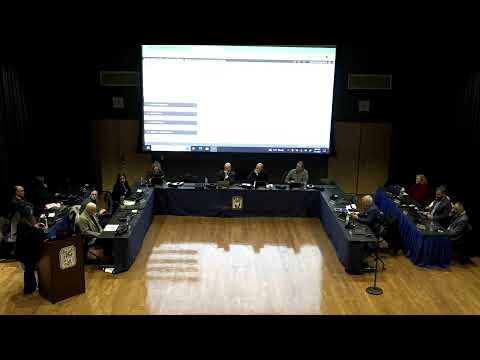
The Lower Moreland Board of School Directors on Jan. 21 adopted a preliminary 2025–26 expenditure budget and authorized staff to begin the Act 1 exception process to address projected increases, particularly in special education costs.
"Item A is the adoption of the preliminary budget. Remember, it's the expenditure budget," Business Manager Mr. Gwynn said when presenting the document; the board then voted to adopt the preliminary budget and submit the required preliminary paperwork to the state. Administrators clarified that adopting the preliminary expenditure budget does not set a tax rate; it begins the Act 1 procedure and allows the district to seek exceptions to the Act 1 index where qualifying costs exceed the index.
District financial details: Mr. Gwynn described several drivers of projected spending and revenue. He said fixed costs — including debt service, salaries and benefits, charter school tuition and special education — account for a large share of the budget. He stated the preliminary projections show a potential fund-balance shortfall at June 30, 2026 of about negative $1.4 million if no tax increase or additional revenues are assumed, and that the district will continue to refine projections. "This is projecting a fund balance at the end of 25, 26 of negative 1 point $4,000,000," Mr. Gwynn said while reviewing the preliminary numbers.
Act 1 exceptions: Administrators recommended pursuing an Act 1 referendum exception tied to special-education cost increases. Mr. Gwynn explained that the Act 1 exception calculation compares qualifying special-education expenditures across prior years and allows districts to apply for an exception for the dollar amount above the Act 1 index. "If you're over a dollar, you would qualify for a dollar," he said when the board asked whether there is a minimum threshold for the exception.
Board action and next steps: The board voted to adopt the preliminary 2025–26 expenditure budget as presented and to submit the required preliminary documentation. Administrators said staff will continue to refine revenue and expenditure assumptions and will present a proposed final budget in April and a final budget in June. They also indicated they planned to apply through the state's referendum exception system and will inform the board as applications progress.
Why it matters: The preliminary budget sets the district’s financial planning process for the coming year and initiates state review of any referendum exceptions needed to cover out-year special-education and capital pressures. School district budgets affect local property taxpayers and services for students.
What’s next: Staff will continue to refine the revenue picture (including anticipated state reimbursement items and interest-earning assumptions), decide whether to include a capital-projects transfer in next year’s budget, and bring updated proposed budget documents to the board in April for public review and a June final vote.