Get Full Government Meeting Transcripts, Videos, & Alerts Forever!
Get email alerts on the Strategic Planning topic
No spam. Unsubscribe anytime.
Consultants present strategic‑planning needs assessment; board to review vision, mission and five draft priorities
Summary
4 Point Education Partners briefed the board on a needs assessment that identified strengths, weaknesses, and recommendations; consultants proposed a graduate profile, five priorities and a focus on implementation, partnerships and HR capacity.
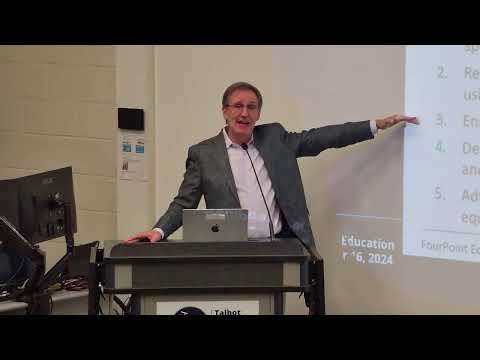
Consultants from 4 Point Education Partners gave the Talbot County Board of Education an overview of a strategic‑planning needs assessment and recommended next steps at the Dec. 16 work session.
Scott Joffdis, president of 4 Point Education Partners, and Sharon Gaskins, identified as former Washington, D.C. Public Schools resource strategy officer, presented findings from interviews, classroom observations and surveys conducted across the district. Joffdis said the review covered eight operational categories and used a SWOT (strengths, weaknesses, opportunities, threats) framework to summarize results.
The consultants listed strengths: a relatively new leadership team, recently adopted math and ELA curricula, school improvement structures such as professional learning communities and multi‑tiered systems of support, and strong community partnerships. They also flagged weaknesses that remain in early stages of implementation: uneven capacity to serve multilingual learners, an historical lack of a consistent core curriculum and intervention systems, and some HR and culture issues the current administration is addressing.
“Let’s make that sort of the focal point for the strategic plan,” Joffdis said, urging the board to center the plan on a profile of a graduate — a set of measurable indicators describing what a successful Talbot County graduate should know and be able to do. The consultants proposed five draft priorities for the strategic plan: implement curriculum and tiered interventions, align assessment and accountability, enhance inclusion and engagement for students/families/staff, strengthen college and career readiness, and modernize operations and partnerships. They recommended limiting the plan to three to five focal priorities to sustain focus and allow measurable progress.
Gaskins urged the board to use and expand existing community partnerships, consolidate grants management (she recommended a single position or shared regional function) and invest in human resources and data systems. “We were so blown away with the depth of partnerships that exist with folks here at TCPS,” Gaskins said, and she recommended leveraging that local network to support after‑school and summer programming and to strengthen business engagement around revenue and workforce goals.
Board members discussed the draft vision and mission statements and asked that special education and mental‑health/health and wellness be visible in the plan’s priorities and strategies. The consultants said the draft vision and mission are not final and that working groups formed the next day would refine strategies and measures; the board retains final approval of the plan.
Ending: Consultants will convene the Strategic Planning Working Group beginning the day after the meeting, the working groups will draft measures and strategies, and staff will return to the board with refined objectives and measures for approval later in the planning cycle.