Get Full Government Meeting Transcripts, Videos, & Alerts Forever!
Get email alerts on the Public Art Sculpture Program topic
No spam. Unsubscribe anytime.
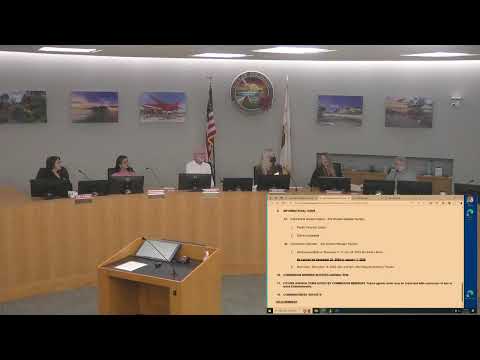
Encinitas arts commission hears calls to expand outreach, streamline temporary sculpture program
Summary
Public speakers urged the commission to notify nearby residents and simplify the temporary sculpture loan program; an ad hoc team presented a draft mission, survey and timeline aimed at overhauling the sculpture loan process for the next cycle.
The Encinitas Commission for the Arts on Dec. 2, 2024, heard multiple public comments urging stronger neighborhood notification and program changes for the city’s temporary sculpture loan program, and the commission’s ad hoc team presented a draft mission statement, survey design and a timeline for finalizing revised program materials.
Why it matters: The ad hoc’s work would shape how the city selects and displays temporary public sculpture, influence artist participation rules and insurance requirements, and set outreach standards for residents living near proposed installations.
Public comment opened the discussion. Kathleen Lees, a Leucadia Town Council member and former commissioner, said residents near a Leucadia park “had no idea” art would be installed and recommended mailing notices to addresses within 500 feet under a citizen participation program (CPP) model. “This needs to be the building stone that you go to,” Lees said, urging use of CPP-style notices and neighborhood organizations to reach nearby residents.
Rosemary Kimbal urged the commission to limit pre-installation public selection in favor of post-installation public dialogue so neighbors can evaluate works in three dimensions. “I want you to have more power to eliminate public input until after installation to encourage dialogue about installed art when the public can actually see the art in 3 dimensions, not just 1 photograph,” Kimbal said.
Artist and former commissioner Diane Sabek told the commission she supports the sculpture program but described the application process as burdensome for artists. “I want to tell you, this was the most difficult 1 I've ever participated in,” Sabek said, and suggested studying other local programs that provide city insurance instead of requiring artists to buy coverage.
After public comment, an ad hoc team provided a status report on its review of the sculpture loan program. An ad hoc team member said, “this is not the final report. We are very close to finishing that up,” and outlined steps completed: interviews with other California cities (including Carlsbad and Solana Beach), consultant-led public discussion guides, random-intercept interviews and focus groups, and a draft survey and rubric tied to a proposed mission statement.
The ad hoc presented a timeline calling for a final draft to staff by the end of the next month, previewing with staff, returning to the commission in January for discussion and bringing a cleaned final version to the commission for potential forwarding to city council by February. The ad hoc also raised the possibility of scheduling a special meeting in January to accommodate the volume of material.
Commissioners and other commissioners’ comments focused on ensuring staff has enough lead time to include materials in agenda packets and on whether a special meeting would be needed. One commissioner asked whether “random intercepts” meant brief street interviews, and the ad hoc confirmed that it did.
Clarifying details from the meeting: the ad hoc recommended using the CPP-style 500-foot notice radius to reach nearby residents; several speakers compared Encinitas’ artist insurance requirements unfavorably with Solana Beach and Carlsbad programs that use city-provided or developer-funded arrangements; the ad hoc aims to finalize documents for inclusion on the commission agenda and to present to council in February 2025.
The commission did not take a formal vote on program changes at this meeting; the ad hoc’s materials remain a draft and the timeline depends on staff review and potential scheduling of a special meeting.
Ending: The ad hoc plans to complete its draft and work with staff on timing; commissioners invited continued public input and signaled they will review revised materials once staff posts them for a future meeting.