Get Full Government Meeting Transcripts, Videos, & Alerts Forever!
Get email alerts on the Education World Languages topic
No spam. Unsubscribe anytime.
Fairport CSD outlines world‑languages overhaul, dual‑credit and Seal of Biliteracy expansion
Summary
District world‑languages staff told the board the program is implementing New York State standards, expanding remediation through a language lab, offering SUNY Oswego dual credit and growing a Seal of Biliteracy program that now includes ELL and home‑language students.
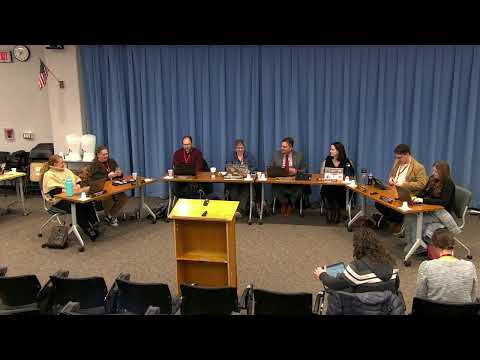
Fairport Central School District language staff presented an update at the board workshop on curriculum changes tied to new New York State world‑languages standards, dual‑credit options and the Seal of Biliteracy program.
The presentation, led by Kevin Provanzano and world‑languages teachers Deb Buckley and Lynelle Vandenberg, outlined the department’s staffing, the state timeline for the standards and three district programs aimed at increasing student access: a language lab for remediation, SUNY Oswego dual‑enrollment for juniors and seniors, and the district’s Seal of Biliteracy pathway.
The new state standards shift emphasis toward communication, the presenters said. “Communication was going to be a big key,” Provanzano said, summarizing the state guidance; the standards also retain culture, connections and comparisons as anchor areas. District staff told the board that an initial cohort of students began the updated standards in 2023 and the district plans a gradual rollout with full implementation targeted in later years of the decade.
Why it matters: New York State requires at least one full credit of world language for a Regents diploma; students pursuing a Regents diploma with distinction generally need additional credits. The district said aligning curriculum to the state’s anchor standards should better scaffold vocabulary and cultural learning across grades so students retain and apply language skills.
Program and staffing details The presenters said the district currently employs 18 full‑time world‑languages educators and four lead educators covering grades 7–12. Buckley described the language lab, a remediation program run in both middle schools that pulls small groups of students out of lunch or study halls for targeted support. “We developed a language lab where we take kids who are just having a hard time,” Buckley said, adding that the lab provides homework time, flash‑card practice and grammar review so students can earn the required credit.
Buckley also noted the lab has helped some students who face learning or social‑emotional challenges to succeed in language classes; staff said a small number of students who have IEP exemptions still choose to attempt language coursework with support.
Dual credit and AP Lynelle Vandenberg described the district’s SUNY Oswego dual‑enrollment partnership, which allows juniors and seniors to earn college credit (French/Spanish/German 201) through SUNY at a reduced cost she cited as $87 per course. Vandenberg said the program was selected over other college partners because it offered all three languages and aligned with the district’s AP curriculum; qualifying district teachers serve as adjuncts to the SUNY program after curriculum approval.
Vandenberg said dual‑enrollment participation has risen each year and that hundreds of students have taken the option in recent years; staff reported a combined enrollment figure for the most recent year of about 121 students in SUNY/college‑level language courses and said roughly 52 students took AP in one recent year. She described the dual‑credit and AP tracks as complementary choices for juniors and seniors.
Seal of Biliteracy Vandenberg, who coordinates the Seal of Biliteracy in the district, described the program as a district priority and a recognized credential placed on student diplomas for demonstrated proficiency. The program includes three cohorts of eligible candidates, she said: continuing world‑language students, English‑language‑learner (ELL) students, and students who speak another language at home but are not enrolled in ELL services. “We’ve had a huge, huge interest on the part of the students,” Vandenberg said.
The Seal pathway includes an online proficiency assessment and a mentored research/presentation project; staff said mentors meet with candidates at least twice and help approve sources and projects. Vandenberg shared examples of student projects (comparative education systems, history of jazz, pandemic responses by country) and said the district had about 76 students pursuing the seal at the time of the presentation.
Inclusion and American Sign Language Board members asked whether American Sign Language (ASL) qualifies for the Seal. Staff said New York State recognizes ASL for the Seal of Biliteracy and that the district already has a student pursuing ASL coursework through a state‑approved asynchronous program. Staff noted operational complexities in hiring qualified ASL teachers and providing interpreter or instructional supports for deaf teachers or students, but said ASL is not off the table and the district is supporting individual student pathways where appropriate.
Board action and next steps The workshop was procedural; the board approved the meeting agenda at the start of the session and later adjourned at the close of the workshop (formal motions were made and approved; mover and second not specified in the record). District language staff said they will continue curriculum work, professional development and outreach to counselors and families as the standards roll out.
The presenters asked the board to continue supporting Seal of Biliteracy funding and dual‑enrollment access; staff said they will share links, sample projects and enrollment guidance with counselors and families in upcoming communications.