Get Full Government Meeting Transcripts, Videos, & Alerts Forever!
Get email alerts on the School Transportation topic
No spam. Unsubscribe anytime.
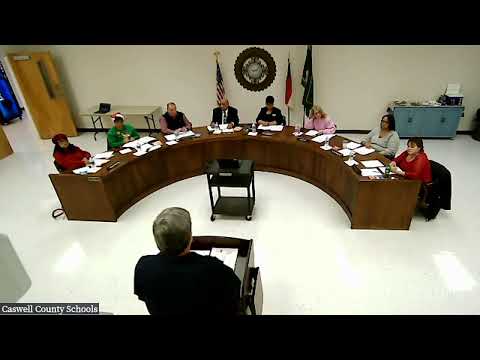
Caswell County Schools board approves purchase of propane school bus amid debate over electric costs
Summary
The Caswell County Schools Board of Education voted to approve the purchase of a propane-powered school bus, with the district facing potential local costs to install fueling equipment.
The Caswell County Schools Board of Education voted to approve the purchase of a propane-powered school bus, with the board recording a 7-0 vote to move forward on the purchase.
Board members heard from district staff that the bus price of $171,302 is paid for by the North Carolina Department of Public Instruction (DPI), leaving the district with no initial vehicle purchase cost but potential local expenses to install fueling infrastructure.
District staff said the district would likely pay to run electrical conduit and hook up a propane pump and tank to the campus fueling station; staff estimated that work "shouldn't be more than $10,000," but said an exact figure depends on tank siting and final measurements. The staff presentation said the cost could be higher or lower once precise site details are determined.
Transportation staff contrasted propane and electric buses for the board. They said a propane bus is built on a gasoline engine with a propane conversion and described lower routine-maintenance needs compared with the district's diesel buses. The staff member also said the district has an electric bus currently at the manufacturer for inspection. "Hopefully, we'll have it by the middle of January," the staff member said.
On electric buses, the staff presentation cited two operational concerns: manufacturer limits on routine maintenance ("anything that's got the big orange cable hooked up to it, we can't touch; that will have to go back to the manufacturer") and battery replacement costs. The staff member said the battery warranty is eight years while the expected service life for a school bus in North Carolina is 20 years, and that batteries "are gonna cost anywhere from $250,000 to $300,000" and could need to be replaced more than once over a 20-year lifecycle.
Board members asked for clarification on who pays what and whether local funds would be required. A staff member said the state covers the cost of the state bus and that local funds typically are only required for site work when the district must install charging or fueling infrastructure up front; DPI then reimburses the district for those costs in the electric-bus cases.
After discussion, the board voted to move forward with the purchase. The motion was made by Mister McDonough and seconded by Miss Smith; the motion carried, 7-0.
The discussion also included examples from other districts reported by staff: several nearby districts had chosen propane buses, while DPI is reportedly encouraging electric adoption. Staff told the board it had spoken with multiple districts about their experience with propane buses.
The board did not set a formal district policy on future bus fuel types at the time of the vote; several members said they preferred to observe performance of the single propane bus before committing to a broader purchase plan.
Votes at a glance: Purchase of propane-powered school bus — approved, 7-0.