Get Full Government Meeting Transcripts, Videos, & Alerts Forever!
Get email alerts on the Student Wellness Success Funds topic
No spam. Unsubscribe anytime.
Board hears report on student wellness funds and disadvantaged pupil impact aid, staff say district in compliance
Summary
Staff presented the 2024–25 Student Wellness and Success Funds and Disadvantaged Pupil Impact Aid plan, described program uses (youth development specialists, QuickMed physical health service), training and community partners, and stated the district is in compliance with Ohio reporting requirements.
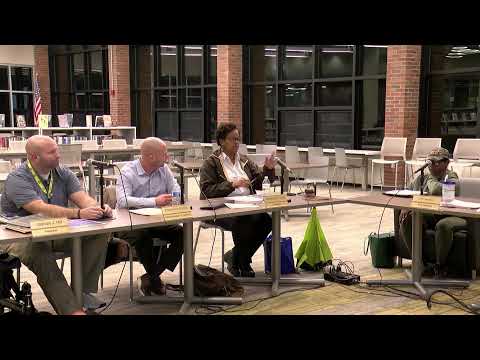
South Euclid-Lyndhurst staff presented an annual update on the district's Student Wellness and Success Funds (SWSF) and Disadvantaged Pupil Impact Aid (DPIA) at the board work session on Dec. 10, saying the funds support wraparound services, mental and physical health, prevention programs and staff positions.
"The funds support wraparound services," said the staff member who led the presentation, identified in the meeting as Miss Thompson. Thompson told the board the district is using SWSF/DPIA to cover salaries and benefits for youth development specialists (YDS) and a QuickMed physical health service. "Because of the mental health and physical health requirements, we are exceeding what that 50% requirement is," Thompson said, referring to the program's statutory requirement that at least half of funding support mental and physical health services.
Thompson also described training and compliance steps the district has taken. She said staff were trained on Erica's Lighthouse (a preventive curriculum referenced in connection with Ohio House Bill 123) and on the Comprehensive School Threat Assessment Guidelines (CSTAG), which the district uses for threat assessment. Thompson told the board the district has centralized some data collection to allow district‑level evaluation of services and is in compliance with annual reporting to the Ohio Department of Education and Workforce.
Board members asked operational questions about staffing and training. Thompson said the district employs six youth development specialists and additional student support specialists; one building (the high school identified in the meeting as "Brush") has four YDS positions on site, and other schools are served by rotating positions or by SSS staff funded from Title I. Thompson said student support specialists receive similar training to YDS staff but are funded from a different source (Title I).
The presentation listed community partners the district works with for behavioral health and services, including Alcohol, Drug Addiction Services, the Mental Health Board, the Educational Service Center of Northeast Ohio and University Hospitals. Thompson said the district maintains service agreements with community partners and that staff coordinate referrals through those agreements.
Thompson told the board the district used a decentralized data collection model in prior years and is moving toward more district‑level evaluation to identify service gaps. "We are in compliance," she said near the end of the presentation, noting the district submits the required annual report to the Ohio Department of Education and Workforce.
No board action was taken; the presentation was informational and will be posted to the district's website with hyperlinks to the relevant statutory guidance and program documentation.