Get Full Government Meeting Transcripts, Videos, & Alerts Forever!
Get email alerts on the District Budget topic
No spam. Unsubscribe anytime.
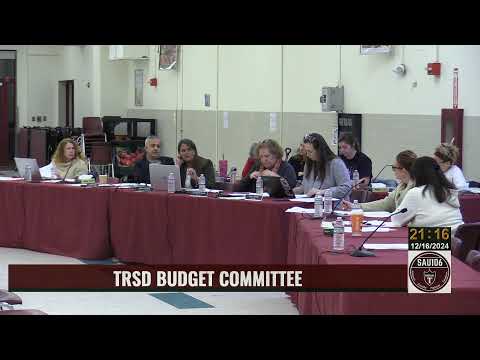
Timberlane budget committee orders $2.4M reduction, debates contracted services and staffing gaps
Summary
The Timberlane Regional School District budget committee voted to reduce the proposed 2025–26 budget by $2.4 million and approved a $14,000 cut to school board stipends after public comment and presentations by district staff.
The Timberlane Regional School District budget committee voted to reduce the proposed 2025–26 budget by $2.4 million on a 7‑0 voice vote after several hours of public comment and staff presentations on revenue, health insurance costs and workforce shortages. The committee also approved a $14,000 cut to school board stipends; an earlier motion to cut $4 million failed on an even tie.
Public commenters urged aggressive reductions and transparency about surpluses and year‑end balances. A resident who spoke during public comment said the district's projected change "actually shows ... $15,000,000" carried forward into next year and called that "very alarming" if correct. Another speaker, citing last year's $16 million underrun and past big increases, urged the committee to find deeper cuts.
Administrators outlined several constraints and options. Superintendent Dean Krueger said administration had tried to balance student needs and taxpayer concerns and noted the proposed budget represents a decline from the previous year after accounting for collective bargaining increases and facility financing. Business administrator Maria (last name not specified at the meeting) summarized staffing and contracted‑services figures: the district had about 607 filled positions and 61 open positions; administrators proposed moving $1.6 million from personnel lines to contracted services this year to cover open special‑education related roles, including three speech‑language positions ($238,000), two psychologist positions ($186,000) and 33 support staff plus 1.5 special‑education professional positions ($1,200,000). Maria said the reallocation would reduce open instructional positions from 52 to nine.
Board and committee members repeatedly noted the cost tradeoffs of contracting for services versus hiring staff. Administrators and staff said contracted providers can be two to three times more expensive than hiring district employees but the district has had to contract to meet student needs because of a scarce market for licensed clinicians. One staff member, asked about regional trends, said shortages of speech pathologists and psychologists are statewide and national and that districts are pursuing a mix of contracting, differential pay and early contracting to retain providers.
On revenue, Maria warned that projecting revenue more than a year in advance is uncertain; she said she used conservative assumptions and that certain line items (federal grants, food service) offset expenses. The business administrator said the district began the year with a large unassigned fund balance and presented a preliminary revenue estimate that included a carried forward balance projection — a point public commenters had seized on.
The budget committee voted on several motions after discussion. A motion to reduce the budget by $4,000,000 failed on a 4‑4 split; a separate motion to cut school board stipends by $14,000 passed unanimously; and a motion to decrease the budget by $2,400,000 passed. Committee members said they will meet again and ask administration to produce specific line‑by‑line options to reach the approved reduction and to return with multiple paths to achieve the target.