Get Full Government Meeting Transcripts, Videos, & Alerts Forever!
Get email alerts on the Warrant Articles topic
No spam. Unsubscribe anytime.
Residents and counsel debate petition warrant articles to rescind Timberlane energy lease and to adopt 2.5% tax cap
Summary
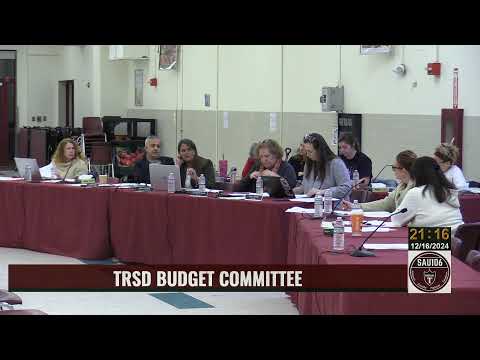
Legal counsel for the district told a joint meeting of the Timberlane Regional School District budget committee and school board that a citizen petition to rescind the district's 2023 energy lease purchase agreement is lawful but would trigger the lease's non‑appropriation clause and potentially large practical costs.
Legal counsel for the district told a joint meeting of the Timberlane Regional School District budget committee and school board that a citizen petition to rescind the district's 2023 energy lease purchase agreement is lawful but would trigger the lease's non‑appropriation clause and potentially large practical costs.
At the meeting attorney Jim O'Shaughnessy of Drummond and Widsom said the 2023 warrant article authorized a 20‑year lease purchase agreement for up to $25,243,000 in energy savings equipment and related improvements and that the contract explicitly contains a non‑appropriation clause. "If the legislative body at annual meeting does not appropriate sufficient funds to make the lease payment due in the coming fiscal year, then the lease will terminate," O'Shaughnessy said. He added, "If approved, section 3 would require the district to cease use of the equipment at the end of this current term, which would be June 30, 2025. Remove and deliver the equipment to the bank and convey legal title to the equipment back to the bank." He later summarized a practical problem bluntly: "I don't know how you return a roof. I don't think you can return a roof."
Public commenters sharply disagreed on the petition's purpose and risks. One resident, identified in the meeting as Mr. Lebreque, told the board: "This lease was absolutely illegal. It was also blatantly presented to avoid a 2 thirds majority." Other speakers pushed back that much of the leased work was needed to address long‑standing facility problems including aging HVAC and leaking roofs. Board members and staff repeatedly said the legal opinion confirmed the petition is valid but that passing it would not be a simple budgetary change and could trigger litigation, equipment removal costs, and higher financing costs in future borrowings.
O'Shaughnessy told the meeting the non‑appropriation clause is the legal mechanism that lets a lease be approved by a simple majority rather than treated as long‑term bonded debt requiring a higher voter threshold. He warned voters and officials the consequences of non‑appropriation are operational and financial: equipment that is physically affixed to buildings would have to be removed at district cost, schools could be left without installed systems needed to operate, and lenders could view a non‑appropriation event as increasing the district's financing risk. "You would have an obligation under the contract to return it," he said, and predicted a likely legal fight before anything practical could be done.
The meeting also included a separate presentation from O'Shaughnessy on a petition proposing a 2.5% municipal tax cap under RSA 32:5‑b. He summarized how the cap would be calculated, how it treats the operating budget and warrant articles with tax impact as a combined figure, and explained deliberative‑session procedures under New Hampshire law to amend or override the cap. He cautioned that adoption requires a three‑fifths majority at deliberative session and that, if adopted, the cap can be overridden annually by a simple majority vote later in the process. "The tax cap is really irrelevant once you get to deliberative," he said, describing the practical interplay between proposed budgets, default budgets and voter amendments.
Speakers on both sides said the deliberative session is the place for further changes; O'Shaughnessy noted petition warrant articles may be amended at deliberative and that petitioners cannot unilaterally rescind a citizen petition before then except by removing sufficient signatures. Board and budget committee members said they will provide factual information to the public before deliberative session so voters can decide.
No formal vote on either citizen petition occurred at the meeting. The discussion concluded with several board members and members of the public saying the petition language could be refined before deliberative session to match the petitioners' stated intent.