Get Full Government Meeting Transcripts, Videos, & Alerts Forever!
Get email alerts on the Title Vi Native Education topic
No spam. Unsubscribe anytime.
Ponca City presents Title VI services for Native students; program leaders cite limited federal funding and push for tribal partnerships
Summary
Sarah Buffalohead, the district’s Indian Education director, outlined Title VI program work — teacher assistants, cultural activities, internships and mental-health needs — and said federal per-student funding is low. She urged increased tribal partnerships and enrollment on the Title VI form to expand services.
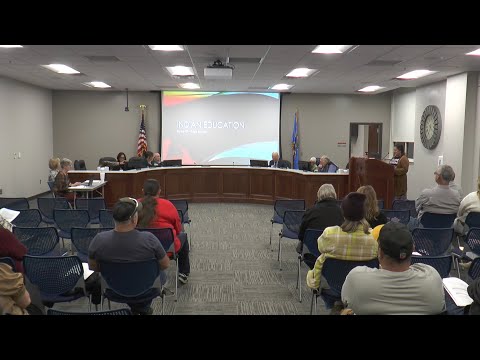
Sarah Buffalohead, Indian Education director for Ponca City Public Schools, updated the school board on the district’s federally funded Title VI program for Native American students and described services, staffing and funding limits.
Buffalohead said the district has “approximately 900 students enrolled in our program,” meaning those families completed the Title VI enrollment form. She added, “I guesstimate that we have closer to about 1,200, maybe even 13 to 1,400 students” who are Native American but have not completed the enrollment paperwork needed to receive Title VI services.
The program’s stated objectives are academic success, increased cultural awareness, higher graduation rates and reduced dropout rates. Buffalohead described core services: a team of Title VI teacher assistants who provide one-on-one and small-group tutoring, advocacy, attendance outreach and classroom integration of tribal art and literature. She identified five teacher assistants currently funded through Title VI and named them as the “heartbeat of our program,” noting they attend IEP meetings, make weekly family contacts and help get students connected to mental-health and medical resources when parents cannot.
Buffalohead described cultural programming and outreach: the Native American Heritage Club; mini powwows and school visits; a 5th-grade field trip partnership with the American Indian Resource Center (AIRC) and First Americans Museum; language-integration efforts; and monthly program newsletters. She said the Ponca Tribe and local partners — including the White Eagle Health Center, Brave’s Books and Phillips 66 — have provided donations, internships and in-kind support.
On graduation outcomes, Buffalohead reported district Title VI data she compiled: among the graduating class of 2023 the program had 55 Title VI seniors with five retained; among the class of 2024 there were 65 Title VI seniors and four non-graduates. “So it’s about 5%,” she said, adding that those figures are why the district tracks both enrollment and outcomes.
Buffalohead described major gaps: federal Title VI funding is small and “about $220 a kid-ish” on a per-student basis, she said, with that allocation covering roughly personnel (salaries/fringe) and small annual supplies. She said the district uses the Title VI enrollment form (the 506 form) to secure funds and that increasing completed enrollment forms would raise Title VI allocations.
She also highlighted an unmet need for culturally competent, on-site mental-health services and said the Ponca Tribe had offered to fund a salaried licensed professional counselor to be located in the schools; negotiations had been ongoing. Buffalohead said the district seeks grant funding, more tribal partnerships and a Title VI curriculum as future goals.
Board members and members of the public thanked Buffalohead and Title VI staff; members of the Indian Parent Committee were present and acknowledged at the meeting. Buffalohead closed by asking for questions from the board and noting the program’s ongoing collaborations and events.