
City administrator outlines progress, EPA talks and financial stakes in Maumee sewer plan
Get AI-powered insights, summaries, and transcripts
Subscribe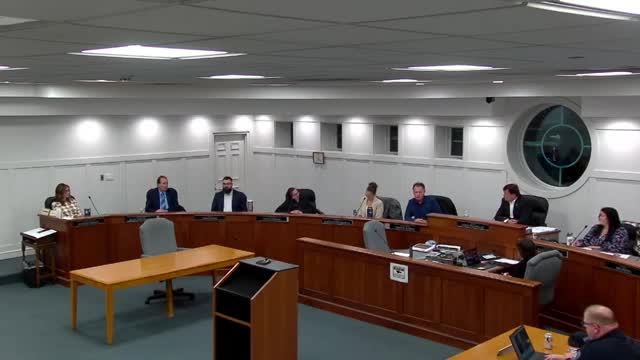
Summary
City Administrator Patrick Birch updated Council on ongoing consent-order planning with the EPA, said the draft target for reducing inflow and infiltration may be 50%, and outlined phased infrastructure and home-repair approaches to avoid constructing large storage tanks.
City Administrator Patrick Birch told Maumee City Council on Dec. 16 that the city is negotiating with the U.S. Environmental Protection Agency on a plan to address sanitary sewer overflows and inflow and infiltration (I&I).
Birch said that past plans that assumed smaller I&I reductions would have required building large storage tanks; city staff and consultants proposed a higher I&I reduction to limit or avoid tanks. Birch said staff previously considered a 25% reduction plan that included large tanks and that the city’s preferred approach would seek a much larger reduction in I&I to avoid that infrastructure. He told the council the EPA has signaled it will likely require a 50% reduction target as the working figure for the city’s plan.
“If we achieve a 50% reduction, that will require a multiyear program of home- and neighborhood-level repairs, sewer separation work and targeted system improvements rather than building multiple large tanks,” Birch said. He said an EPA letter clarifying the required reduction was expected soon and that the percentage EPA accepts will materially affect the city’s financial analysis and the amount and timing of work the city must do.
Birch described a substantial pipeline of capital projects and economic developments. He said staff and partner jurisdictions are working on roughly $233 million in public-infrastructure projects, including about $120 million in sewer-related work this year. He said the city has about a dozen pending development agreements that could collectively support nearly 400 jobs and described a multistep process of engineering, financial capability analyses and negotiations with state and federal regulators before a consent order or decree is finalized.
He also reported progress on outreach: more than 200 property owners had signed up to discuss home-level inspections and potential repairs since the program’s recent promotion, and staff had held multiple individual meetings to explain options and grant possibilities. Birch said EPA and state officials met with city staff recently to narrow the scenarios the city must evaluate and that agreement on a single workable scenario would avoid repeating dozens of large modeling runs.
Birch said the city had already eliminated four outfall SSOs and has nine remaining problem outfalls to address, some of which will be technically difficult. He warned that no plan can eliminate discharges for extraordinarily rare, extreme “NOAA-level” events but said the chosen I&I reduction target frames the scale and cost of practical mitigation.
Birch also addressed questions about his own compensation and severance: he said his total compensation is public record, that his salary is lower than a $280,000 figure circulating in public comments, and described standard municipal severance provisions as consistent with International City/County Management Association (ICMA) practice. He said exempt administrators do not receive overtime in the same way hourly employees do and that comp-time policies vary by job class under ordinances adopted at the meeting.
Council members asked for continued public outreach and noted the need to align funding, grant opportunities and timelines with the EPA’s direction. Birch said staff would continue technical and financial analysis and pursue available grant funding and state coordination as the EPA clarified its expectations.
No vote or binding commitment on the consent order was taken at the Dec. 16 meeting; Birch’s remarks were an informational update.