
DOJ findings prompt Trenton leaders, residents to press for reforms; mayor and police director pledge changes
Get AI-powered insights, summaries, and transcripts
Subscribe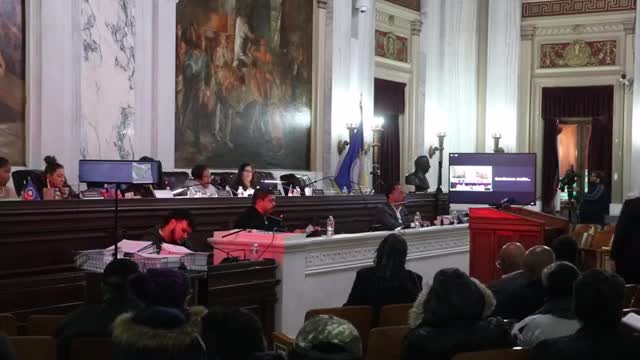
Summary
Trenton elected leaders, police officials and dozens of residents addressed a Department of Justice report that found systemic problems in the Trenton Police Department, prompting calls from community groups for firmer accountability and from city officials for a resourced reform plan.
Trenton elected leaders, police officials and dozens of residents addressed a Department of Justice report that found systemic problems in the Trenton Police Department, prompting calls from community groups for firmer accountability and from city officials for a resourced, supervised reform plan.
The council opened a dedicated public-comment portion for the Justice Department findings. Community leaders, organizations and residents described long‑standing concerns and urged specific remedies: removal of senior police leadership in some speakers’ views, a community-led civilian review board empowered with subpoena authority, improved complaint intake and in-person training, and greater resources for nonpolice crisis response.
Albert Clark, criminal justice co-chair of the Trenton NAACP, said the community demands “accountability and change” and urged removal of Police Director Steve Wilson, citing the director’s prior association with units identified in the report and promotions of unit members into oversight roles. Clark urged a community-led review board with subpoena power, noting the council itself holds subpoena authority in its legislative capacity.
Residents offering public comment described interactions with police and long-standing worries about use-of-force and complaint handling. Several community groups — including the Superior Officers Association, the PBA and local chapters of national organizations — addressed the council in person. Jason Woodhead, president of the Superior Officers Association, said his membership is willing to work on reforms and suggested data-driven, collaborative solutions that balance public safety and officer morale. Stuart Alterman, who spoke for PBA Local 11A, emphasized funding shortfalls for training and equipment and urged state attention to resourcing.
Mayor Reed Gusciora acknowledged the DOJ findings as “troubling,” said the city fully cooperated with the investigation and outlined the administration’s view of next steps: strengthen internal affairs, require more in-person training (rather than online-only modules), improve supervisor accountability for field conduct, broaden community meetings and work with the Department of Justice and the state Attorney General’s guidance to implement reforms. He noted several operational steps already taken under Director Wilson, including disbanding the specific proactive units the DOJ cited and starting programs to integrate mental health responders with police response.
Police Director Steve Wilson said the department had begun implementing recommendations before the DOJ report’s release, creating an Internal Affairs Bureau that groups professional standards, training and human resources; revising policies (including body-worn camera and use-of-force rules); and instituting new field training and arrest search-and-seizure training with the Mercer County Prosecutor’s Office. Wilson said internal affairs will attempt to reach complainants, document noncooperation and pursue independent investigations when necessary. He also called for more supervisor presence in the field and pledged discipline for officers and supervisors who fail to follow policy.
Council members of multiple parties expressed frustration and urged rapid change. Councilwoman Edwards, who has been involved in public advocacy on police reform, said the report offered an opportunity for the city to rebuild trust and pressed for a complaint review board. Councilwoman Williams called the findings “disgusting and embarrassing,” urged prompt reforms and said the city should require in-person training and cultural competency programs. Other council members asked for a 30–60 day status update on progress and for the administration to identify funding needs to implement reforms.
Several speakers urged investment in nonpolice crisis response — mental health professionals, social workers and community street teams — to handle many calls that do not require armed police officers. Community members highlighted specific instances and demanded both criminal and administrative accountability where appropriate.
Why it matters: The DOJ report documented systemic failures the department and city must address to restore community trust. City and law-enforcement officials said they will work with state and federal partners, but community groups and many residents pressed for faster, firmer actions and formal oversight arrangements.
What the city said it will do next: the mayor and police director pledged to (1) revise and publicize the complaint intake process, (2) expand in-person training tied to supervision and discipline, (3) continue to reorganize internal affairs and testing for compliance, and (4) schedule community meetings and publish regular status updates on implementation. The city said it will seek state and federal resources where available to support the reforms.