Get Full Government Meeting Transcripts, Videos, & Alerts Forever!
Get email alerts on the Land Use Assembly Venues topic
No spam. Unsubscribe anytime.
Bountiful council discusses allowing Lakeview Mortuaries event venue in residential zones; primary concerns are noise and traffic
Summary
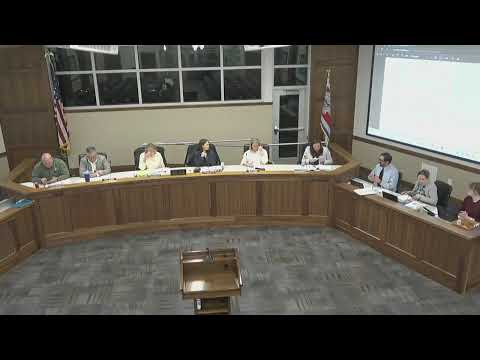
Bountiful City Council members spent the Jan. 28 work session reviewing a Lakeview Mortuaries proposal to permit public or private assembly uses in residential zones, focusing on noise, traffic and setbacks.
Bountiful City Council members spent the bulk of their Jan. 28 work session discussing a proposal from Lakeview Mortuaries to allow public or private assembly uses — described by the applicant as a multipurpose event/reception space for funerals, weddings and similar gatherings — in residential zones.
The proposal before council is a land‑use code text amendment submitted by the applicant. Planning staff summarized the item and the Planning Commission’s recommendation, and said the commission forwarded a positive recommendation but the council had previously requested further work sessions before deciding. Staff identified the primary concerns as spatial separation from single‑family homes, increased traffic and event noise mitigation.
The applicant amended its request after a Jan. 16 meeting with staff. In the updated proposal the applicant offered the following limitations and assurances: a minimum site size increased from 3 acres to 10 acres, a minimum setback from property lines increased from 75 feet to 150 feet, limiting access for events to Bountiful Boulevard (avoiding Lakeview Drive and Millbrook Way ingress/egress for event traffic), an offered measurable noise limit of 78 decibels measured at 150 feet from the gathering space, the ability to submit a traffic study with a site plan or conditional use permit application, and proposed hours of operation described in their submittal (the applicant said they were comfortable with either a code standard or handling hours through a conditional use permit).
Planning staff (Francisco) emphasized this is an applicant‑initiated text amendment and reminded the council there is a six‑month statutory timeline for applicant‑initiated land use applications: "We do need to be careful with the timing. Since the application was submitted, we cannot take more than 6 months in that it's an applicant submitted application." Francisco also explained that the site‑specific access point would be determined during site plan or conditional use permit review: "The exact location would not be determined at this time and ... the exact location would be determined at a site plan / conditional use permit review application based on the criteria that we come up with." (Francisco, planning staff).
Council discussion focused on three recurring issues: how noise will travel downhill into adjacent neighborhoods, where and how many access points should be allowed on the long Bountiful Boulevard frontage, and whether setting a 10‑acre minimum effectively makes the allowance apply to only a single site in the city. Multiple council members expressed appreciation for the applicant’s concessions but hesitated about introducing what one described as a "fairly intensive use" into that hillside residential area.
A council member asked what 78 decibels corresponds to in everyday terms and observed enforcement and complaint response practicalities. Council member Gary (identified in the meeting transcript by first name) said: "78 decibels, I I've looked it up. 75 decibels is a vacuum cleaner." Other council members noted that existing uses on the bench — the LDS temple and nearby golf/reception facilities — produce activity but that amplified outdoor sound on the hill can carry into neighborhoods below and could be disruptive if events occur multiple nights per week.
Council options outlined by staff included: approve the Planning Commission recommendation, modify and approve, deny, or remand to the Planning Commission for additional direction. Several council members said they favored remanding to the Planning Commission for more specific criteria; others said they would be willing to direct staff to draft code language now. On the single operational restriction the council coalesced around a limitation on outdoor amplification: a majority signaled support for prohibiting outdoor amplified sound after 9 p.m.; others preferred retaining the city's standard noise window or moving to 10 p.m. Francisco confirmed he had direction from the council to proceed with code language reflecting the applicant’s updated proposals with an added restriction on outdoor amplification after 9 p.m., and noted the Planning Commission or staff could require a traffic study during conditional use/site plan review.
The applicants described their motivation as responding to changing demand for nonreligious memorial celebrations and multipurpose event space: "Our primary motivation behind this is we see a distinct emerging trend within the funeral industry ... we need an additional facility that is nonreligious, that is multipurpose, that is more of a life celebration event center," the applicant said, adding that they would "honor the fact that we're aware of our neighbors" and noted their offered mitigation measures including the larger setback and the 78‑decibel limit.
No formal vote or ordinance was taken at the work session. Staff said they will move forward based on the council’s direction and that a traffic study is typically required with a conditional use permit or can be codified to be submitted with a site plan; some council members explicitly said they want a traffic study while others said it is not necessary to decide at this stage.
What happens next: staff will prepare formal code language and processing steps consistent with council direction (including the applicant’s updated setbacks and the council’s outdoor amplification restriction) for future consideration. If the council or staff elect to remand the item, the Planning Commission would consider a conditional use permit and any required studies at that stage.
Votes/Action: No formal motion or vote was taken during the work session; the meeting produced council direction to staff rather than a final decision.