
Hooper Planning Commission reviews draft policies on delegation, voting and meeting conduct
Get AI-powered insights, summaries, and transcripts
Subscribe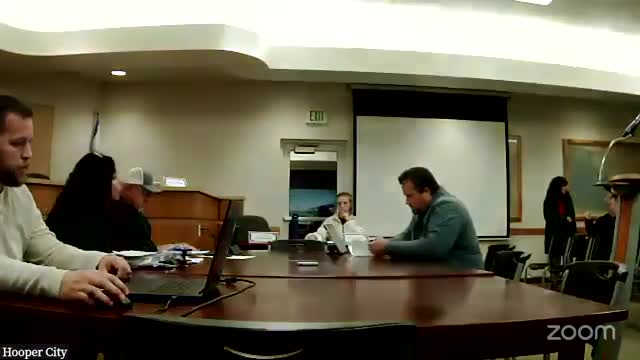
Summary
Hooper City Planning Commission members reviewed a draft Policies and Procedures document at their Dec. 12, 2024 meeting that would formalize delegation to support staff and clarify chair duties, ex parte rules, training and meeting practices.
Hooper City Planning Commission members reviewed a draft Policies and Procedures document at their Dec. 12, 2024, meeting in the Hooper City Council Chamber that describes delegation of routine tasks to support staff and the Technical Review Committee (TRC), outlines the chair's duties and voting rights, and sets rules for ex parte contacts, training, and meeting formats.
The draft, read aloud by a city planner, cites the subdivision ordinance and the city's code and states that "the Planning Commission may adopt policies and procedures and bylaws consistent with this ordinance for the conduct of its meetings, the processing of applications, and for any other purposes considered necessary for the functioning of the Planning Commission," language the planner said was taken from other cities' policies.
Why it matters: the document would formalize how the commission delegates administrative tasks (for example, preparing agendas, providing notices and recording decisions), how the chair interacts with staff and signs documents, and how commissioners must handle conflicts of interest and ex parte communications. Commissioners said these rules will affect how quickly applications are processed and how transparent deliberations appear to the public.
Commission discussion focused on several points:
- Delegation to support staff and the TRC: The draft lists many routine responsibilities ' from scheduling pre-application meetings to recording documents with the county ' that the planner recommended be delegated to support staff "who will consult with the chair." Commissioners generally supported delegating administrative tasks but said the final language should make clear which items remain the commission's decision-making responsibilities.
- Chair voting and motions: The draft says the chair "shall be entitled to 1 vote on all matters" and later states "the chair shall vote, but shall not make motions before the commission, except in the absence of response from other members." Commissioners asked whether current city code allows a chair vote; the planner said the group would check the code and that a change to permit or prohibit a chair vote would require an amendment to the municipal code. The chair noted that the mayor had discussed chair voting with staff earlier in the year.
- Ex parte communications and disclosures: The draft defines ex parte contacts as any communication with interested parties about pending administrative land-use applications and instructs commissioners to disclose such contacts and to avoid pre-arranged private meetings with applicants. The planner said communications with planning staff are not considered ex parte.
- Meetings and meeting types: The draft defines regular meetings, work meetings and special meetings; it proposes regular meetings on the second Thursday at 7 p.m., with work meetings before regular meetings at 6:30 p.m. It also suggests a target end time of 9 p.m. for regular meetings and specifies that work meetings should not include votes on completed applications. Commissioners debated the value of work meetings, whether they should limit discussion of scheduled items, and whether a soft or hard meeting end time was preferable.
- Training, conflicts of interest and removal: The draft references mandatory training required by Utah code and describes disclosure and recusal procedures for conflicts of interest. The planner noted that a newly appointed member must complete training within 60 days.
Several commissioners suggested edits for clarity and for aligning the draft with the city code. The planner told commissioners the draft pulled language from multiple other cities and asked the commission to identify items they wanted to change. The planner also said some procedural items in the draft (such as whether the chair signs approvals) reflected local practice but would be checked against the code.
No formal action was taken on the policies document at the meeting; the commission discussed changes to bring back for later consideration.
The commission also heard a legal-procedure reminder before moving into action items: with only three members present, the chair said he had "spoken with our legal counsel" and that "in order for something to carry forward, we would need a unanimous vote by all three members so that something isn't decided by two." That advice framed commissioners' approach to agenda items later in the meeting.
Looking ahead, the planner said staff would reconcile the draft with the city code and return a revised Policies and Procedures document for further review and possible vote at a future meeting.