
Waste Management reports recycled materials routed to Wasatch Integrated, outlines participation and a Smart Truck pilot
Get AI-powered insights, summaries, and transcripts
Subscribe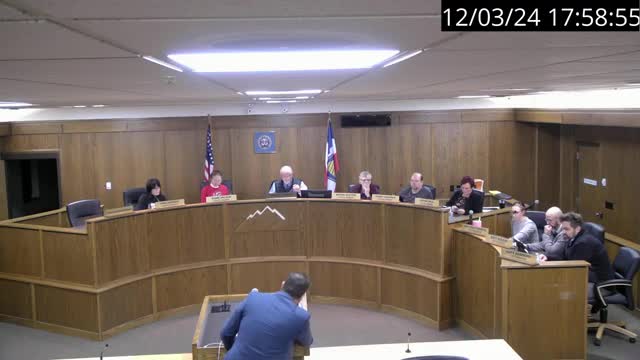
Summary
Waste Management briefed the council on where Roy's recycling is processed, diversion metrics for October and options—including a 'Smart Truck' contamination-detection tool—to increase diversion and reduce contamination.
Blakely, a Waste Management representative, told the Roy City Council on Dec. 3 that most of Roy's recyclables currently go to Wasatch Integrated in Layton while Waste Management pursues options to route material back to its own materials recovery facility.
Blakely presented an October diversion audit and said the city's recycling saved an estimated 986 mature trees, 141 cubic yards of landfill space, 189,000 kilowatts of electricity, avoided 196 metric tons of greenhouse gas emissions and conserved 240,000 gallons of water. “Your diversion for the month of Oct. 0…ranges anywhere from 9% to 4%,” Blakely said, adding the city's formal diversion goal is 15%.
Participation and contamination: Waste Management reported about 54% of Roy households have recycling cans. Blakely said contamination items most commonly found in Roy's stream were plastic bags and wood that is not processed through the local MRF. The firm emphasized that material placed in the city's recycling containers is processed at a MRF, and contamination increases processing costs.
Smart Truck and education: Waste Management described a "Smart Truck" capability that can identify individual containers at pickup, detect contamination at the time of collection and trigger an automated notification to the resident or the city. "When it picks up a container, it can identify the container. It can identify the address… and it can then automatically spit out, a notification that it was contaminated at the site," Blakely said. The company said the technology is installed on trucks but must be enabled and policy decisions made about how to notify or penalize repeated contamination.
Costs and market conditions: Blakely said recycling commodity markets are cyclical — referencing the post-China policy shock and pandemic demand spikes — and currently many commodities have positive market value, offsetting processing costs in some cases. He explained that net costs vary by city based on contamination rates and logistics; some municipalities receive rebates while others pay net processing costs.
Council questions focused on where material is processed, recycling outreach to schools, and whether recycling is cost-effective for the city. Council members and staff asked Waste Management to provide monthly diversion reports and short, reusable educational content for the city's newsletter and social media; Waste Management committed to supplying those materials.
No formal action was taken; council members expressed interest in a Smart Truck presentation and in pursuing cooperative outreach to increase participation and reduce contamination.