
Council approves America First Credit Union corporate campus phase 1 site plan amid traffic concerns
Get AI-powered insights, summaries, and transcripts
Subscribe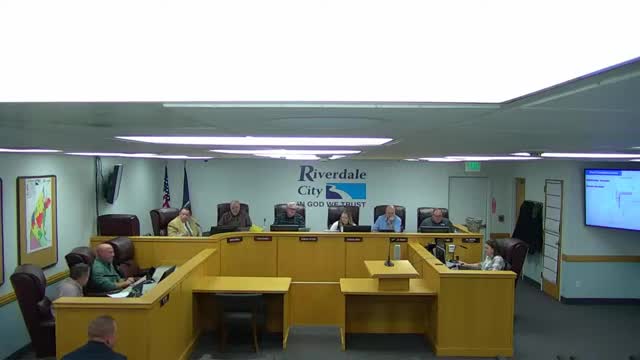
Summary
The Riverdale City Council approved a site plan for the first phase of the America First Credit Union (AFCU) corporate campus after lengthy discussion about traffic impacts and infrastructure funding. Council conditioned approvals on periodic updates as additional buildings are proposed.
Riverdale City Council on Tuesday approved a site plan for phase 1 of the America First Credit Union corporate campus, a multi-building development on the city’s west bench that councilors and applicants said will require major road and utility upgrades before the whole campus can be built out.
The approval covers initial construction of an office building and a parking structure, plus related roads, trails and landscaping. City planner Brandon Cooper described the proposal as the start of a larger master plan that could include up to 10 buildings and substantial public infrastructure work tied to the project.
Why it matters: AFCU’s campus would add thousands of employees and large-daytime population to Riverdale, triggering transportation improvements the council and applicants said the city otherwise could not afford. Staff and the applicant said the project is the catalyst for UDOT and local upgrades the area needs, but the council pressed for safeguards so the city can track traffic impacts as the project proceeds.
The planning presentation said phase 1 includes about 11.03 acres of landscaping, approximately 17 acres of open space and a parking structure with roughly 497 stalls. Jake Tate, an engineer with AWA (the applicant’s consultant), told the council the traffic study submitted for the project models long‑term scenarios and includes proposed interchange improvements and a slip ramp that UDOT is evaluating.
Tate said, “This doesn't reflect that option. This was done before the slip ramp came about,” referring to an earlier rendering; he described ongoing coordination with UDOT to incorporate the slip‑ramp option into regional models. Kim (AFCU representative) said AFCU has already earmarked departments and staff for the first building and expects to occupy most of the initial building when it is completed.
Council debate centered on traffic modeling, sequencing of buildings and what kinds of future site changes would require council review. Councilor Arnold moved approval of the site plan with an explicit expectation that the applicant report back to the council as subsequent buildings approach permit application; a second was recorded. Staff noted the planning commission recommended approval and asked for periodic updates.
The motion passed by roll call. Councilors recorded on the roll call were: Councilor Arnold (yes), Councilor Stevens (yes), Councilor Richter (yes), Councilor Haas (yes) and Councilor Hansen (yes, described in the meeting as a “cautious yes”). The council did not specify additional named votes during the roll call in the record.
What the approval does and does not do: The council’s site plan approval allows AFCU to proceed with the phase 1 site plan as presented; individual buildings will still require building permits. Staff said any material change to the approved site plan — for example, removing or substantially relocating a building or altering the primary promenade or fire lanes — would require a site plan amendment or reapproval. The council and planning commission also asked the applicant to provide informational updates as later buildings are designed and permitted.
Traffic and funding: City staff and the applicant repeatedly described the project as a “sword and shield” — bringing its own traffic impacts while enabling broader infrastructure investments. The applicant and staff identified a list of potential transportation improvements associated with the development, noted they are likely to require public funding or tax‑increment support, and said the slip ramp and a full Riverdale Road interchange with I‑15 are on UDOT’s long‑range plans and are being modeled by the agency. Tate summarized the level‑of‑service (LOS) analysis and explained LOS ratings are delay‑based; councilors asked for ongoing traffic counts and updates as mitigation measures or new infrastructure come online.
Next steps: Building permits for phase 1 elements were under review at the time of the meeting. Staff said the applicant expects to begin construction as soon as permits are issued and that building B and later buildings will be designed and permitted as growth requires, with the applicant and staff returning to the council with updates as required.
Speakers quoted in this article are representatives of AFCU, AWA Engineering and Riverdale city staff, as listed below.
Ending: Council members said they are excited about the economic development but expressed continuing anxiety about neighborhood traffic pressure and resident impacts. Several councilors urged staff to continue coordination with UDOT, Weber County and neighboring cities to protect residential streets while enabling the campus infrastructure to proceed.