Get Full Government Meeting Transcripts, Videos, & Alerts Forever!
Get email alerts on the Land Use And Planning topic
No spam. Unsubscribe anytime.
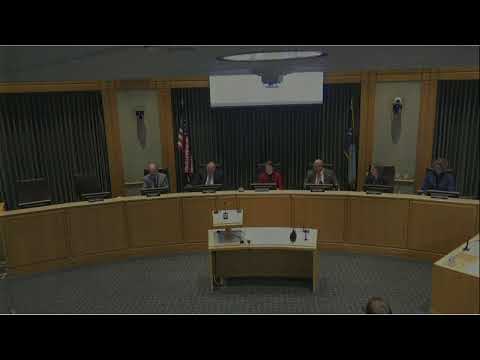
Olmsted County adopts change to land-use amendment process after public hearing; adds criterion on neighboring impacts
Summary
The Olmsted County Board of Commissioners voted to adopt a text amendment to the county General Land Use Plan (Text Amendment 02024003), changing the procedure for land-use map and text applications and adding an explicit requirement to address impacts to neighboring properties in decisions that affect the county’s urban service area.
The Olmsted County Board of Commissioners voted to adopt a text amendment to the county’s General Land Use Plan (GLUP), amending the process for map and text changes and adding a specific criterion requiring applicants and recommending bodies to address impacts to neighboring properties in urban service area decisions.
Planning Director Dave Dunn told the board the amendment “is really geared to create a procedural modification to the way that text amendments or map text amendments are done for the general land use plan,” and that staff recommended approval after working with city and township partners.
The amendment clarifies who receives an application, sets response timelines for townships and cities (townships: 60 days or two regular meetings, whichever is longer; county: an additional 60 days for Planning Commission and board review), and adds a new criterion (number 9) focused on urban service area modifications. The board adopted an additional explicit sentence to that criterion — requested during the meeting — asking applicants to explain “how this proposal impacts surrounding properties and whether it creates future limitations for potential development.”
Why it matters: the GLUP guides where development is expected in unincorporated Olmsted County and identifies the county’s urban service area — the band of unincorporated land cities expect to serve with municipal utilities and services over the long term. Changes to GLUP designations can influence later zoning and infrastructure planning though they are not themselves parcel-level, legally binding rezones.
Public testimony highlighted a sharp division among stakeholders. Norman Wall, a Rochester City Council member, urged the board to delay and revisit city-proposed language, saying the city’s concerns include affordable housing, infrastructure costs, and environmental risks — “decisions that encumber city finances belong with the city,” he said. Several township officials and residents, including John Johnson (Everhill Township) and Joel Messmer and Roger Burkey (Marion Township), urged the board to retain county-level decision authority over GLUP amendments and expressed distrust of shifting that authority to city decision-making.
Other speakers called for clarity and for preserving the GLUP as a technical, not political, document. Amy Cockett, speaking for the League of Women Voters, urged the board to oppose language that would make city approval effectively required, arguing it would transform the plan from a technical to a political instrument. Incoming Rochester City Council member Nick Miller also asked the board to delay action so staff could further vet the city’s alternative proposal.
Board discussion referenced the history of the document and prior amendments: Dunn said there were 26 GLUP map amendments since 2014 (20 approved, 6 denied) and that only three in the last 10–11 years involved adjustments to the urban service area — two removals and one addition. Several commissioners said the proposed revision sought to move the plan’s approach toward the middle ground between prior versions and create standardized, transparent procedures.
Commissioner discussion produced a friendly amendment during the motion to adopt that added the explicit sentence about impacts to neighboring properties (the additional language became criterion 9.e). The board debated the appropriate balance between city and county authority for urban-service-area matters; proponents argued the revised process increases transparency and accountability, while opponents argued the city should retain decisive authority for its urban service area.
The amendment passed (motion amended on the floor to add the neighboring-impacts sentence). The board chair announced that the amendment had been adopted and described the action as a step in an ongoing relationship between city and county rather than a final resolution to their planning partnership.
What the amendment does not do: it does not itself rezone parcels or change property-level zoning; any subsequent zoning actions would follow the county’s established zoning process. Dunn asked the board to avoid substantive on-the-fly edits because major changes could have unintended consequences; the board limited its change to the added criterion sentence and adopted the amendment as revised.
Next steps: the revised GLUP language will be incorporated into county planning materials and applied to future GLUP map and text amendment applications. County staff and city staff indicated they expect further collaborative work on process details as needed.