Get Full Government Meeting Transcripts, Videos, & Alerts Forever!
Get email alerts on the Zoning Nonconforming Use topic
No spam. Unsubscribe anytime.
Baltimore County panel denies petition to recognize boarding-house use at 2420 Holly Neck Road
Summary
A Baltimore County zoning appeals panel on Nov. 19, 2024 said the petitioner, William Faber, did not meet his burden to show that 2420 Holly Neck Road is a lawful nonconforming "boarding house" under Baltimore County Zoning Regulations section 104, and the panel declined to grant the special hearing that would have recognized that status.
A Baltimore County zoning appeals panel on Nov. 19, 2024 said the petitioner, William Faber, did not meet his burden to show that 2420 Holly Neck Road is a lawful nonconforming "boarding house" under Baltimore County Zoning Regulations (BCZR) section 104, and the panel declined to grant the special hearing that would have recognized that status.
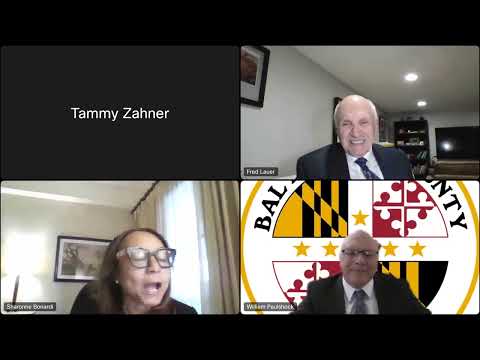
Panel chair Sharron Bernardi opened the public deliberation and concluded: "and therefore, it the special, you know, hearing is not granted to approve the existence of a lawful nonconforming use of a boarding house." Members Fred Lauer and William Palschuck agreed with the disposition during the discussion recorded in the transcript.
The panel's decision rested primarily on three factual findings raised repeatedly in the deliberation: the petition lacked contemporary documentary proof (leases, photographs or rental ledgers) that the property was occupied and operated continuously as a boarding house; county licensing and permit records showed gaps and lapses; and multiple code‑enforcement and police complaints, together with testimony in related recordings, raised public‑health and safety concerns.
Why it matters: a lawful nonconforming use allows a property to continue a preexisting use after zoning changes only if the owner proves continuity and other legal factors. If the panel had found the property lawfully nonconforming as a boarding house, it could have preserved that use despite the 2008 zoning change; by denying the petition, the panel set the stage for the property to be subject to ordinary zoning rules and any enforcement processes under BCZR 104.8.
Panel members repeatedly emphasized a lack of ordinary documentary records. Bernardi and Lauer noted the petitioner did not provide lease agreements, photos, or other routine evidence. Lauer said, "it was represented that they had rental licenses in at the hearing, that there were rental licenses, but none were produced." The panel discussed testimony that short‑term, month‑to‑month arrangements had been described at hearing, but found oral testimony alone insufficient to meet the strict burden for a nonconforming use determination.
Board members also debated continuity of use across the 2008 zoning change. The transcript records the panel's view that some evidence suggested the property was used to rent rooms in a similar capacity since at least 2007, and that some filings referred to nine rooms around 2008, but the panel found the record did not reliably establish continuous, uninterrupted lawful use from before the zoning change through the present.
Public‑health and neighborhood‑impact evidence weighed heavily in the discussion. Panel members cited a sequence of code‑enforcement complaints beginning in 2007 and continuing into recent years, police calls, and testimony from recordings introduced at the hearing alleging multiple deaths on the property and the presence of discarded needles and trash on the property line adjacent to a nearby yacht club. Bernardi described the alleged deaths and the presence of needles as "a public health and public safety issue" and said those reports were "striking." The panel referenced the McKinney case standard for evaluating whether a nonconforming use has a "substantial effect upon the neighborhood."
The panel discussed the legal consequence under BCZR 104.8 if a property is a nonconforming use but subsequently violates code: termination procedures exist for enforcement, but the panel said it did not reach that enforcement step because it concluded the petitioner had not proved a lawful nonconforming boarding‑house use. The panel also cited the County Council of Prince George's County case referenced in memoranda as background on local zoning authority and the elimination of nonconforming uses.
On tenant impacts, member Fred Lauer proposed and the panel agreed to provide a relocation grace period in the eventual written order. Lauer suggested "maybe a 120 days" to allow tenants time to relocate; Bernardi and Palschuck agreed with including a tenant‑relocation period and noted appeals and stays could affect timing. The transcript records Lauer saying the period could be a matter for the order and that many tenants had month‑to‑month arrangements and some may be elderly.
Formal action and next steps: the transcript records the panel concluding that the petitioner did not meet the burden and that the special hearing would not be granted; the transcript does not record a roll‑call vote or a formal motion maker/second on the record. Panel members directed that their decision be reflected in a written order that will deny the petition and, according to statements in the deliberation, include a tenant relocation period (the panel discussed 120 days as a guideline). Any appeal, stay or further enforcement under BCZR 104.8 was noted as a possible next step but was not decided in the deliberation itself.
Background: the special hearing addressed whether the property qualifies as a lawful nonconforming boarding house under BCZR section 104. The panel reviewed memoranda submitted by parties and cited case law and evidentiary standards; the public hearing on the petition was held Oct. 16, 2024 and this Nov. 19 session was the panel's public deliberation and decision.
Reported claims that arose in the hearing record include an assertion in recorded testimony that there were "6 or 7" deaths per year at the property; the panel characterized that and other allegations as serious public‑health concerns but based its legal ruling on the insufficiency of documentary proof required for a nonconforming‑use finding.
The panel's written order is expected to reflect the denial and the discussed tenant relocation period and will be the public record for any appeal or further enforcement action.