Get Full Government Meeting Transcripts, Videos, & Alerts Forever!
Get email alerts on the Capital Improvement Program topic
No spam. Unsubscribe anytime.
DPWT presents capital program priorities: landfill expansion, sewer consent‑decree progress and $399M road‑paving gap
Summary
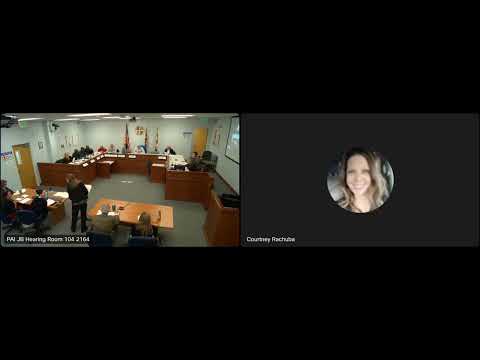
At a Planning Board capital subcommittee meeting Jan. 16, Baltimore County DPWT Director Lauren Buckler outlined the department’s capital priorities: road pavement management showing an approximately $399 million backlog to reach average condition, plans for a vertical expansion at Eastern Sanitary Landfill, and continued sewer‑system investments under a federal consent decree.
Lauren Buckler, director of the Baltimore County Department of Public Works and Transportation (DPWT), briefed the Planning Board subcommittee on Jan. 16 about the department’s capital priorities, infrastructure condition, and data‑driven changes to project selection.
Buckler said DPWT is moving to systematic, data‑driven decision making across highways, utilities and solid waste. For highways, DPWT completed pavement condition assessments of roughly 8,000 road segments using lidar‑based scans and assigned each segment a pavement condition index (PCI) score on a 0–100 scale. Buckler told the board that bringing county roads up to an average PCI in the sixties would require about $399 million in improvements, while annual repaving funding is approximately $11 million. She noted that the cumulative shortfall corresponds to highway user revenues the county did not receive from the state over the last decade.
On solid waste, Buckler described a series of initiatives and limits. The county’s recycling and materials recovery facility (MRF) is near the end of its useful life; DPWT has begun an ARPA‑funded assessment of options. DPWT also launched an organics pilot in January 2024 in Perry Hall serving about 100 homes; the pilot collected 318 tons of organic material (the presentation noted combined residential and some commercial contributions) and DPWT has applied to the EPA for a grant to expand the program. Eastern Sanitary Landfill is moving through permitting for a vertical expansion that DPWT says would extend the landfill’s lifespan by about seven years and that the operation is currently in phase three of a five‑phase permitting process; Buckler said the current estimate for cell life under present volumes would reach approximately 2033 without expansion.
Sewer and wastewater rehabilitation were emphasized as DPWT’s largest capital requirement. Buckler said the county maintains more than 3,000 miles of sewer lines and about 120 pump stations. She recounted long‑term investment under the federal consent decree and told the board that Baltimore County has invested about $1.5 billion since 2005 in system improvements intended to eliminate sewer overflows. The presentation said DPWT has closed 34 of 44 original overflow structures and is working on projects that will close seven more this winter; three remaining relief points lie along the Baltimore City–County line and require coordination with the city and state partners.
Buckler reviewed in‑house work and cost‑saving practices: DPWT’s crew rebuilt 301 of 328 residential grinder pumps that required full replacement last year (the presentation cited savings of approximately $750,000), and the pipeline maintenance division completed 1,610 proactive pipe‑cleaning segments in the previous year. Metro operations (billing) improvements were also reported: DPWT said it has cut average response time for customer billing appeals from 63 days to 15 days and has contracted repairs to recover meter reads, which DPWT said contributed to increased billable consumption revenue in recent years.
On transportation safety, Buckler said DPWT has updated its Highway Safety Plan and Vision Zero plan and is using data‑driven tools to target high‑risk locations. Design work is progressing on Honeygo Boulevard (about 60% design as of the presentation), and the county expects its first protected bike lane implementation in the spring (site not specified in the transcript). Buckler also said DPWT has piloted LED sign technologies at two locations to improve driver awareness.
During a question‑and‑answer period, board members raised customer experience issues (residents reported confusion when the annual solid‑waste pickup calendar was not mailed), the status and outreach on the landfill vertical expansion, pre‑/post‑evaluations for traffic safety projects, and interest in expanding the Towson Loop transit service to other areas. Buckler responded that the county is pursuing grants to expand the Loop, that MDOT funding formulas (LOTS transit funding) count Baltimore County population in a manner DPWT staff said undercounts the county relative to other jurisdictions, and that the department is working with state partners on various corridor and tolling questions related to recent bridge incidents.
Buckler closed by noting ongoing CIP work such as pump station improvements, water‑main replacements, storm‑drain repairs and the triennial water and sewer plan required by the Maryland Department of the Environment. She said DPWT would continue to coordinate with Permits, Approvals and Inspections and other county departments as plans advance and would return to the board with detail on specific CIP items.
Speakers and participants quoted or referenced in this article appear in the meeting transcript, including Lauren Buckler (DPWT director) and Emily Brophy (chair, Planning Board CIP subcommittee).